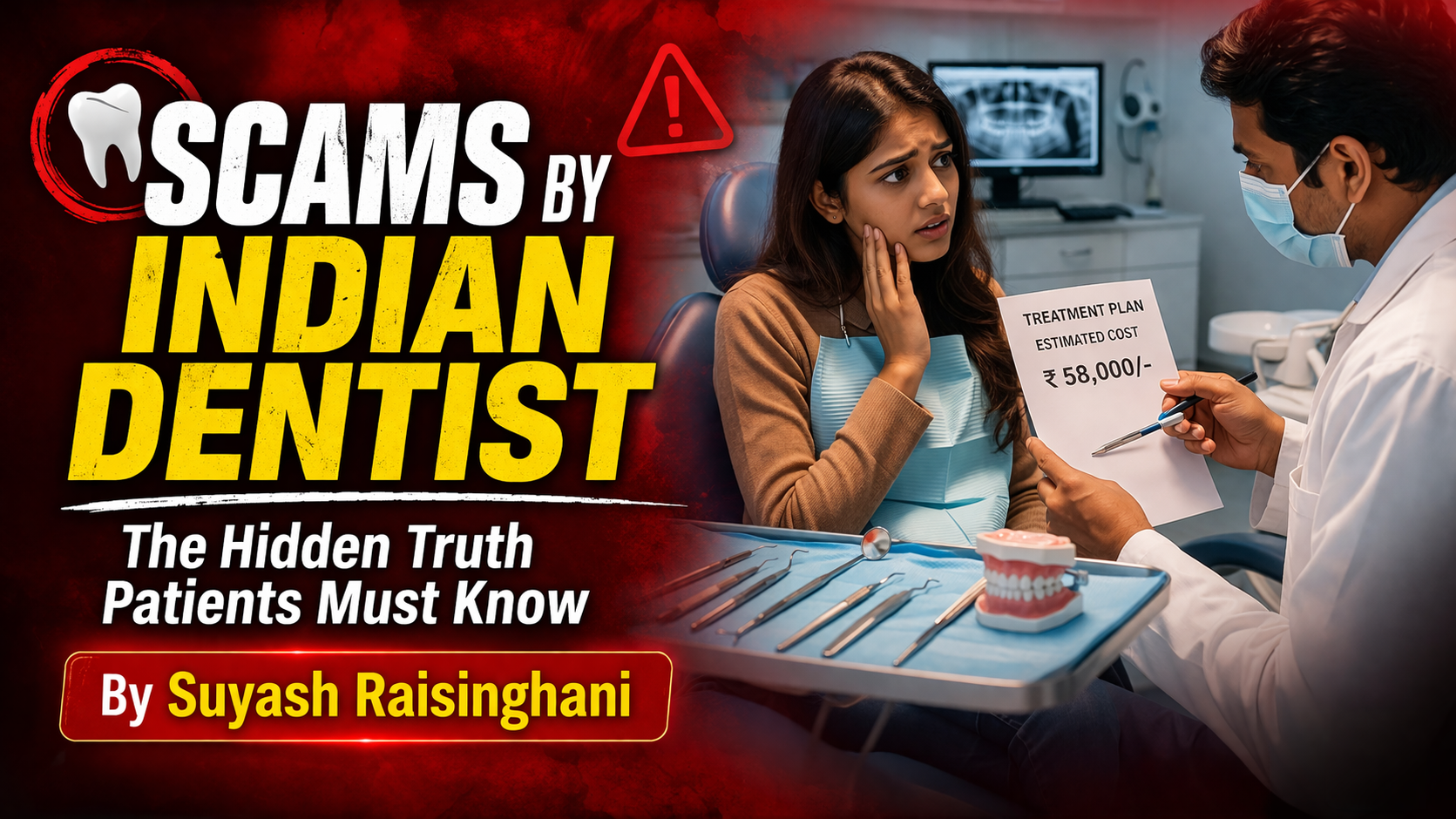
India’s dental industry has grown significantly in recent years, but this expansion has also exposed patients to various unethical practices. One of the most serious concerns is the presence of unqualified practitioners, often referred to as dental “quacks.” Estimates indicate that 30–40% of dental providers in certain regions may not hold valid qualifications, particularly in rural and semi-urban areas. These individuals usually attract patients with low-cost treatments, but the consequences can include infections, failed procedures, and long-term damage.
Another major issue is the recommendation of unnecessary treatments. Patients are sometimes pushed toward expensive procedures such as root canals, crowns, or cosmetic corrections without genuine medical need. A study examining 111 dental negligence cases in India found that nearly 39.6% resulted in judgments against dentists, highlighting a concerning level of malpractice and lack of accountability. Common complaints included incorrect diagnosis, poor surgical execution, and absence of proper patient consent.
Financial exploitation further adds to the problem. Dispute records show that patients often claim compensation of around ₹5–6 lakh on average, yet the actual awarded amounts tend to be significantly lower, discouraging many from taking legal action.
Additionally, misleading advertisements and exaggerated credentials continue to misguide patients, making it difficult to distinguish between qualified professionals and fraudulent ones.
While a large number of dentists in India maintain high ethical standards, these issues underline the urgent need for stricter regulation, better awareness, and careful verification before undergoing dental treatment.