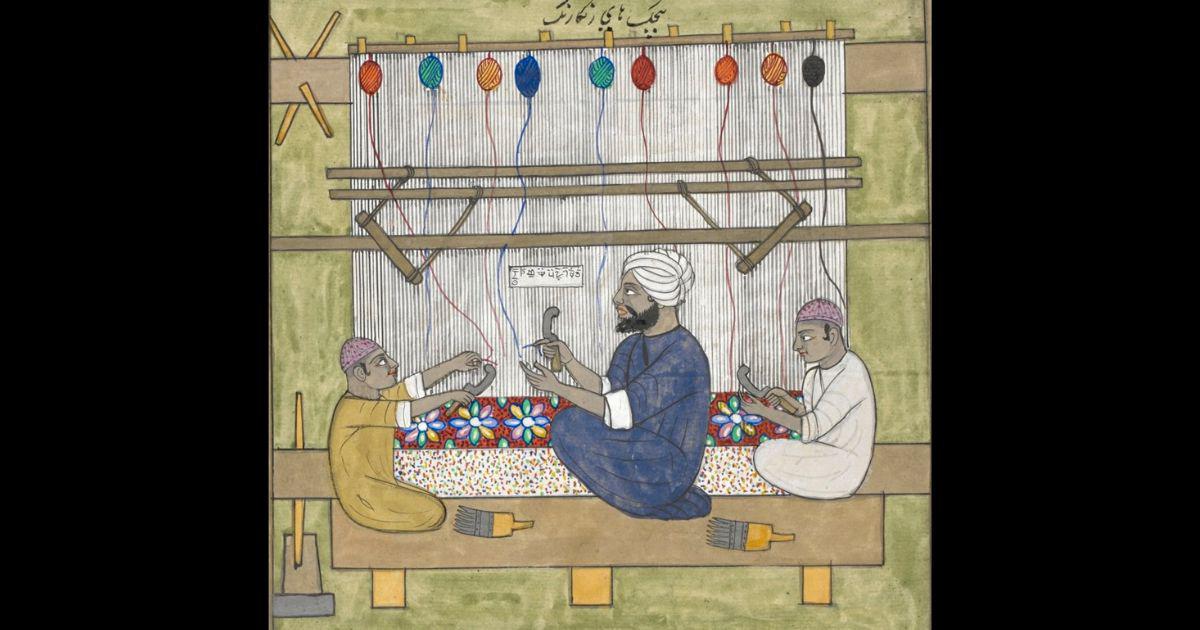
The Girdlers’ carpet, an exquisite creation from the 17th century Mughal Empire, tells a story that transcends time and geography. This remarkable piece of art was commissioned by Robert Bell, a prominent merchant and one of the founding directors of the English East India Company. It was intended as a gesture of goodwill for the Worshipful Company of Girdlers during his final term as its Master in 1634.
The Company of Girdlers has roots deep in history, dating back to the medieval era when it specialized in crafting girdles, belts, and various metal works. Founded under a patent issued by Edward III in 1327, this prestigious company has been integral to the trading fabric of England. The carpet, intricately woven with threads sourced from Lahore, made a long journey from Surat, arriving in London in 1634, where it was proudly displayed as a table covering in the courtroom of the Girdlers.
Its journey has not been without peril. The Great Fire of London in 1666 posed a significant threat to the carpet, but thanks to the quick thinking of its caretaker, it was saved from destruction. Resilience seems to be a recurring theme in the carpet’s history; it also survived the Blitz during World War II, when London faced relentless aerial bombardment. This enduring piece of art was given a new lease of life in 1899, when its restoration was advised by the director of the Victoria and Albert Museum.
The Girdlers’ carpet is not merely a decorative item; it embodies the exchange of cultures and ideas between the East and the West. It serves as a tangible reminder of the Mughal Empire’s artistic prowess, a time when intricate craftsmanship was revered and celebrated. Each thread in this carpet weaves together a narrative of trade, diplomacy, and the rich tapestry of historical connections between India and England.
For contemporary audiences, especially in India, the Girdlers’ carpet stands as a testament to the enduring legacy of Mughal artistry. It invites a reflection on the shared histories and cultural intersections that define our world today. As we marvel at such artifacts, it is crucial to acknowledge their historical significance and the stories they tell about a time when empires were built on trade, artistry, and human relationships.