The Silent Struggle of Young Minds: Understanding the Rise of Student Suicides in India
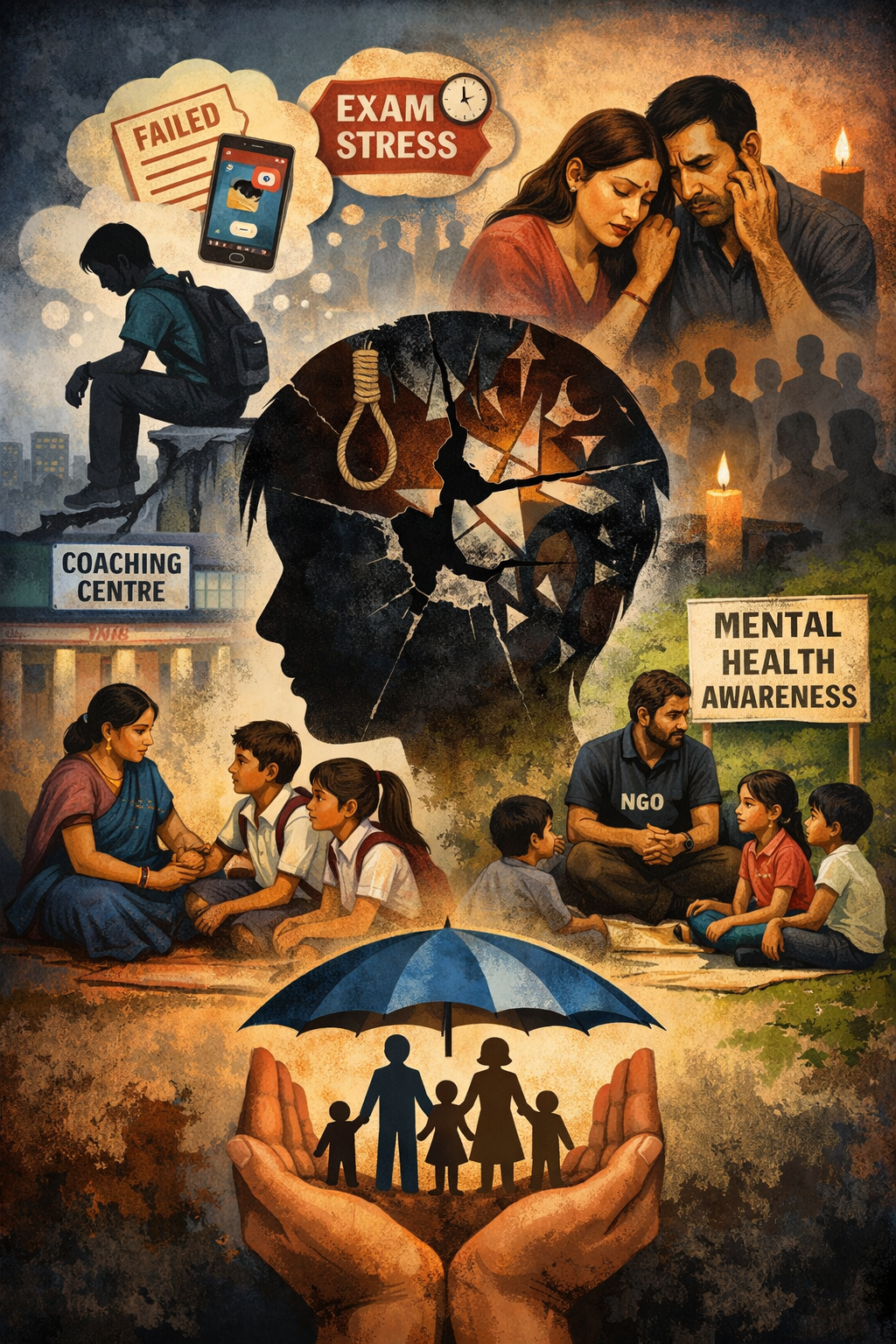
The Silent Struggle of Young Minds: Understanding the Rise of Student Suicides in India
India is often celebrated as a young nation full of dreams, ambitions, and opportunities. Across cities and villages, millions of children and students wake up every morning with hopes of building a better future for themselves and their families. Education has always been seen as the strongest pathway to success, dignity, and social mobility.
However, beneath this hopeful narrative, a disturbing and painful reality has been quietly unfolding. In recent years, India has witnessed a worrying rise in suicides among young children and students. What makes this crisis particularly heartbreaking is that many of these young individuals were standing at the very beginning of their lives.
According to the latest data released by the National Crime Records Bureau (NCRB), 13,892 students died by suicide in India in 2023, marking one of the highest figures recorded in the past decade. Students now account for more than 8 percent of total suicides in the country, and the number has steadily increased over the last ten years. Behind every number lies a story of pressure, loneliness, fear, or emotional pain that remained unheard.
For a country that prides itself on its educational achievements and intellectual capital, these statistics raise uncomfortable but necessary questions. Why are young minds, full of potential and dreams, reaching such extreme points of despair?
One of the most frequently discussed factors is the immense academic pressure placed on students. From an early age, children are often introduced to an intensely competitive environment where success is defined largely through marks, ranks, and entrance examinations. In many households, academic performance becomes closely tied to expectations of family pride, financial stability, and social recognition.
Cities known for coaching institutes and competitive exam preparation have repeatedly come into the spotlight when such tragedies occur. Students preparing for engineering, medical, or other professional entrance examinations often live away from their families, following rigorous study schedules and carrying the weight of enormous expectations. When success becomes the only acceptable outcome, even temporary setbacks can begin to feel like permanent failures in the minds of young individuals.
But academic pressure alone does not explain the entire story. The emotional landscape of today’s children and adolescents is very different from that of previous generations. Young people today are navigating a complex world shaped by rapid social change, digital connectivity, and constant comparison. Social media platforms, while offering connection and expression, can also create unrealistic standards of success, appearance, and happiness. A student who is already struggling with self-doubt may feel even more inadequate when constantly exposed to the curated achievements of others.
At the same time, many children find it difficult to speak openly about their emotional struggles. Mental health conversations are still evolving in India, and in many families the topic remains surrounded by silence or misunderstanding. A child experiencing anxiety, fear of failure, bullying, or loneliness may hesitate to share these feelings, fearing judgement or disappointment.
In earlier decades, joint family structures often provided multiple emotional anchors for young people. Grandparents, relatives, and extended family members naturally created spaces where children could seek comfort or advice. Today, changing family structures, urban migration, and demanding work schedules sometimes reduce these informal support systems. As a result, some young individuals may feel isolated even while living in busy cities or crowded households.
Occasionally, tragic incidents reported in the media bring this issue into national focus. Stories of students taking their own lives after exam results, academic pressure, or emotional distress shock the country for a few days. Public debates begin, institutions promise reforms, and awareness campaigns are discussed. Yet once the immediate attention fades, the deeper emotional challenges faced by students often remain unaddressed.
What these repeated incidents remind us is that suicide among young people is rarely caused by a single moment of weakness or one isolated event. More often, it is the result of accumulated pressure, silent struggles, and a lack of timely emotional support.
Addressing this crisis requires a collective shift in how society understands success, failure, and well-being. Schools and educational institutions must recognize that emotional health is just as important as academic achievement. Counseling services, peer-support groups, and mental health education should become an integral part of the educational ecosystem rather than an occasional intervention.
Families also play a crucial role in shaping the emotional resilience of children. While parents naturally wish to see their children succeed, it is equally important to create an environment where love and acceptance are not dependent on academic results. When children feel safe discussing their fears, disappointments, and doubts, they are far more likely to seek help during difficult moments.
Beyond families and schools, social organizations and non-governmental institutions can also make a powerful contribution in addressing this growing concern. NGOs often work closely with communities and are able to reach young people who may otherwise have limited access to mental health awareness or professional guidance. Through workshops, counseling programs, school engagement initiatives, and public awareness campaigns, such organizations can help normalize conversations around emotional well-being.
One example is the work being carried out by an Delhi based Support Foundation through its mental health awareness initiative. The organization believes that conversations around emotional well-being must begin at the grassroots level, especially among children, youth, and communities where mental health support is often limited or misunderstood. Through community engagement, awareness sessions, and outreach programs, the foundation encourages open dialogue about stress, anxiety, and emotional resilience. By creating safe spaces where individuals can talk freely about their feelings, such initiatives aim to reduce stigma and ensure that people know they are not alone in their struggles.
Ultimately, preventing student suicides is not only a matter of policy or institutional reform; it is a matter of collective compassion. Young people must grow up in a society that values their emotional well-being as much as their achievements. They need teachers who recognize distress signals, parents who listen without judgement, and communities that remind them that life offers many paths and second chances.
Every child carries within them a universe of possibilities. When even one young life is lost to despair, it is not only a personal tragedy for a family but also a loss for society as a whole. By fostering empathy, awareness, and support systems, India can ensure that its young generation grows not only in knowledge and ambition but also in emotional strength and hope.
The dreams of our children should never end in silence. They deserve understanding, patience, and the reassurance that no failure is greater than the value of life itself.
– By Dr kapil Singh, Phd