In the bustling streets of Delhi, countless stories echo the struggles of domestic workers, who form the backbone of many households. One such story is that of Sumitra, a migrant from Muzaffarpur, Bihar, who moved to the capital in 2005 in hopes of a better life. Fast forward nearly two decades, and Sumitra finds herself balancing domestic chores both at work and home from dawn until dusk, navigating her duties in five different households.
Sumitra’s day begins at 7 am and extends until 2 pm, after which she returns home to tend to her ailing parents and manage household responsibilities. Her life took a severe turn when she recently suffered a broken leg while attempting to clean a ceiling fan, leading to an unexpected healthcare expense of Rs 2,000 at a private hospital. With a monthly income of just Rs 3,000, she faces mounting challenges—paying rent, supporting her unemployed husband, and ensuring her 14-year-old son can continue his education despite his irregular attendance due to late fee payments.
The plight of domestic workers like Sumitra is emblematic of the broader issues faced by millions employed in this largely unregulated sector in India. Despite their significant contribution to the economy, domestic workers remain largely invisible, with no formal recognition or protection. The policy network, Women in Informal Employment: Globalizing and Organizing (WIEGO), notes the lack of reliable data on the exact number of domestic workers in India. Estimates range dramatically, from the 4.75 million cited in the 2005 National Sample Survey to figures exceeding 90 million from various other sources.
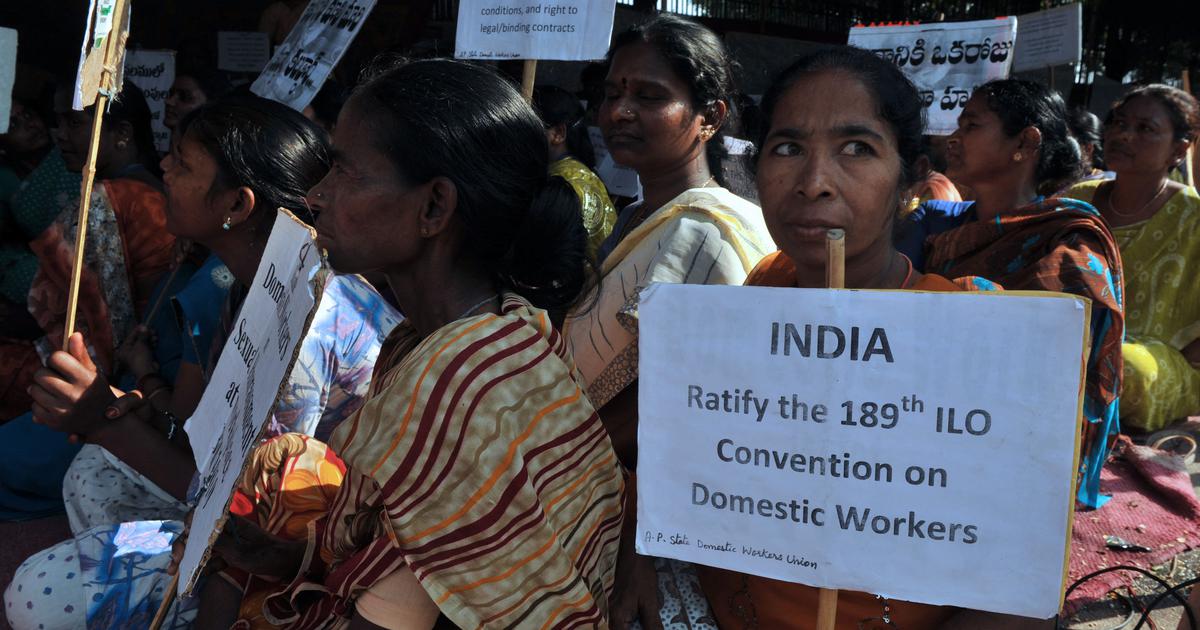
The absence of a dedicated legal framework for domestic workers is a pressing concern. Reports highlight their precarious working conditions—long hours, low wages, and limited access to essential services. A comprehensive law could provide the necessary safeguards, ensuring fair wages, working hours, and health benefits for these laborers who often work outside the regulatory purview of labor laws.
Despite these pressing needs, the Indian government has shown resistance to implementing a separate law for domestic workers. Critics argue that this reluctance stems from a lack of political will and awareness about the sector’s significance. Advocates for domestic workers insist that a dedicated law would not only uplift the working conditions but also empower workers by giving them a legal recourse to address grievances.
As the conversation surrounding labor rights evolves in India, the need for a structured approach to protect domestic workers is becoming increasingly urgent. With their voices often unheard, it is essential to rally support for these individuals who play a vital role in the daily functioning of countless families across the nation. Legislative change is crucial, and it is high time that India recognizes the rights and contributions of its domestic workforce.