




Union Government Weighs In: Secular Courts Shouldn’t Define Religious Practices as Superstition in Sabarimala Case
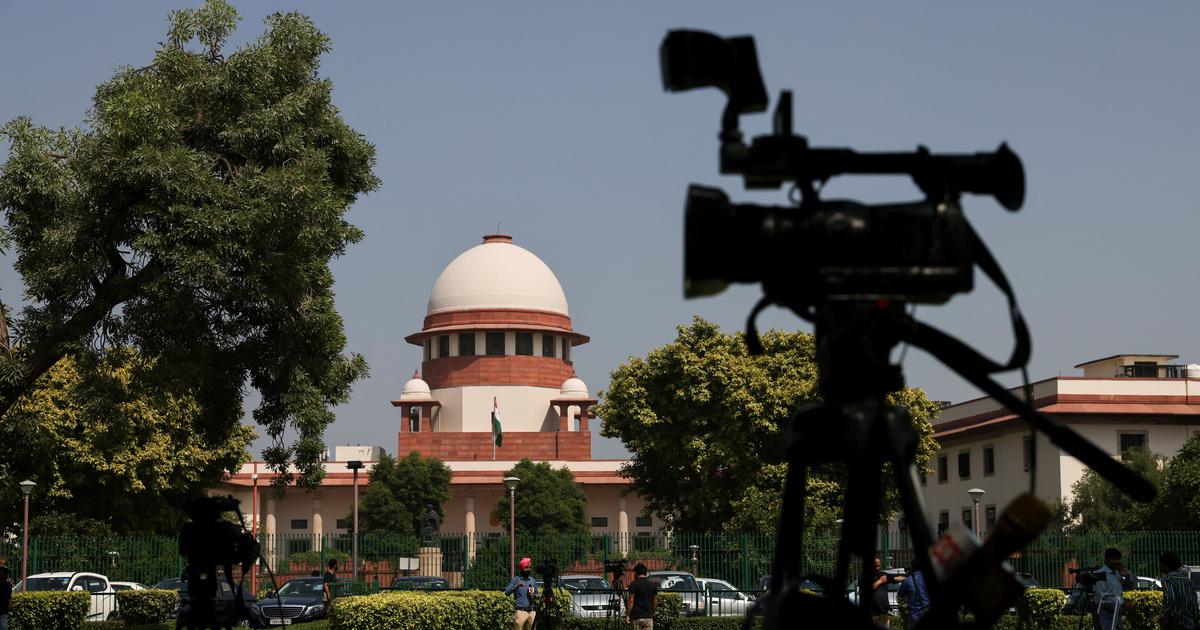
In a significant legal discourse surrounding the entry of women into the historic Sabarimala temple in Kerala, the Union government has posited that secular courts are not equipped to label religious practices as superstition. This assertion was articulated by Solicitor General Tushar Mehta during proceedings before a nine-judge bench of the Supreme Court, which is currently deliberating on important constitutional issues related to religious freedoms.
The Sabarimala temple, revered by devotees of Lord Ayyappa, has been at the center of controversy particularly after a 2018 ruling by a five-judge Constitution bench that lifted a long-standing ban on women of menstruating age from accessing the temple. This decision, reached with a 4:1 majority, represented a landmark moment in the ongoing struggle for gender equality in religious spaces. However, following this ruling, a fresh wave of legal challenges emerged, prompting a subsequent review by another five-judge bench in late 2019. This bench chose to refer the matter to a larger nine-judge bench, focusing on broader questions about the interplay between religion and constitutional rights.
As the Supreme Court convened to hear arguments, Solicitor General Mehta argued that the relationship between the state and religion should be reciprocal; just as the state should not intrude on religious practices, it should also expect that religion does not infringe upon state matters. He emphasized that the determination of what constitutes superstition in religious practices is not the role of the judiciary but rather that of the legislature, as outlined in Article 25(2)(b) of the Indian Constitution. This provision grants the state authority to regulate and potentially reform religious practices.
The bench hearing the case comprises notable justices, including Chief Justice Surya Kant and Justices BV Nagarathna, MM Sundresh, and several others. Their task is not only to mediate the specific case of Sabarimala but to navigate the complexities of constitutional rights concerning religious freedoms in a country characterized by its diversity. The court’s ongoing deliberations are crucial for establishing precedents that will influence not just Sabarimala but various other religious sites across the nation.
As the dialogue unfolds, the debate touches on deeper societal issues, including gender equity, the interpretation of personal freedoms, and the role of the state in regulating religious traditions. The Sabarimala case continues to highlight the ongoing tensions within Indian society regarding tradition versus modernity, a discourse that resonates widely across various sectors of the population.

