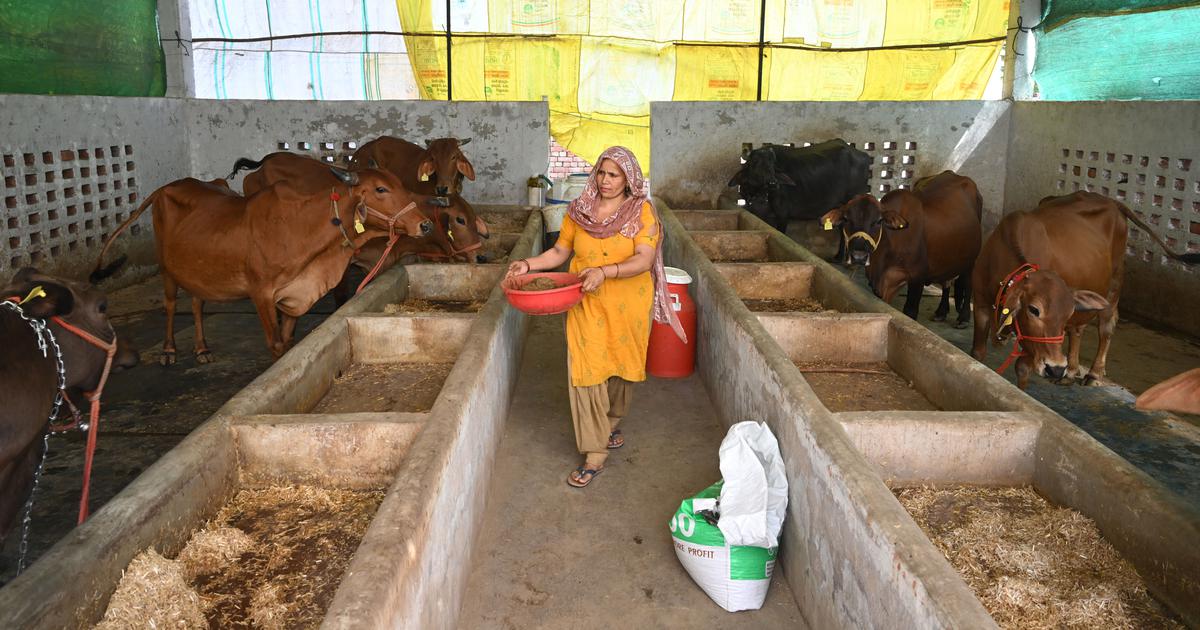
As the summer heat intensifies in Uttar Pradesh, dairy farmers like Jagdish Agrahari are grappling with significant losses due to the adverse effects of climate change on their cattle. Agrahari, a resident of Sultanpur in Ayodhya district, began his journey in dairy farming in August 2025. With a modest herd consisting of four Jersey cows, one Holstein Friesian, and three buffaloes, he aimed to supplement his family’s income. However, the unseasonal weather shifts witnessed in March took a toll on his livestock, leading to health issues among his cows.
Agrahari’s struggle reflects a broader crisis facing the state’s dairy sector, which has seen remarkable growth over the past two decades. India’s milk production surged from approximately 80 million tonnes in 2000 to an impressive 239 million tonnes in 2023. Yet, as climate change disrupts the delicate balance of livestock health, many farmers are facing unprecedented challenges. The financial burden of veterinary care has become increasingly difficult for many, with Agrahari himself incurring a hefty treatment bill of Rs 20,000. He is fortunate to share the expenses with his brothers, who also operate a scrap shop, but most rural households lack such financial safety nets.
According to a recent report by the Council on Energy, Environment and Water, a think tank based in New Delhi, more than half of the buffalo rearers surveyed have reported climate-related issues impacting their animals. The study highlighted alarming statistics: 50% of those raising crossbred or exotic cattle and 41% of indigenous cattle owners are experiencing the repercussions of rising temperatures and unpredictable weather patterns. The implications of these findings are profound, as dairy farming is a critical source of livelihood for around 80 million rural families in India.
This situation raises urgent questions about the future of dairy farming in India, particularly in states like Uttar Pradesh, where a significant portion of the population relies on cattle rearing. As the climate crisis unfolds, farmers are urged to adapt through better management practices and to seek support from government initiatives aimed at bolstering the resilience of the dairy sector. The pressing need for awareness around climate change’s effects on agriculture and livestock is critical in ensuring that these farmers can continue contributing to India’s dairy economy.
In light of these challenges, the need for comprehensive policies and climate-resilient practices has never been more essential. Farmers, government officials, and stakeholders in the dairy industry must collaborate to find sustainable solutions. As summer heat becomes a defining factor in livestock health, proactive measures are necessary to safeguard this vital sector and the livelihoods it supports.