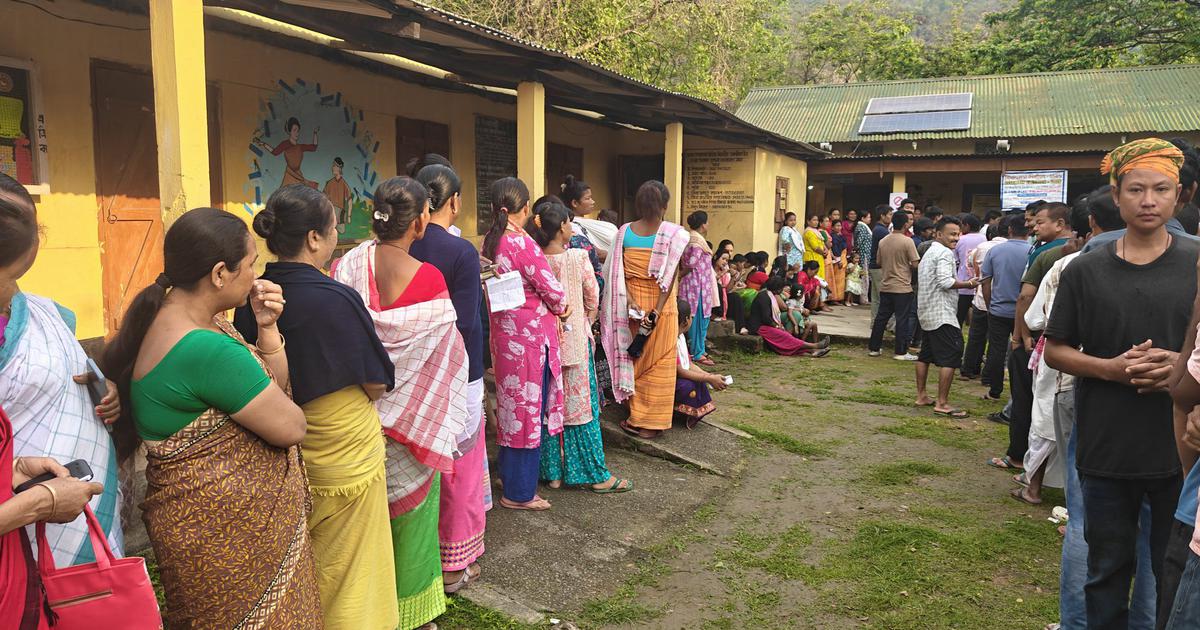
On Thursday, voters in Assam, Kerala, and Puducherry cast their ballots in a significant assembly election, the outcome of which is poised to shape the political landscape of these regions. All constituencies across the two states and the Union Territory participated in a single-phase election, with polling hours set from 7 AM to 5 PM. The results of this crucial electoral exercise are scheduled to be announced on May 4.
In Assam, an extensive security apparatus has been mobilized to ensure a peaceful voting process. Over 150,000 security personnel have been deployed across 31,940 polling stations that service 126 constituencies. With approximately 25 million eligible voters in the state, including around 640,000 first-time voters, the atmosphere is charged with anticipation. The political climate in Assam has been tumultuous, especially for the Miya Muslim community, who feel disillusioned with the ruling BJP’s governance.
Meanwhile, Kerala is witnessing a robust contest as more than 880 candidates vie for election across 140 constituencies. The electorate here totals about 27 million, making it a pivotal battleground. The incumbent Chief Minister Pinarayi Vijayan, leading the Left Democratic Front, is striving for a remarkable third consecutive term. He faces stiff competition from the Congress-led United Democratic Front as well as the Bharatiya Janata Party’s National Democratic Alliance, which has been working tirelessly to expand its influence in the state.
In Puducherry, approximately 950,000 voters are making their choice among 294 candidates competing for 30 constituencies. The All India NR Congress, led by Chief Minister N. Rangasamy, aims to retain its hold on power. However, they face opposition from the INDIA bloc, which has emerged as a significant contender in the Union Territory, reflecting the changing dynamics of local politics.
This assembly election not only represents a critical moment for the candidates involved but also highlights the aspirations and concerns of the electorate in these regions. From economic development to social justice, voters are keenly aware of the issues at stake. The results will undoubtedly signal not just a shift in power, but also reflect the sentiments of the people as they navigate the complexities of governance in contemporary India.