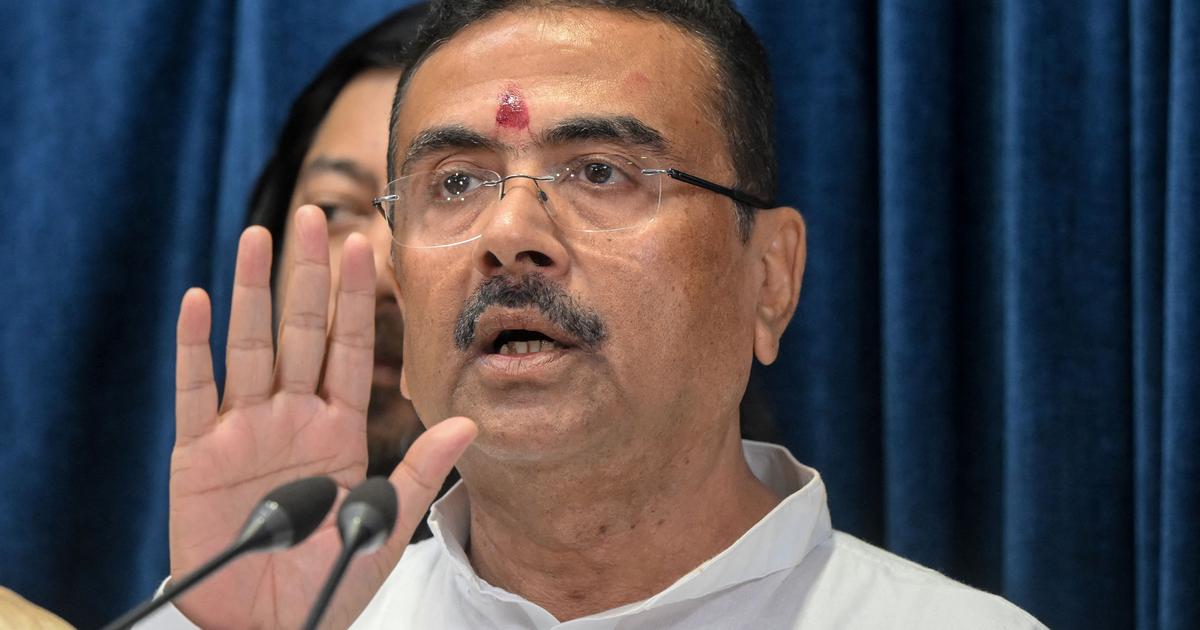
In a significant development, West Bengal Chief Minister Suvendu Adhikari announced on Sunday that the state has deported approximately 4,800 alleged undocumented immigrants to Bangladesh over the past month. These individuals, according to the government, do not qualify for citizenship under the Citizenship Amendment Act (CAA). This announcement comes as the state intensifies its measures against illegal immigration, a contentious issue in Indian politics.
Adhikari, a prominent leader of the Bharatiya Janata Party (BJP), further disclosed that an additional 836 individuals identified as “illegal infiltrators” are currently housed in holding centers and are expected to be deported soon. These holding centers were established by the state government earlier this year, specifically designed for undocumented immigrants and those foreign prisoners awaiting repatriation.
During his remarks, Adhikari emphasized the government’s legal framework, which allows undocumented immigrants to be transferred to the Border Security Force (BSF) rather than being incarcerated. He criticized the previous approach where such individuals were treated as guests, claiming they received state provisions, including food and medical care, while in prisons. “This law has been effectively utilized in other states, but here in West Bengal, they were treated differently,” he stated, highlighting a shift in policy under the new government.
In addition to the deportation efforts, the chief minister highlighted the priority that border security holds for the new BJP administration. In a recent cabinet meeting, the government approved the transfer of nearly 100 kilometers of land to the BSF to facilitate border fencing. Adhikari asserted, “Border security is our top priority,” while confirming the commitment to strengthening measures along the state’s borders to prevent illegal crossings.
This move underscores the ongoing tensions surrounding immigration policies in India, particularly in border states like West Bengal. The issue of undocumented immigrants has long been a divisive topic, with various political factions offering different solutions ranging from humanitarian approaches to stringent enforcement. As West Bengal moves forward with its current strategy, it remains to be seen how these policies will affect the socio-political landscape in the region and the lives of those involved.