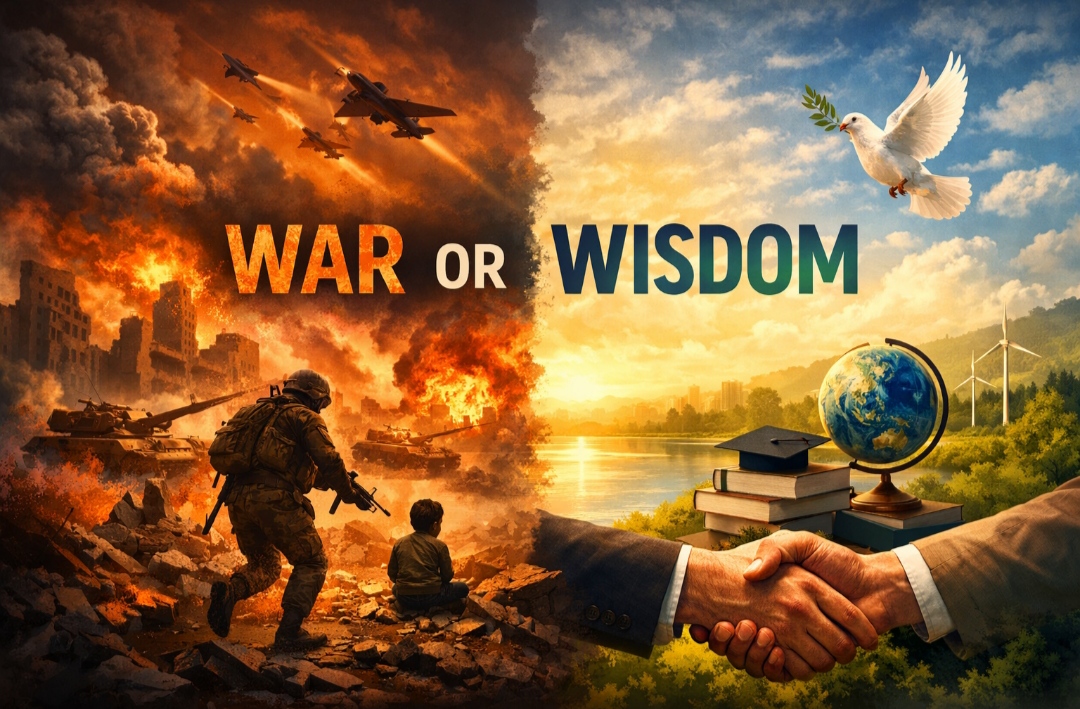
## When Wars Are Fought with Missiles, the Bills Arrive at Home
### Introduction
When powerful nations confront each other militarily, the immediate focus is often on missiles, diplomacy, and military strength. Yet the deeper and more persistent consequences unfold far from the battlefield. The ongoing tensions between the United States and Iran illustrate a familiar pattern in global geopolitics: while governments fight strategic battles, ordinary citizens quietly absorb the economic shock. The **Iran–US conflict impact on everyday life** is not limited to the region where the conflict unfolds. It spreads through oil markets, trade routes, financial systems, and ultimately household budgets across the world.
### War No Longer Stays on the Battlefield
In earlier centuries, wars were geographically contained. Today, globalization ensures that any conflict between major powers quickly becomes an economic event for the entire world.
The Iran–US confrontation demonstrates how interconnected the global economy has become. Oil tankers delayed in the Persian Gulf affect fuel costs in Asia. Military tension in the Middle East influences stock markets in Europe. Currency fluctuations triggered by geopolitical risk can affect small businesses thousands of miles away.
For the common citizen, this means wars are no longer distant events shown only on television. They appear in rising fuel bills, more expensive groceries, and increasing uncertainty about jobs and savings.
### Energy Markets: The First Domino to Fall
Energy remains the most sensitive sector during any Middle Eastern conflict. The region supplies a substantial portion of the world’s oil, and even the perception of disruption can trigger price spikes.
When tensions rise between Iran and the United States, global energy traders react immediately. Oil prices climb because markets fear interruptions to supply routes such as the Strait of Hormuz. Once crude prices rise, the cost of petrol, diesel, and aviation fuel follows.
This chain reaction moves rapidly through the economy. Transportation becomes costlier, logistics companies increase charges, and manufacturers pass those costs forward. Eventually, the consumer at the end of the supply chain pays the difference.
### The Silent Multiplier: Inflation
Energy price increases rarely stay confined to fuel. They multiply across sectors in subtle but powerful ways.
Farmers pay more for diesel to run irrigation pumps and tractors. Transporters pay more to move goods across cities and countries. Factories face higher electricity and shipping costs. As these pressures accumulate, the price of everyday items—from vegetables to electronics—begins to climb.
For middle-class and lower-income households, inflation acts like a hidden tax. Income remains the same while purchasing power steadily declines.
### Small Businesses Feel the Squeeze First
While governments debate sanctions and military strategy, small businesses often experience the earliest economic pain.
Retailers face higher wholesale prices. Restaurants pay more for cooking gas and ingredients. Transport companies struggle with fluctuating fuel costs. For entrepreneurs operating on thin margins, such disruptions can threaten sustainability.
In many developing economies, small enterprises form the backbone of employment. When these businesses slow down or cut costs, the effects ripple into job markets and local communities.
### Financial Anxiety in an Uncertain World
Geopolitical conflicts also influence investor psychology. During periods of tension, markets become volatile as investors shift funds toward safer assets.
This volatility can affect retirement funds, savings portfolios, and currency values. When currencies weaken or stock markets fluctuate sharply, economic confidence declines. Governments may delay investments or tighten spending, which further slows economic momentum.
For the common citizen, the result is often subtle but significant: fewer opportunities, cautious hiring, and a general atmosphere of financial uncertainty.
### The Psychological Cost of Global Conflict
Beyond economic indicators lies another often overlooked consequence: psychological strain.
Continuous exposure to news about war, economic instability, and global tension can shape public perception of the future. People begin to postpone investments, delay major purchases, or reconsider career decisions.
In this sense, the influence of international conflict extends beyond economics. It subtly reshapes how individuals think about security, opportunity, and long-term planning.
### What the Future Could Hold
The long-term consequences of the Iran–US conflict will depend largely on whether tensions escalate further or move toward diplomatic resolution.
If the conflict stabilizes through negotiation, markets typically regain balance and economic pressure gradually eases. However, if disruptions to energy routes persist or regional alliances deepen the confrontation, the economic effects could last much longer.
For many economies, the lesson is clear: geopolitical stability remains one of the most important foundations of economic security.
### Conclusion
The Iran–US conflict reminds us that modern wars extend far beyond borders. While leaders negotiate strategy and military responses, ordinary citizens experience the real cost through rising prices, economic uncertainty, and shifting financial realities. In a deeply interconnected world, the impact of war is rarely distant, it eventually reaches the daily lives of people everywhere.