Escalating Conflict: Rising Tensions Between Iran and the United States Shake the Middle East
March 1, 2026
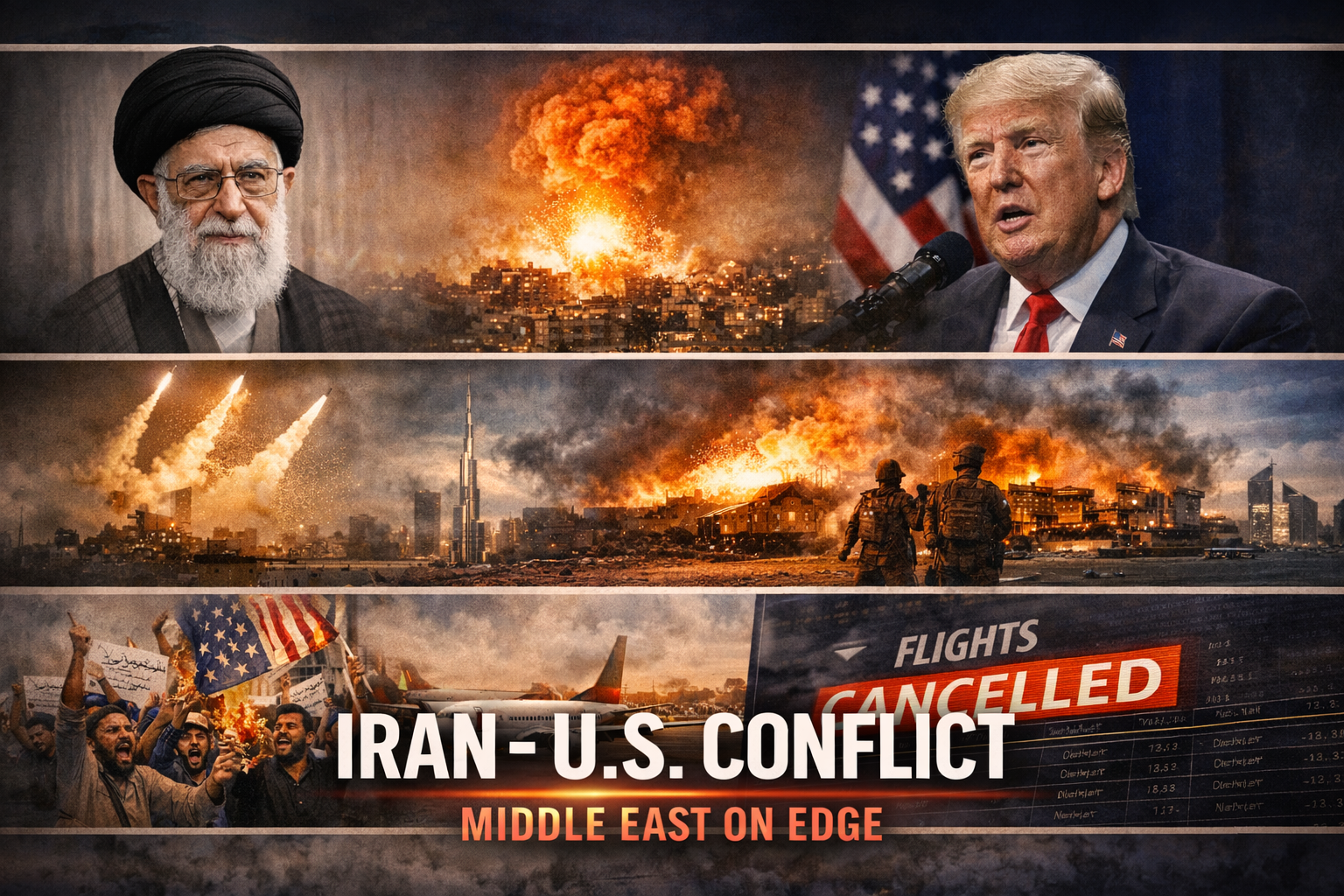
The Middle East stands on the brink of a dangerous escalation following direct military exchanges between Iran and the United States, marking one of the most serious confrontations between the two nations in decades. The unfolding crisis has triggered regional instability, global diplomatic alarm, and widespread concern over economic and security consequences worldwide.
Coordinated Strikes and Immediate Fallout
Late on February 28, joint operations reportedly involving the United States and Israel targeted strategic military and nuclear-linked infrastructure inside Iran. Explosions were reported in and around Tehran, with additional strikes aimed at missile facilities and command centers.
Iranian state sources confirmed significant casualties and infrastructure damage. Among the most shocking developments was the reported death of Iran’s Supreme Leader, Ali Khamenei, a figure who had dominated Iranian politics and regional policy for decades. While international verification remains ongoing, the reported assassination has dramatically intensified the crisis.
In Washington, U.S. President Donald Trump defended the strikes, stating they were carried out to neutralize what he described as “imminent threats” to U.S. forces and allies in the region. The White House emphasized that the operation targeted military assets rather than civilian populations.
Iran’s Retaliation Across the Gulf
Within hours of the strikes, Iran launched retaliatory missile and drone attacks targeting U.S. military installations and allied locations across the Gulf region. Explosions were reported near strategic sites in the United Arab Emirates, particularly in the cities of Dubai and Abu Dhabi.
Additional missile alerts were issued in Qatar and Bahrain, both of which host U.S. military facilities. Air defense systems were activated across multiple countries as governments scrambled to secure their airspace.
Airports temporarily suspended operations, international flights were rerouted, and several Gulf nations shifted schools and public institutions to remote operations amid security concerns.
Regional Shockwaves
The ripple effects have extended beyond the immediate conflict zone. In Pakistan, protests erupted outside diplomatic missions, reflecting rising public anger and geopolitical anxiety. Security forces were deployed to prevent further unrest.
Meanwhile, India has reportedly issued advisories urging its citizens in affected regions to remain cautious and consider evacuation where necessary. Thousands of Indian nationals work across the Gulf states, increasing concern about civilian safety.
Oil markets reacted swiftly to the escalating tensions, with fears mounting over the security of the Strait of Hormuz, a critical maritime passage through which a significant percentage of the world’s oil supply flows. Any prolonged disruption could trigger sharp increases in global energy prices.
Global Diplomatic Reactions
World leaders have called for restraint as emergency sessions of international bodies convene to assess the rapidly deteriorating situation. European powers urged both sides to step back from further escalation, while regional actors fear the conflict could expand into a broader war involving proxy forces across Iraq, Syria, Lebanon, and Yemen.
China and Russia have called for immediate de-escalation talks, emphasizing the risks to global stability. The United Nations Secretary-General appealed for calm, warning that further military action could ignite a wider regional conflict with unpredictable consequences.
Strategic Implications
The reported killing of Iran’s Supreme Leader represents a turning point in regional geopolitics. Leadership transitions in Iran are historically sensitive, and any internal power struggle could further complicate diplomatic efforts. Hardline factions within Iran may push for intensified retaliation, raising the risk of prolonged confrontation.
For the United States, the operation signals a shift toward direct military engagement rather than indirect containment strategies. Analysts suggest that this could redefine U.S. policy in the Middle East for years to come.
Economic and Humanitarian Concerns
Beyond the military dimension, the humanitarian consequences are mounting. Civilians in affected areas face uncertainty as air raid sirens, infrastructure damage, and disrupted supply chains create instability. International airlines are reassessing flight routes, and insurance costs for shipping through the Gulf have begun to rise.
Financial markets are bracing for volatility. Oil prices are expected to surge, potentially impacting fuel costs globally. Stock markets in Asia and Europe are anticipated to open under pressure as investors react to the unfolding crisis.
What Comes Next?
As of March 1, 2026, the conflict has entered a critical phase. Diplomatic channels remain fragile but active. Military analysts warn that the next 48 to 72 hours will be decisive in determining whether the confrontation remains contained or expands into a broader regional war.
The world now watches closely as two powerful nations stand at a crossroads — between escalation and restraint, retaliation and negotiation.
The coming days may shape the geopolitical landscape of the Middle East for a generation.