Allahabad High Court Grants Bail to Muslim Student Accused of Religious Conversion Attempt
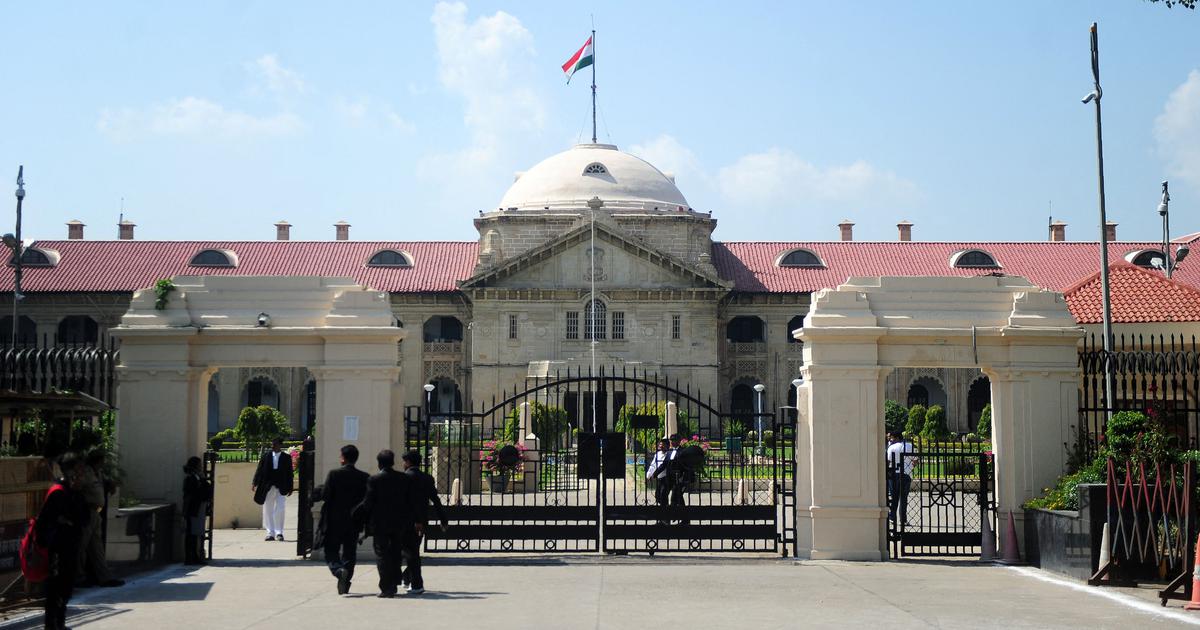
The Allahabad High Court has recently provided anticipatory bail to a Muslim student, identified as Malishka alias Malishka Fatma, who faced allegations of attempting to forcibly convert her Hindu classmate. The ruling, delivered by Justice Avnish Saxena, was made in light of insufficient evidence supporting the claims against Fatma, apart from the testimony of the supposed victim.
In the case at hand, Fatma was accused under the 2021 Uttar Pradesh Prohibition of Unlawful Conversion of Religion Act, following a complaint lodged by the brother of her Hindu classmate. He alleged that a group of Muslim students had coerced his sister into wearing a burqa and pressured her to embrace Islam. According to reports, the alleged incidents occurred during a school outing in December, raising serious concerns regarding religious freedom and the treatment of students in educational environments.
While the accusations are alarming, Justice Saxena pointed out the lack of corroborative evidence, highlighting that Fatma has no prior criminal history. He emphasized the importance of a fair trial, noting that the decision to grant anticipatory bail was made with careful consideration of the facts presented. The Hindu student reportedly claimed that the pressure to wear a burqa and accept non-vegetarian food was exerted during a school outing, leading to significant distress.
This case has ignited a broader discussion on the intersection of religion and education in India, particularly in a state like Uttar Pradesh, where religious tensions can often escalate. It also sheds light on the need for a supportive educational environment where students of diverse backgrounds can interact without fear of coercion or discrimination.
Three of the Muslim students involved in the case have also sought legal redress from the High Court, challenging the first information report filed against them. They assert that the allegations stem from a misunderstanding perpetuated by the Hindu classmate’s brother. As the legal proceedings continue, the case remains a focal point for discussions on religious identity and the youth in contemporary Indian society.