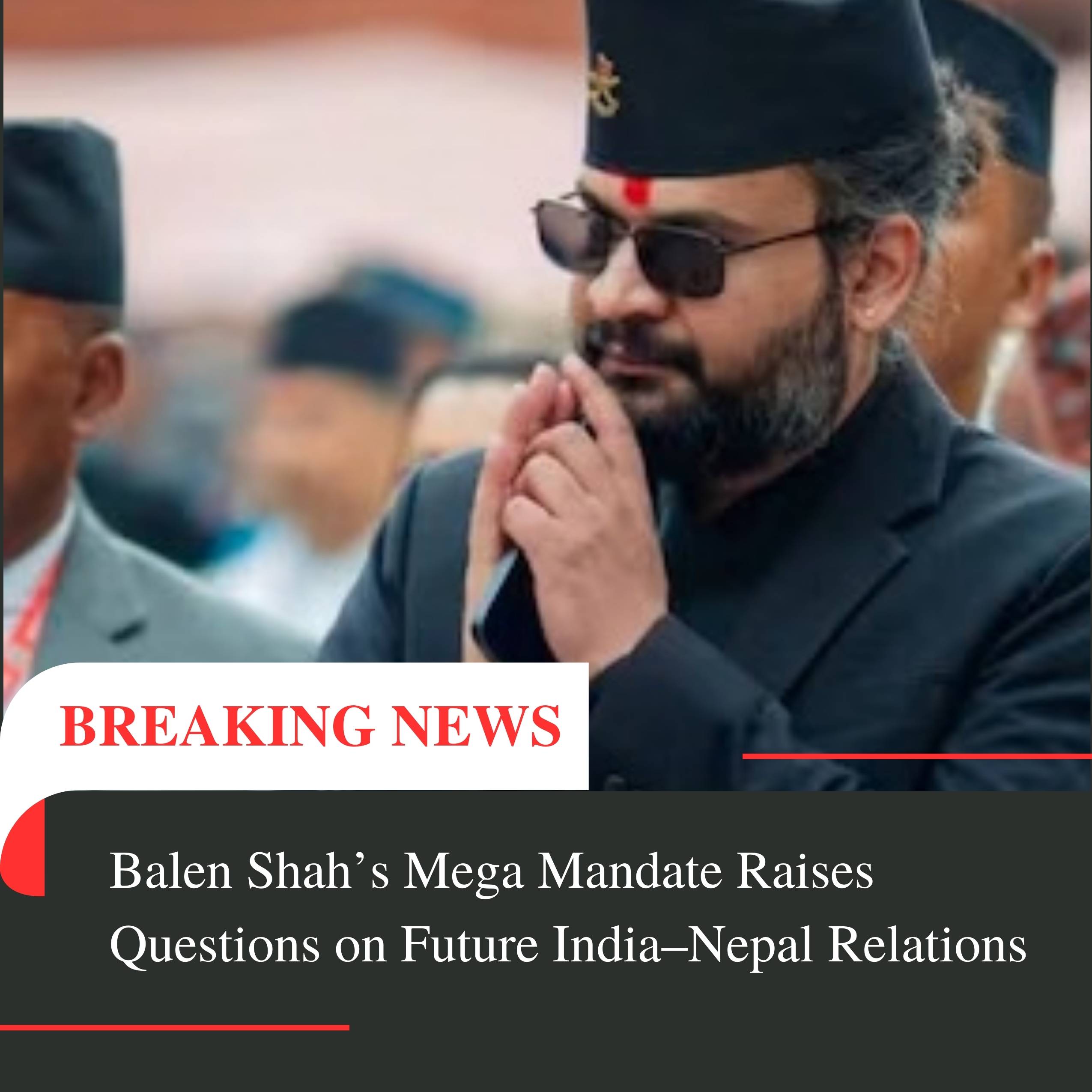
The recent landslide electoral victory of Balendra Shah—popularly known as Balen Shah—has triggered widespread discussion about the future of diplomatic and political ties between India and Nepal. Shah’s overwhelming public mandate reflects a growing demand for political change in Nepal and could reshape the country’s domestic politics as well as its foreign policy priorities.
A Political Shift in Nepal
Balen Shah, a well-known independent political figure and former mayor of Kathmandu, emerged as one of the most prominent voices of a new generation of leaders challenging Nepal’s traditional political establishment. His massive electoral support is widely interpreted as a clear message from voters—particularly the youth—who are frustrated with corruption, political instability, and slow economic growth.
Analysts say Shah’s victory represents a major generational shift in Nepali politics, where younger leaders and independent candidates are gaining momentum against long-established political parties.
Youth Support and Reform Agenda
Shah built his campaign around themes of transparency, governance reform, and modernization. He attracted significant backing from urban voters and young citizens who want a more accountable and efficient government.
Key priorities highlighted during his campaign include:
Strong action against corruption
Better urban development and infrastructure
Job creation for young people
Improved public services in health and education
His reform-focused image helped him gain trust among voters seeking new leadership outside Nepal’s traditional political elite.
Implications for India–Nepal Relations
The political rise of Balen Shah is also being closely watched in New Delhi because of the deep historical, economic, and cultural connections between India and Nepal.
The two nations share an open border and longstanding cooperation under the 1950 India–Nepal Treaty of Peace and Friendship, which allows citizens of both countries to live and work across borders without major restrictions.
Experts believe Shah’s leadership could bring a more assertive national approach in Nepal’s foreign policy. While he has occasionally expressed nationalist views regarding Nepal’s sovereignty, many observers expect that practical cooperation with India will continue because of the countries’ strong economic and cultural ties.
Balancing Regional Powers
Nepal traditionally maintains a careful diplomatic balance between India and China. Political observers say Shah’s government may attempt to pursue an independent foreign policy that strengthens Nepal’s national interests while maintaining stable relations with both neighboring powers.
India remains Nepal’s largest trade partner and an important development partner, making continued cooperation essential for both countries.
Challenges Ahead
Despite the strong mandate, Shah faces several challenges. Nepal’s political system is complex, and turning electoral support into effective governance will require navigating coalition politics, bureaucratic hurdles, and economic pressures.
Observers say the coming months will be critical in determining whether Shah can translate his popularity into meaningful reforms and stable leadership.
A New Political Era
Balen Shah’s electoral triumph signals a new chapter in Nepal’s political landscape, reflecting public demand for fresh leadership and governance reforms. For India, the development represents both an opportunity and a challenge—requiring careful diplomatic engagement with Nepal’s emerging political leadership.
As the region watches closely, the direction taken by Shah’s administration could shape the future of India–Nepal relations and the broader geopolitical dynamics in South Asia.