As the state of West Bengal stands on the brink of a potential political shift, the atmosphere is thick with anticipation. The rivalry between the Trinamool Congress (TMC) and the Bharatiya Janata Party (BJP) has intensified as they gear up for the upcoming election results, set to be announced on May 4. With both parties equally determined—one striving to maintain its grip on power and the other aiming to break through a long-standing political stronghold—the stakes couldn’t be higher.
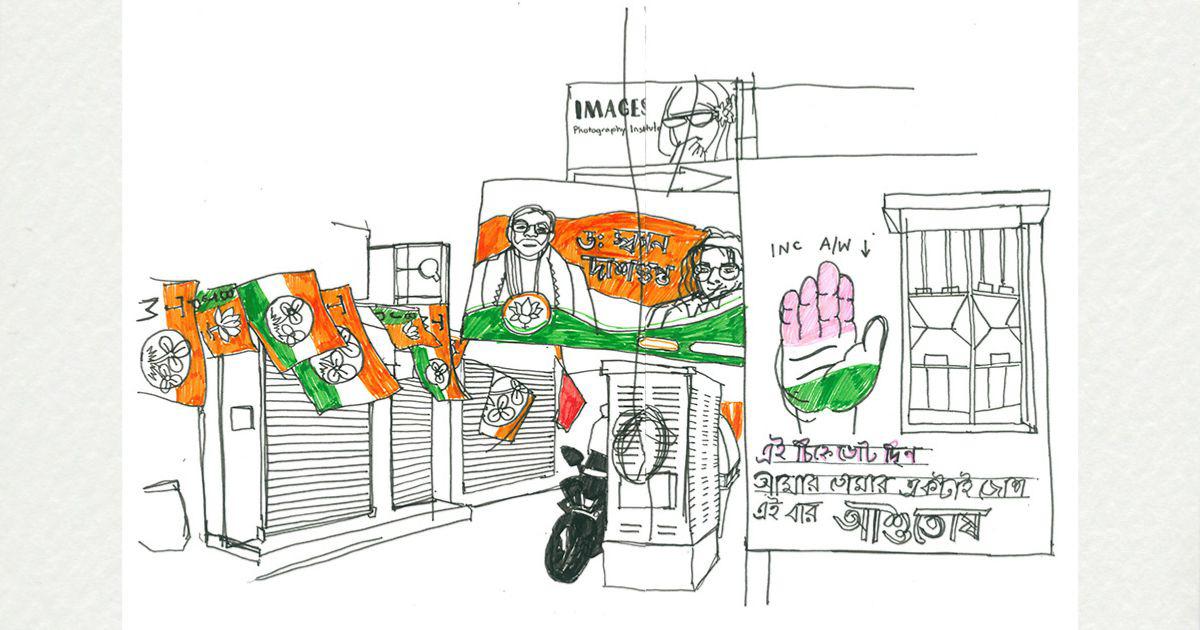
The TMC has dominated West Bengal’s political landscape for 15 years, and a BJP victory could not only bring this era to a close but also highlight a significant ideological shift within the state, which has historically been resistant to the BJP’s political narrative. As the elections unfold in two phases, the buzz of the campaign has permeated every corner of Kolkata, where I, armed with a sketchbook, ventured to capture the essence of this momentous occasion.
On April 23, at precisely 4:30 PM, the first phase of the assembly elections witnessed voting in 152 out of West Bengal’s 294 constituencies. The mood in the air was electric, a mixture of hope and apprehension as voters made their way to polling stations. In the bustling BJP office located in Salt Lake, Kolkata, party workers were hard at work, their energy palpable as they prepared for the day’s responsibilities. The presence of crisply uniformed security personnel under the vibrant canopy of an orange shamiana added to the sense of urgency and organization.
The reception area, where a receptionist clad in a navy blue saree with her hair neatly styled, welcomed visitors, set the tone for a day filled with fervor and purpose. As I waited in one of the numerous chairs, I couldn’t help but observe the intricate details of the campaign environment around me. The enthusiasm of the party members was infectious, and it was clear that each individual was invested in the outcome of this election.
As the day progressed, I wandered the streets of Kolkata, sketching the diverse moods that define the city during such a critical political juncture. From the vibrant rallies filled with slogans and music to the quieter moments of individuals contemplating their vote, the rich tapestry of Bengal’s electoral landscape unfolded before my eyes. It was a vivid reminder of how deeply politics intertwines with the everyday lives of the people in this culturally rich state.
The ongoing election reflects not just a battle for power, but a contest of ideas and identities that resonate with the electorate of West Bengal. The outcome may very well dictate the ideological future of the state, and as the voters cast their ballots, they carry with them the weight of their aspirations and the hope for a better tomorrow.