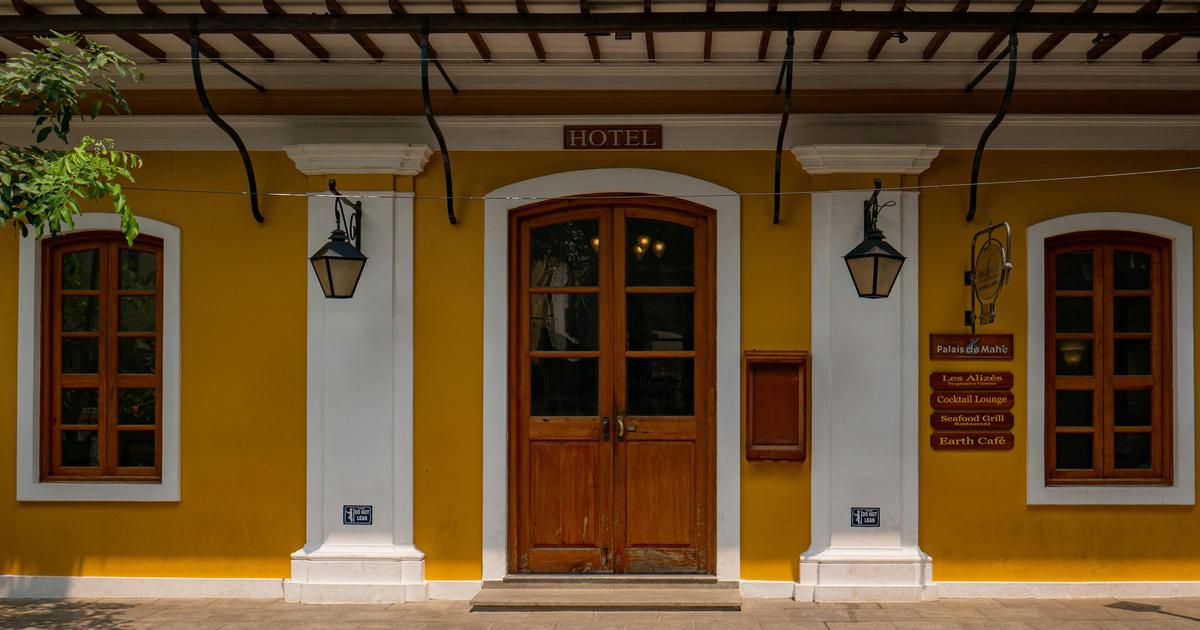
In the vibrant lanes of Kurussukupam, a small locality in Pondicherry, a unique cultural fusion has thrived for generations, where the remnants of French colonialism continue to influence daily life. Among the locals, the name Kel’nna evokes a sense of warmth and community. A devoted wife of a rickshaw driver, Kel’nna is not just a mother juggling her responsibilities with grace but also a symbol of how language can intertwine with identity. Her endearing habit of blending French words into her everyday interactions showcases how deeply the French language is embedded in the local culture.
Kel’nna, whose real name seldom gets spoken, has a charming flair for transforming her children’s names into French-inspired titles. Arumugam becomes “Six Visages,” Ezhumalai is dubbed “Sept Montagnes,” and even the limping child is affectionately called “Boiteux Noir.” These whimsical adaptations reflect her aspiration for her children to embody a regal, almost aristocratic essence influenced by the language she so cherishes.
However, the recent policy changes by the Central Board of Secondary Education (CBSE) pose a significant threat to this cultural tapestry. With the implementation of a new three-language rule, students are now mandated to learn a minimum of two Indian languages, effectively sidelining what they’ve long regarded as a bridge to their colonial past—French. This shift signifies not just an educational reform but a potential erasure of a vital aspect of Pondicherry’s identity, where French remains more than a language; it’s a living legacy.
The CBSE’s decision has sparked considerable debate within the community, with many expressing concern that this move will extinguish the cultural nuances that have flourished in the region. For years, French has served as a conduit for locals to connect with their historical roots, fostering an environment where the old colonial charm can coexist with modern Indian identity. The implications of this policy stretch beyond mere language; they touch on the essence of what it means to be a part of Pondicherry’s unique culture.
As the academic year kicks off, many worry that students will miss out on the opportunity to appreciate and engage with a language that connects them to a rich heritage. The sidelining of French may also hinder future prospects for students interested in pursuing careers in tourism, international relations, or even the culinary arts, where knowledge of multiple languages is often a significant asset. The local government and educational institutions now face a critical task: how can they preserve this linguistic and cultural diversity in the face of changing regulations?
Ultimately, as Pondicherry navigates this new educational landscape, the community must come together to ensure that their cherished cultural identity, embodied in the French language, does not fade away. To lose French is to lose a part of themselves, a charming connection to a bygone era that still resonates in the lives of many, including the indomitable Kel’nna.