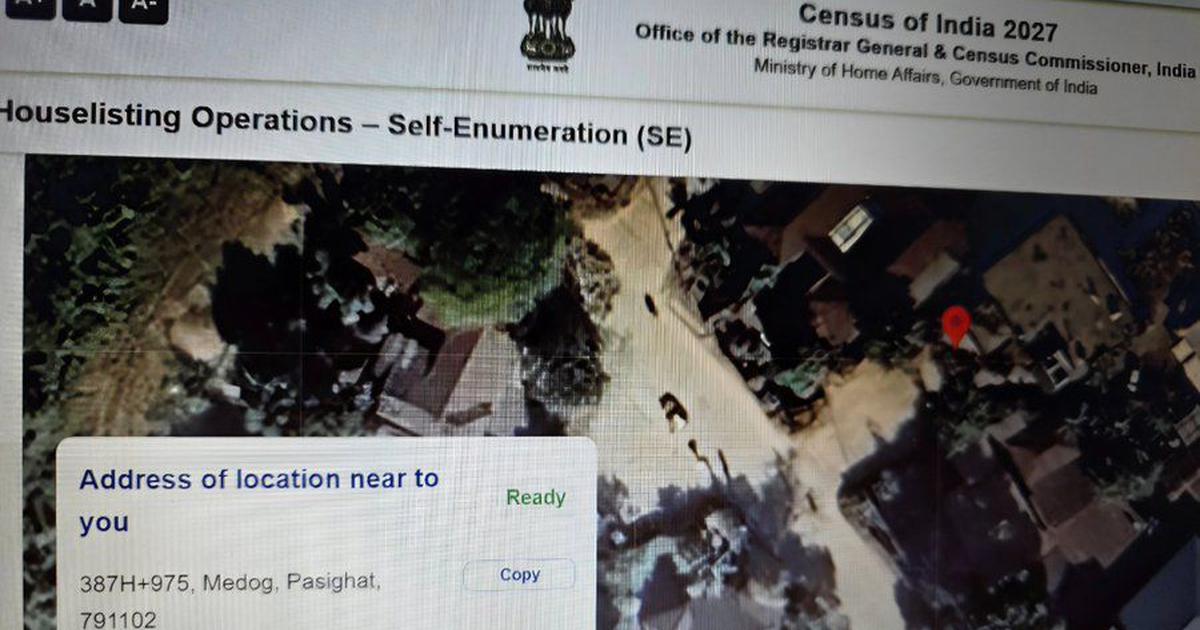
In a surprising twist amid the ongoing Census 2027 process, the self-enumeration portal erroneously identified Pasighat, a historic town in Arunachal Pradesh, with a Chinese name, Medog. This revelation emerged when Mohonto Panging Pao, a retired Indian Air Force officer and resident of Pasighat, flagged the issue on social media, sparking concerns about territorial integrity and the accuracy of official government data.
Pasighat, known as one of the oldest towns in Arunachal Pradesh, is steeped in history and cultural significance. The erroneous labeling of this town as Medog, which is actually a county located across the Line of Actual Control in China, raised alarms among locals and patriotic citizens alike. In his post, Pao expressed his frustration over the mix-up, emphasizing the urgent need for intervention to correct such glaring inaccuracies on government platforms.
Within hours of Pao’s alert, the office of the Registrar General and Census Commissioner swiftly acknowledged the error, stating that they had contacted their map services provider to rectify the situation. They confirmed that the issue had been resolved, ensuring that the identification of Pasighat will reflect its rightful name moving forward. Pao recounted his experience trying to navigate the self-enumeration process, explaining how the incorrect name hindered his progress and sparked his concern about how such errors could undermine the integrity of India’s territorial claims.
The Census 2027 is a significant undertaking occurring in two phases, with house-listing having kicked off on April 1 and set to continue through September, followed by population enumeration. The incident serves as a reminder of the importance of accuracy in national records, particularly in border states like Arunachal Pradesh, where issues of territorial sovereignty are especially sensitive. As the government moves forward with the census, citizens hope for heightened vigilance to prevent similar mix-ups in the future.
With the increased scrutiny of digital platforms and their role in shaping national narratives, this incident highlights the critical need for robust checks within government systems to ensure that misinformation does not slip through the cracks. As India continues to assert its sovereignty and territorial integrity, the accuracy of official documentation remains paramount for all stakeholders involved.