The ongoing political tussle between the ruling Bharatiya Janata Party (BJP) and the Congress party has escalated as the latter lodged a privilege notice against Prime Minister Narendra Modi. The Congress alleges that Modi’s recent address to the nation on April 18 was not just a critique of the opposition but an unprecedented ‘abuse of power’ that undermined parliamentary decorum.
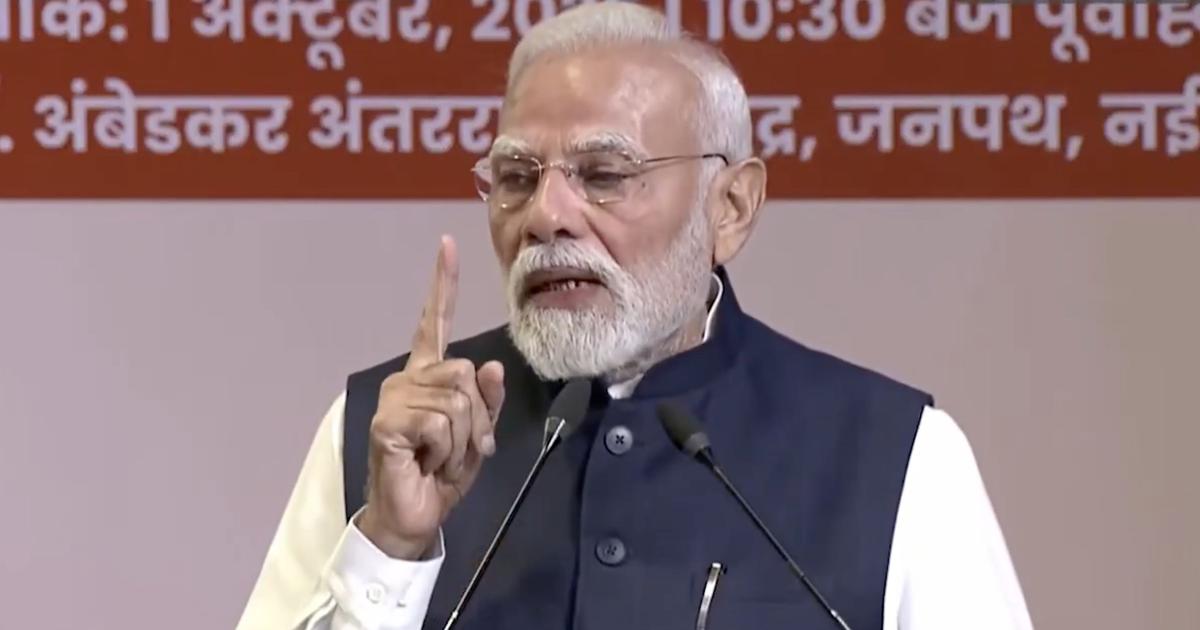
In a formal letter addressed to Lok Sabha Speaker Om Birla, Congress leader K.C. Venugopal articulated the party’s concerns, asserting that Modi’s comments were aimed at casting aspersions on opposition members of Parliament. The prime minister criticized the opposition for their role in the failure to pass the 2023 Women’s Reservation Act during a special session of Parliament, labeling their actions as motivated by ‘selfish political interests.’ This assertion by Modi has now become a flashpoint in the ongoing political discourse.
The backdrop to this controversy involves the recent defeat of the Constitution (131st Amendment) Bill concerning women’s reservation, which is crucial for enhancing women’s representation in electoral politics. The bill was blocked by opposition parties—namely the Congress, Dravida Munnetra Kazhagam (DMK), and Trinamool Congress (TMC)—who argue that they supported the amendments but had concerns regarding the implementation and potential loopholes in the legislation. Interestingly, the ruling National Democratic Alliance (NDA) lacks a two-thirds majority in either House, making opposition support essential for passing constitutional amendments.
Political analysts note that Modi’s words reflect a growing trend where leaders express frustration over parliamentary dynamics. However, it raises questions about the appropriateness of a sitting prime minister targeting the opposition in such a manner, especially during an address intended for the nation. Critics argue that the prime minister’s rhetoric could breed further division in an already polarized political environment.
As the Congress continues to challenge the government’s narrative, it remains to be seen how the Lok Sabha Speaker will address this privilege notice. This incident not only highlights the severe political rifts within Indian politics but also underscores the challenges of legislative governance in a fractured parliamentary landscape. With the 2024 general elections on the horizon, the stakes are high as both parties gear up for a battle over policy, governance, and public perception.