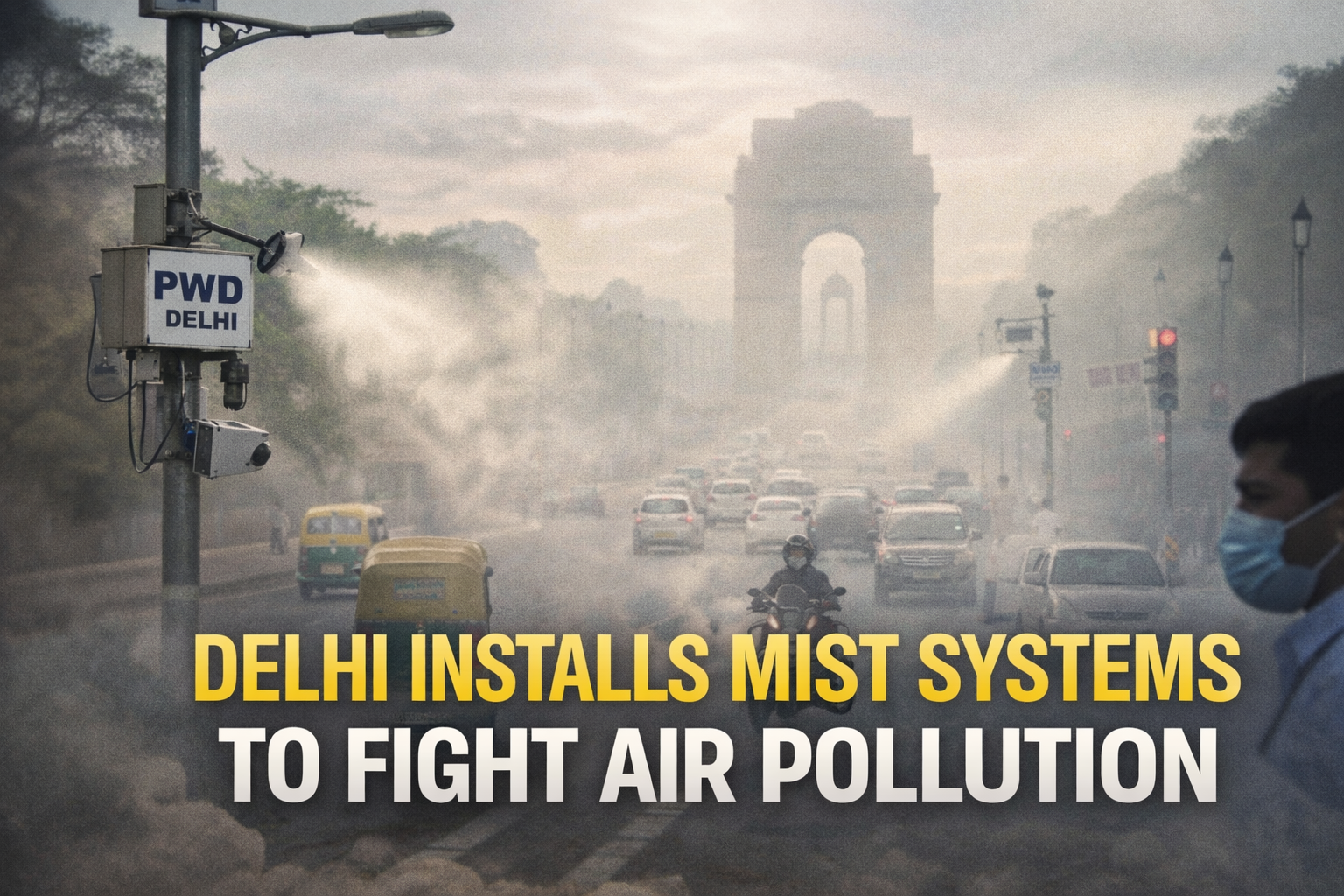
New Delhi: In a major step to tackle rising air pollution, the government of New Delhi has begun installing water mist systems on nearly 1,000 electric poles across the city to help control dust and improve air quality.
The initiative, led by the Public Works Department (PWD) Delhi, aims to reduce airborne dust particles by spraying a fine mist of water along busy roads and pollution-prone areas. Officials say the system will help suppress dust generated by traffic, construction activities, and dry weather conditions.
How the Mist System Works
The misting technology releases tiny water droplets into the air, which capture dust particles and bring them down to the ground. This helps reduce PM10 and PM2.5 particulate matter, two of the main pollutants responsible for poor air quality in the capital.
According to officials, several misting units have already been installed and are operational. In addition to the mist systems, the government has also deployed water sprinklers and green wall projects along major roads to further improve environmental conditions.
Government’s Pollution Control Strategy
Authorities in New Delhi have been implementing multiple measures to address pollution, especially during peak seasons when smog levels rise significantly. The mist system project is part of a broader strategy that includes:
Installation of water sprinklers and anti-smog guns
Development of green belts and vertical gardens
Increased monitoring of construction sites
Stricter regulations on dust control
Officials believe these measures will contribute to reducing pollution levels and improving overall air quality for residents.
A Step Toward Cleaner Air
Air pollution has long been a major challenge for New Delhi, particularly during winter months when smog levels often reach hazardous levels. Environmental experts say technological interventions like misting systems can help mitigate dust pollution in high-traffic urban areas, though long-term solutions will require broader environmental reforms.
The city administration hopes that the project will make roads cleaner, reduce dust pollution, and improve public health, while also raising awareness about the need for sustainable urban development.