New Delhi, March 7, 2026:
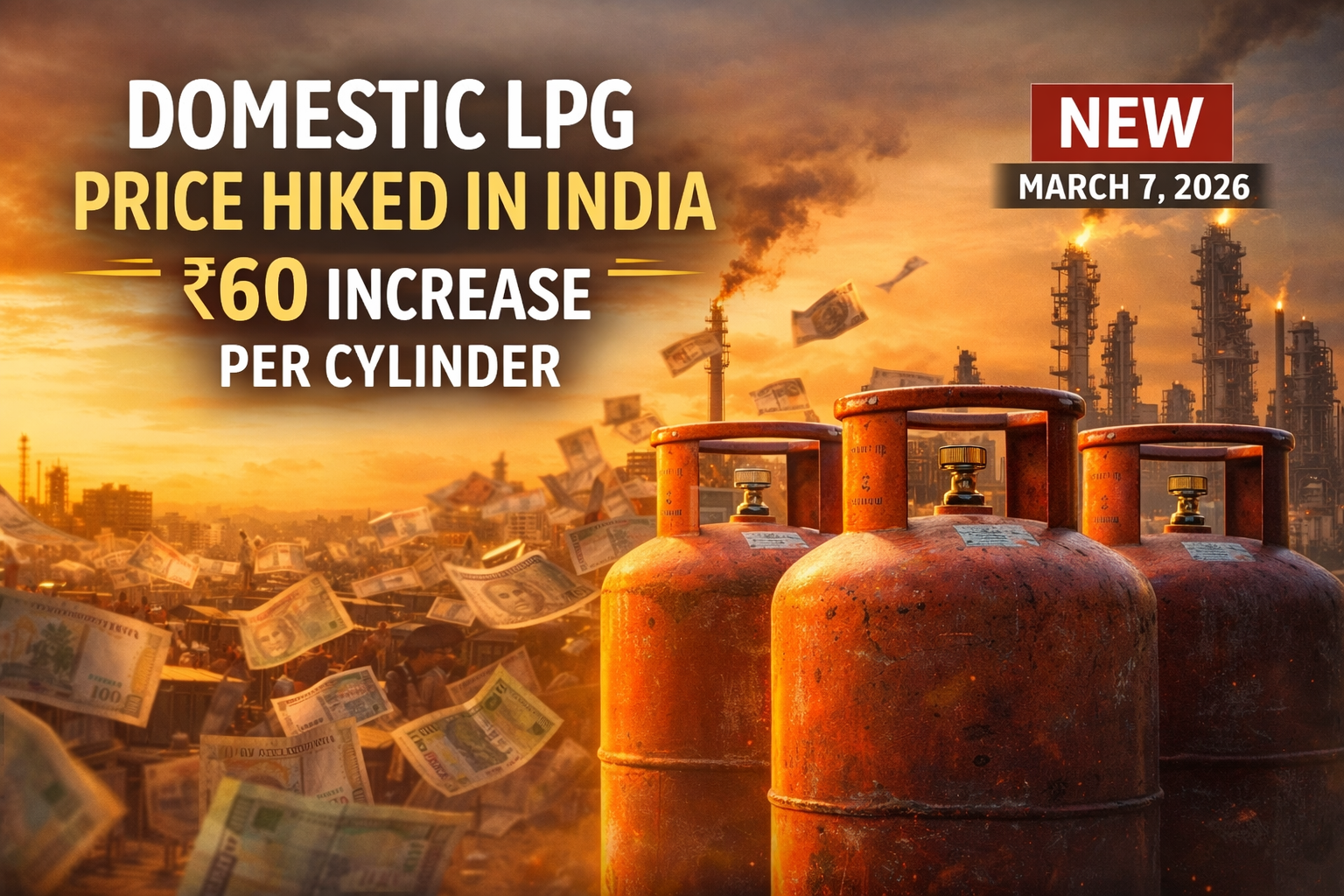
In a move that will impact millions of households, the price of domestic cooking gas cylinders has been increased across India starting March 7. The price of the 14.2-kg domestic LPG cylinder has been raised by ₹60, marking the first price hike in nearly a year.
The revision was announced by state-run oil marketing companies including Indian Oil Corporation, Bharat Petroleum, and Hindustan Petroleum, which periodically review LPG prices based on global energy market trends.
New LPG Prices in Major Cities
Following the hike, the price of a domestic LPG cylinder in New Delhi has increased from around ₹853 to ₹913. Similar price increases have also been implemented in major cities such as Mumbai, Kolkata, and Chennai.
Officials said the price revision reflects changes in international LPG rates and fluctuations in the global energy market.
Commercial LPG Also Becomes Costlier
Along with domestic cylinders, the price of the 19-kg commercial LPG cylinder—commonly used by restaurants, hotels, and small businesses—has also been increased by ₹115.
The hike is expected to raise operational costs for food businesses and eateries, which may eventually lead to slightly higher prices for consumers.
Reasons Behind the Increase
Energy experts attribute the price rise to increasing global fuel costs and supply uncertainties, partly driven by geopolitical tensions in the Middle East and fluctuations in crude oil prices.
India imports a significant portion of its LPG requirement, making domestic prices sensitive to international market movements.
Impact on Households
The increase in LPG prices is likely to affect household budgets, particularly for middle- and lower-income families who rely heavily on subsidized cooking gas for daily needs.
Despite the hike, government officials say subsidies for eligible beneficiaries under schemes like the Pradhan Mantri Ujjwala Yojana will continue.
Future Price Revisions
LPG prices are reviewed regularly by oil marketing companies depending on global crude oil trends, exchange rates, and supply conditions. Analysts say further adjustments may occur in the coming months if international fuel prices remain volatile.