Introduction
Across the world, the rise of substance abuse has become a silent but dangerous crisis, and its effects are being felt most strongly among young people. The issue of drugs impacting youth is no longer limited to isolated regions; it has evolved into a global concern with deep social, economic, and health consequences. In India, this challenge is becoming increasingly visible, especially in border states and urban centers where easy availability and peer influence are drawing more young individuals into addiction.
What makes the situation more alarming is the complex network of illegal drug trafficking routes that bring narcotics into the country from neighboring regions. These substances do not just harm individuals; they weaken families, disrupt communities, and threaten the nation’s future. As the problem continues to grow, understanding its roots and consequences becomes essential for building effective solutions.
Background: How the Drug Problem Is Expanding
The spread of drug abuse is closely linked to globalization, urbanization, and changing lifestyles. Increased connectivity and economic activity have made it easier for illegal networks to operate across borders. India’s geographical location places it between major drug-producing regions, making it vulnerable to trafficking activities.
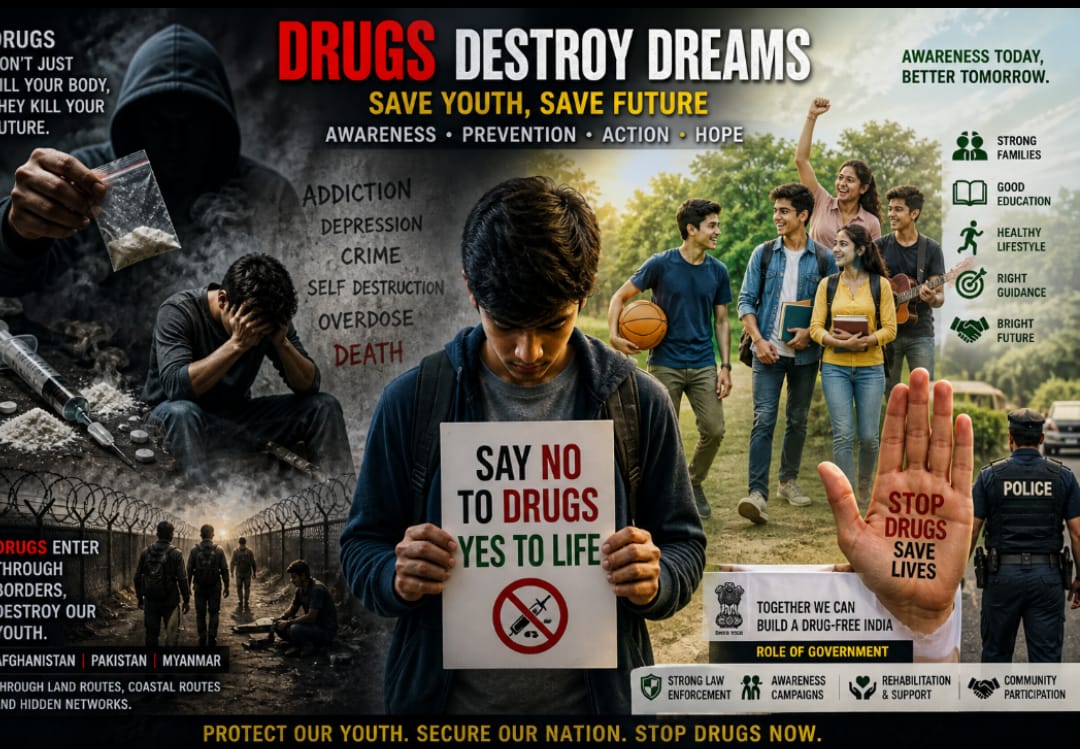
Neighbouring areas such as Afghanistan, known for opium production, and routes passing through Pakistan and Myanmar have contributed to the inflow of narcotics. These drugs enter India through land borders, coastal routes, and even digital networks, making enforcement increasingly challenging.
The rise of drug trafficking routes in India has made substances more accessible than ever before, particularly to the youth who are often unaware of the long-term consequences.
Key Developments: Smuggling Networks and Changing Patterns
Drug smuggling has evolved into a highly organized and technologically advanced operation. Traffickers use hidden routes, encrypted communication, and innovative methods to transport illegal substances across borders. Coastal areas, remote border regions, and even courier services have become part of this network.
Synthetic drugs are also becoming more common, adding a new dimension to the crisis. Unlike traditional narcotics, these substances can be produced in smaller labs and distributed quickly. This has increased the availability of drugs in cities and towns, making it harder for authorities to control their spread.
The combination of traditional smuggling routes and modern distribution methods has intensified the problem of youth drug addiction, creating a situation where access is easier and risks are higher.
Impact on Youth: A Generation at Risk
The impact of drugs on young people is both immediate and long-lasting. Physically, substance abuse can damage vital organs, weaken the immune system, and lead to addiction that is difficult to overcome. Mentally, it can cause anxiety, depression, and loss of focus, affecting education and career prospects.
Socially, the consequences are equally severe. Relationships with family and friends often deteriorate, and individuals may become isolated or involved in criminal activities. Over time, this leads to a broader societal issue where communities are affected by rising crime and reduced productivity.
The growing concern around substance abuse in India highlights how deeply this issue is affecting the country’s youth. If not addressed, it could undermine the potential of an entire generation.
Role of Government: Policies and Prevention Efforts
The government plays a crucial role in combating drug abuse and trafficking. Law enforcement agencies are working to strengthen border security, monitor suspicious activities, and dismantle smuggling networks. Strict laws and penalties are also in place to deter those involved in illegal drug trade.
In addition to enforcement, awareness campaigns and rehabilitation programs are being promoted to help individuals recover from addiction. Educational institutions are increasingly being involved in spreading awareness about the dangers of drug use.
Efforts by organizations such as the Narcotics Control Bureau are essential in tackling the issue at both national and international levels. However, the scale of the problem requires continuous improvement in strategy and cooperation between agencies.
How to Save Future Generations from Drug Abuse
Protecting future generations from drugs requires a combined effort from families, schools, communities, and governments. Awareness is one of the most powerful tools in prevention. When young people understand the risks and consequences, they are less likely to experiment with harmful substances.
Strong family support systems and open communication can also play a significant role in guiding youth away from negative influences. Educational programs that focus on life skills, mental health, and decision-making can empower young individuals to make better choices.
At a broader level, improving access to sports, cultural activities, and employment opportunities can reduce the likelihood of drug abuse. When young people are engaged in meaningful pursuits, they are less likely to turn to harmful habits.
What Happens If Drug Abuse Is Not Stopped
If the current trends continue, the consequences could be severe and far-reaching. A growing number of addicted individuals would place a heavy burden on healthcare systems and reduce the overall productivity of the workforce. Crime rates could rise, and social stability may be affected.
The economic impact would also be significant, as resources would need to be diverted toward treatment, enforcement, and rehabilitation. Over time, the loss of human potential could slow down national development and weaken the country’s global standing.
Most importantly, the continued spread of drugs would threaten the future of millions of young people, creating a cycle of addiction and hardship that becomes increasingly difficult to break.
Conclusion
The issue of drugs impacting youth is not just a health concern; it is a challenge that touches every aspect of society, from families and education to the economy and national security. In India, the problem is intensified by its proximity to major drug-producing regions and the presence of complex smuggling routes. As drugs become more accessible, the risks to young people continue to grow, affecting their physical health, mental well-being, and future opportunities.
However, this crisis is not without solutions. Strong government action, combined with community awareness and family support, can create a powerful defence against the spread of drug abuse. Efforts to strengthen border security, dismantle trafficking networks, and provide rehabilitation services are essential steps in the right direction. At the same time, education and awareness must remain at the forefront, ensuring that young people understand the dangers before it is too late.
Looking ahead, the fight against drug abuse requires sustained commitment and cooperation at all levels. If society acts collectively and decisively, it is possible to protect future generations and build a healthier, more secure nation. But if ignored, the consequences could shape not just individual lives, but the destiny of the country itself.