Humanity at the Algorithmic Crossroads: Power, Ethics, and the Future of Artificial Intelligence
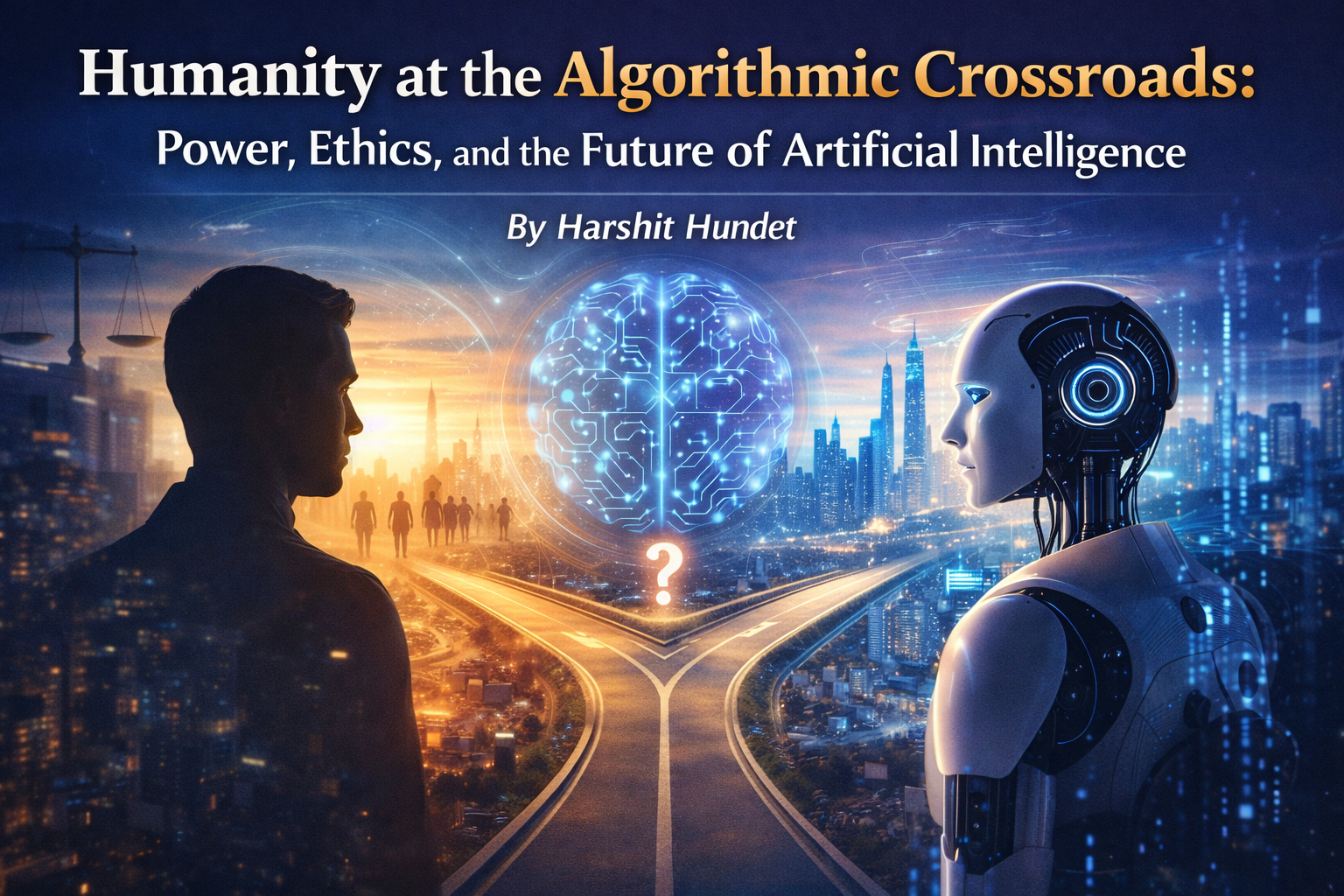
In the annals of human progress, certain technological breakthroughs have fundamentally altered the trajectory of civilization. The invention of the printing press democratized knowledge, the industrial revolution mechanized production, and the internet interconnected the world.
Today, humanity stands at the threshold of another transformative epoch—one defined by the rapid advancement of artificial intelligence.
Artificial intelligence, once confined to the realm of speculative fiction and academic laboratories, has now become an integral component of modern life. From predictive healthcare systems and financial analytics to autonomous technologies and creative content generation, AI is redefining how societies function and how economies evolve. The magnitude of this transformation is not merely technological; it is profoundly social, ethical, and philosophical.
At the core of this revolution lies a paradox. Artificial intelligence promises unparalleled efficiency and innovation, yet it simultaneously raises fundamental questions about employment, human creativity, and the future of decision-making. Automation, driven by increasingly sophisticated algorithms, is poised to reshape industries ranging from manufacturing and logistics to journalism and law. While new categories of employment will inevitably emerge, the transition may also expose structural vulnerabilities within global labor markets.
Equally significant is the influence of artificial intelligence on knowledge production and information ecosystems. Algorithms increasingly curate the information individuals encounter—determining which news stories appear on social media feeds, which advertisements are displayed, and even which political narratives gain prominence. In this environment, the intersection between technology, power, and information becomes critically important.
For journalists and media professionals, the implications are profound.
Artificial intelligence has introduced tools capable of generating articles, analyzing vast datasets, and even producing visual and audiovisual content. These capabilities hold immense potential for enhancing investigative journalism and expanding analytical reporting. Yet they also raise concerns regarding authenticity, misinformation, and the erosion of editorial oversight.
The ethical dimension of artificial intelligence therefore demands careful scrutiny. Questions surrounding data privacy, algorithmic bias, and accountability are no longer abstract academic debates; they are pressing societal issues that will define the governance of technology in the coming decades. Policymakers across the world are grappling with how to regulate AI systems without stifling innovation, while technology companies continue to push the boundaries of what machines can accomplish.
Beyond economics and governance, artificial intelligence also invites reflection on the very nature of human identity. If machines become capable of composing music, writing literature, diagnosing diseases, and even engaging in complex conversations, society must reconsider what distinguishes human intelligence from artificial cognition. In this sense, the AI revolution is not merely a technological transition—it is a philosophical inquiry into the essence of creativity, intuition, and consciousness.
However, technological progress has always been shaped by the values and priorities of those who guide it. The trajectory of artificial intelligence will ultimately depend on the collective decisions made by governments, researchers, journalists, and civil society. Responsible innovation, transparent governance, and ethical frameworks must therefore accompany technological advancement if AI is to serve humanity rather than undermine it.
History demonstrates that transformative technologies can either deepen inequality or expand opportunity. Artificial intelligence carries both possibilities. If harnessed wisely, it has the potential to accelerate scientific discovery, enhance global education, and address some of humanity’s most pressing challenges—from climate change to public health. If mismanaged, it could amplify misinformation, concentrate power in the hands of a few institutions, and disrupt social stability.
In navigating this unprecedented era, thoughtful public discourse becomes essential. Journalists, scholars, and policymakers must engage in rigorous debate about how artificial intelligence should evolve and who should shape its future. The decisions made today will influence not only economic structures but also the moral and intellectual foundations of the twenty-first century.
The intelligence revolution has already begun.
The question that remains is not whether artificial intelligence will transform the world, but whether humanity will possess the wisdom to guide that transformation responsibly.