India’s Next Silent Revolution: How AI Villages, Smart Farms and Drone Networks May Transform Rural India by 2030
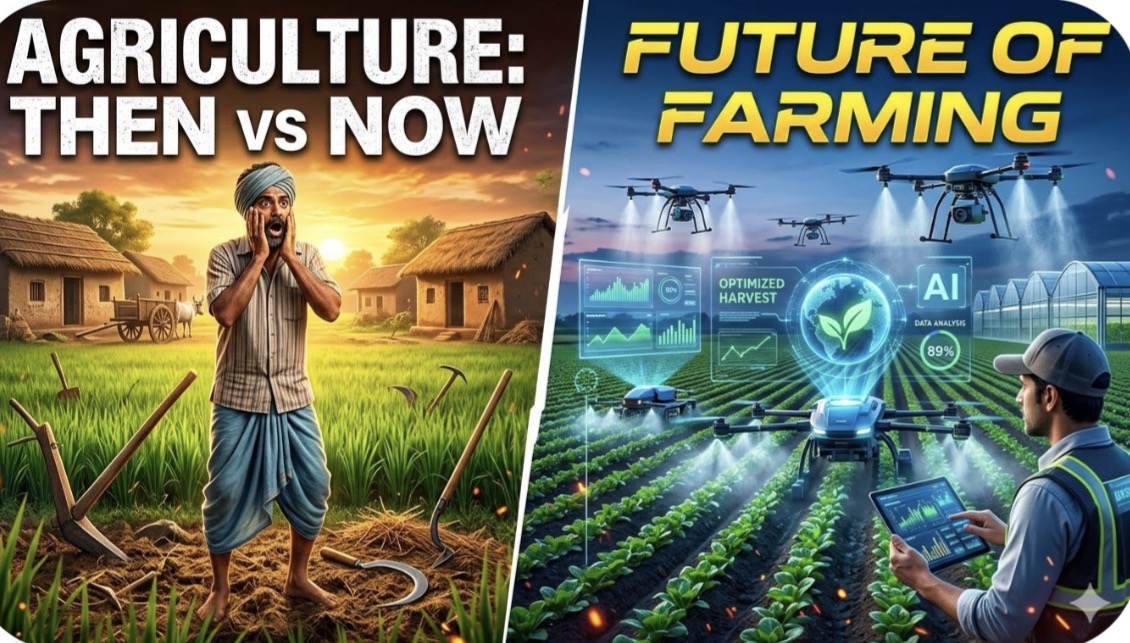
India may soon witness a silent technological revolution — not in big cities, but in its villages. While urban India debates artificial intelligence and digital economies, a new transformation is quietly emerging in rural regions: AI-powered villages, autonomous drones in agriculture, and data-driven farming ecosystems.
Experts believe that the next decade could see rural India turning into one of the world’s largest laboratories for AI-powered agriculture and smart rural governance.
The Rise of AI Villages
The idea of an AI-driven village has already started taking shape in some parts of India. In Maharashtra, a pilot project introduced a fully connected rural ecosystem where farmers receive real-time alerts about soil health, irrigation needs, and weather patterns through mobile applications and AI-powered platforms.
In such villages, artificial intelligence is used for multiple purposes:
Monitoring crop health through satellite images
Predicting rainfall and pest attacks
Providing telemedicine services in rural clinics
Delivering digital education content to village schools
These experiments suggest that rural India could soon adopt technology faster than expected. If replicated nationwide, analysts say thousands of villages could become AI-assisted agricultural hubs within a decade.
Smart Farming: The New Agricultural Model
Agriculture still employs nearly half of India’s population. But traditional farming faces growing challenges — climate change, labour shortages, and rising costs.
Artificial intelligence and precision farming technologies are now emerging as potential solutions.
AI systems can analyse data from soil sensors, satellite imagery, and weather models to recommend:
Ideal sowing time
Fertilizer requirements
Irrigation schedules
Pest management strategies
This kind of precision agriculture helps farmers increase yield while reducing water and chemical usage.
Researchers say AI can also help predict crop prices and demand, allowing farmers to decide which crops to grow even before the season begins.
Drones: The New Farmers’ Assistant
One of the most visible changes in rural India could be the widespread use of agricultural drones.
These drones can spray fertilizers and pesticides across large fields within minutes, saving both time and labour. In some pilot projects, drones have already been able to cover 3 to 12 acres of farmland in just one hour, significantly improving crop management efficiency.
Advanced drone systems are now equipped with cameras and AI software that can detect plant diseases or nutrient deficiencies long before they become visible to the human eye.
The drone agriculture market in India is expected to grow rapidly and could exceed $600 million by 2026, driven by government incentives and private innovation.
Farmer Digital IDs and Data-Driven Agriculture
Another major transformation could come from the creation of digital databases of farmers and farmland.
India’s digital agriculture initiatives aim to provide unique digital identities to millions of farmers, creating a nationwide agricultural data ecosystem.
With such systems in place, farmers may soon receive personalized recommendations based on:
Soil type
Crop history
Local weather patterns
Market prices
Financial institutions could also use this data to provide faster crop loans and insurance claims.
AI Weather Forecasting for Farmers
Climate unpredictability has become one of the biggest threats to agriculture. However, AI-powered forecasting models are now helping farmers anticipate monsoon changes and extreme weather events.
These systems analyse decades of rainfall data and satellite information to provide localized forecasts. In recent initiatives, millions of farmers received customized weather alerts that helped them decide when to plant or harvest crops.
Such predictive tools could reduce crop losses caused by sudden climate shifts.
The New Rural Economy
If these technologies expand rapidly, rural India may witness the emergence of entirely new professions.
Future villages could require:
Drone operators
Agricultural data analysts
AI farm advisors
Rural technology technicians
Startups focusing on rural innovation are already building tools that combine AI, robotics, and satellite technology to support farmers.
Some experts even believe that rural India could become a global model for tech-driven agriculture, especially for other developing countries facing similar challenges.
Challenges Ahead
Despite the optimism, several challenges remain.
Technology adoption in rural areas depends heavily on:
Internet connectivity
Training and digital literacy
Affordable technology costs
Government policy support
There are also concerns about data privacy and the potential loss of traditional farming knowledge.
However, policymakers and researchers argue that with proper regulation and training, technology can complement rather than replace traditional agricultural practices.
The Road to 2030
India is home to more than 600,000 villages, making rural transformation a massive undertaking. Yet the combination of artificial intelligence, drone technology, and digital governance could redefine how agriculture and rural economies function.
The next big revolution in India may not come from skyscrapers or tech parks — but from fields, farms, and villages powered by algorithms, sensors, and flying robots.
If current trends continue, the coming decade may mark the beginning of India’s AI-powered rural revolution, reshaping the future of food production, employment, and sustainable development.