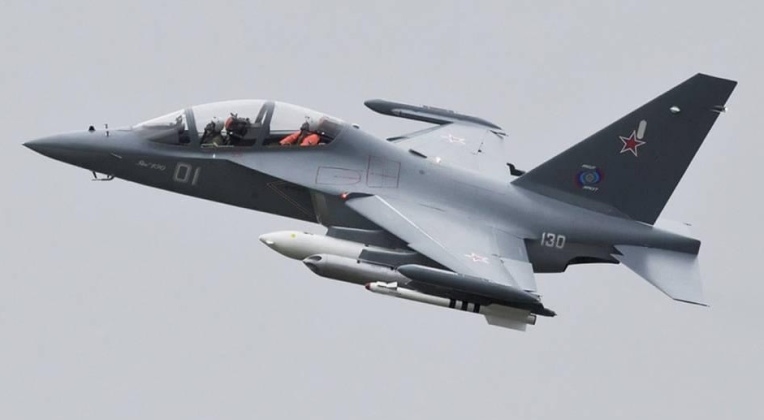
The Iranian Air Force has deployed Yak-130 advanced jet trainer aircraft received from Russia in September 2023 to participate in air patrol missions over the capital Tehran, equipping them with air-to-air missiles to counter threats from hostile drones. The aircraft were seen conducting patrols alongside MiG-29A fighters, which have for decades been based around Tehran for air defence duties.
Although the Yak-130 is by far the most modern and sophisticated fighter type in Iranian service, it was not designed for high intensity air-to-air operations, and is only capable of engaging targets within visual ranges. Nevertheless, its visual range capabilities far exceed those of other Iranian fighter types, and of most Israeli fighter types, due to the integration of helmet mounted sights and R-73 air-to-air missiles, which allow for high off boresight targeting, meaning pilots can engage targets at extreme angles without pointing the fighters’ noses at them.
Available reports and footage indicates that U.S. and Israeli fighters have refrained from launching penetration strikes into Iran, and are instead primarily launching long range strikes using cruise, ballistic and anti-radiation missiles, such as the respective Delilah, Rampage, and AGM-88 HARM. Unmanned aircraft operating in Iranian airspace have suffered heavy losses, which appear to have primarily been caused by ground-based infrared guided air defence systems which engage targets without emitting radar signatures, and thus cannot be detected and neutralised from the air as easily. The Iranian Air Defence Forces have also made extensive use of decoy air defence launchers to deplete adversary resources. With its airspace still relatively well defended, Iranian aircraft like Yak-130 and MiG-29 can be used for anti-drone duties with little risk of being engaged by more capable fighter types.
The Yak-130 is the only new type of combat jet which the Iranian Air Force has received in the last 35 years, with the decision to purchase the aircraft thought to have been motivated by a perceived need to prepare pilots to operate new Su-35 fighters, which were reportedly scheduled to begin deliveries later in 2026. Statements by Russian officials in early February that a contract had been signed for the export of the Su-57 fifth generation fighter to a country in the Middle East also fuelled speculation that Iran was the intended client, with the Yak-130 having also been designed to train pilots for the newer aircraft. The Yak-130 retains a formidable combat capability alongside its role as a trainer, and although suffering from a low climb rate, mediocre manoeuvrability, a low operational altitude and a subsonic maximum speed, its avionics, sensors and access to a range of advanced munitions partly compensate for this.