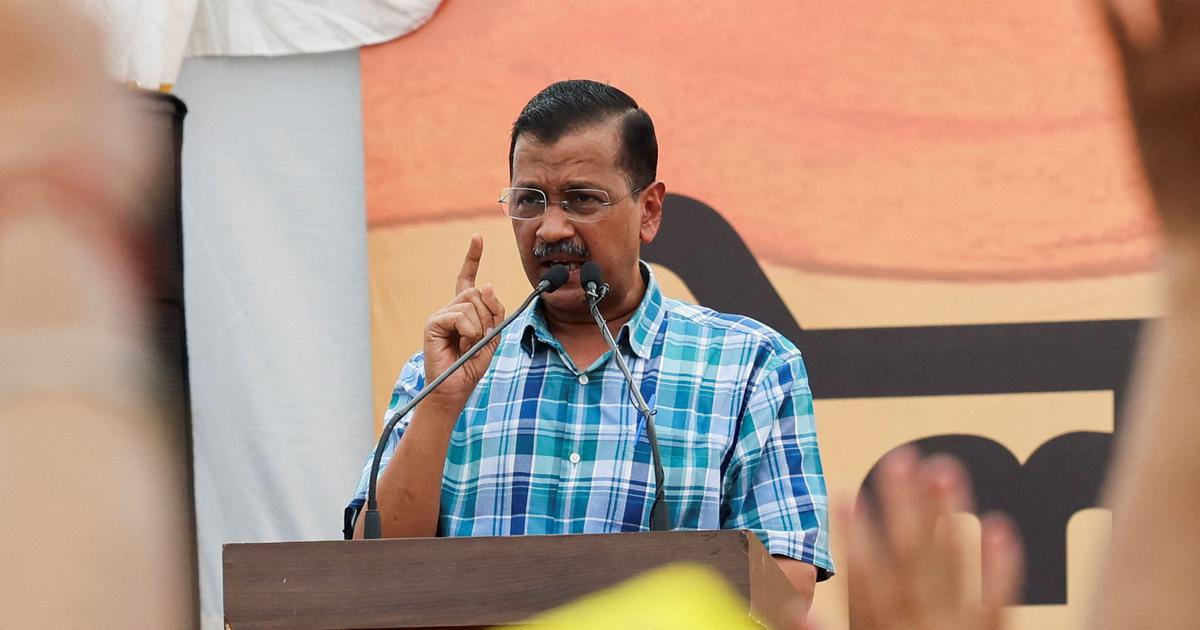
In a dramatic turn of events, Arvind Kejriwal, head of the Aam Aadmi Party (AAP), raised serious concerns regarding the fairness of judicial proceedings in the liquor policy case, during a hearing at the Delhi High Court on Monday. Kejriwal’s remarks came as he sought the recusal of Justice Swarana Kanta Sharma from the case, citing her previous orders and conduct outside the courtroom as reasons for his apprehensions.
Kejriwal appeared before the bench to personally address what he described as a disturbing trend in the court’s decisions related to the Enforcement Directorate (ED) and the Central Bureau of Investigation (CBI), both of which are actively involved in the prosecution of the liquor policy case. He asserted that Justice Sharma has repeatedly favored the arguments presented by these central investigative agencies, creating a perception of bias in the proceedings.
During the hearing, the former Delhi Chief Minister highlighted what he termed a “pattern” in the court’s rulings, claiming that the judge has consistently endorsed every petition put forward by the ED and CBI. He elaborated that this recurring endorsement has transformed the petitions into de facto judgments, fueling his concerns about the judicial process being compromised. Kejriwal’s allegations indicate a growing unease not only about the judicial independence but also about the integrity of the legal proceedings against him.
Adding to his concerns, Kejriwal pointed out the swift pace at which the case is being handled, noting that such rapid proceedings are unprecedented in cases involving prominent political figures. He contrasted this urgency with the slower pace observed in other politically sensitive matters, which he believes reflects an underlying bias against him and his party. The AAP leader also referred to Justice Sharma’s participation in events perceived as politically charged, suggesting that this could further cloud her impartiality.
This situation unfolds against a backdrop of intensified scrutiny surrounding the Delhi government’s liquor policy, which is under investigation as part of a larger political narrative involving allegations of corruption. Kejriwal’s call for Justice Sharma to step aside from the case is not merely a legal maneuver but a strategic gesture aimed at preserving the integrity of the trial and ensuring public confidence in the judicial system.
As the political landscape in India continues to heat up, Kejriwal’s apprehensions resonate with a broader audience concerned about the fairness of legal frameworks in politically charged cases. This incident raises critical questions about judicial accountability and the separation of powers in India’s democracy. With the AAP facing fierce opposition from various political quarters, the outcome of this case and its implications may have long-lasting effects on the party and its leadership.