Koli Fishermen in Mumbai Face Existential Threat as 45,000 Mangroves Are Cleared for Coastal Development
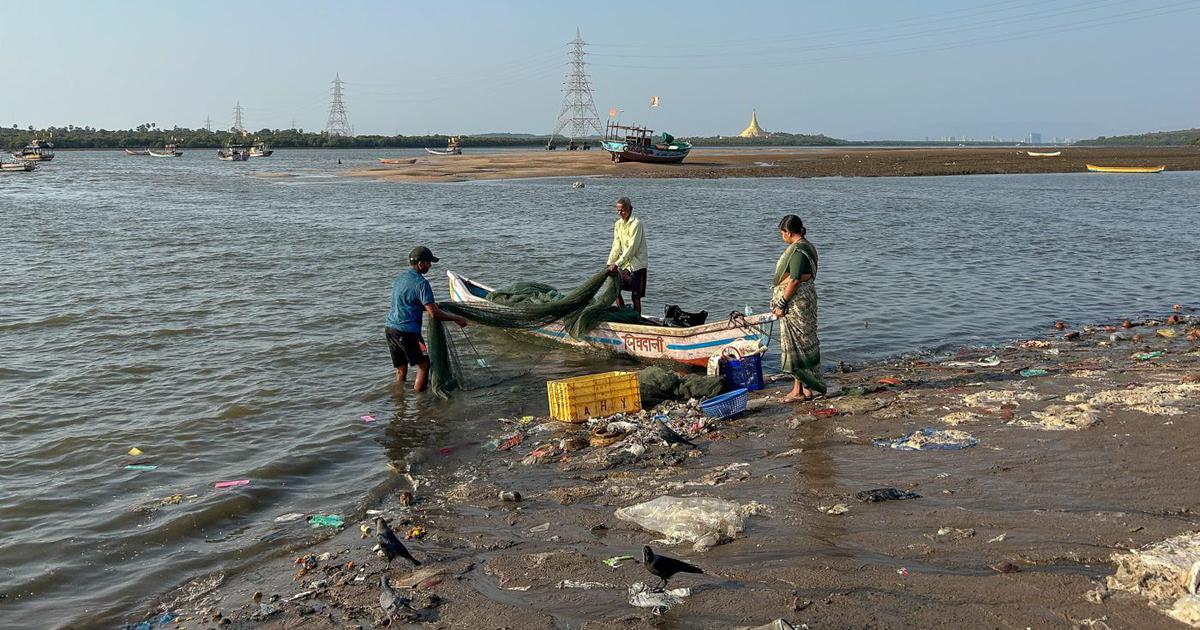
In the early hours of the morning, the gentle hum of small fishing boats begins to fill the creeks along Mumbai’s sprawling coastline. By mid-morning, the fruits of their labor—fresh fish—are sorted, packed, and dispatched to numerous markets scattered throughout the city. This age-old routine has been meticulously upheld by the Indigenous Koli fishing community for generations, embodying not just a livelihood, but a cultural heritage steeped in the rhythms of the sea.
These fishermen rely heavily on the nearby mangrove forests, known locally as kaandalvan, teewar, and khaarphuti, which play a vital role in sustaining their way of life. Acting as a natural barrier against floods, these ecosystems mitigate tidal forces, stabilize coastlines, absorb carbon emissions, and provide a crucial habitat for the fish populations that are integral to the Koli community’s existence. However, this delicate balance is under threat from a new infrastructural initiative—a proposed 26-kilometer coastal road that will stretch from the affluent Versova area to Bhayandar, a suburban locality.
The implications of this development are dire for the Koli community, particularly for fishermen like Sanjay Bhandari, who has dedicated his life to this trade. “On a good day, I make around Rs 1,500 to Rs 2,000 by fishing year-round,” says the 50-year-old from Charkop, a suburb that lies in the planned route of the new road. His voice trembles with concern as he adds, “If this coastal road goes ahead, I fear my income will vanish completely.” Such sentiments reflect the anxiety shared by many in the community, who view the mangroves not just as trees, but as the backbone of their survival.
In a controversial ruling earlier this year, India’s Supreme Court upheld a decision from the Mumbai High Court permitting the removal of approximately 46,000 mangrove trees to facilitate this coastal road project. The Brihanmumbai Municipal Corporation, the city’s planning authority, has been tasked with overseeing the development, raising alarms about the potential ecological and social ramifications. Critics argue that the destruction of mangroves will lead to increased vulnerability to flooding, loss of biodiversity, and a disruption of the local fishing economy.
The Koli community, rich in tradition and irreplaceable knowledge of the coastal ecosystem, fears that their cultural identity will be irreparably damaged by this development. Fishing is not merely a job for them; it is intertwined with their history, values, and way of life. As infrastructural projects prioritize urban development over environmental conservation, the stakes couldn’t be higher for communities like the Koli. They stand at a crossroads, grappling with the potential loss of not only their livelihoods but also the essence of who they are.