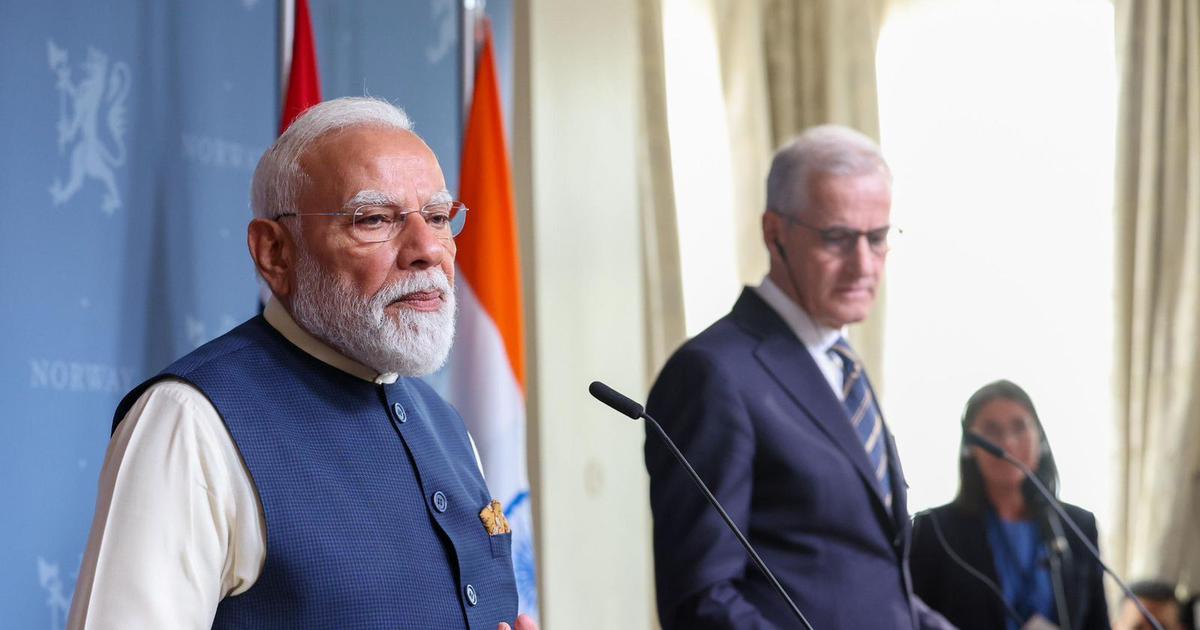
The recent interaction between Indian Prime Minister Narendra Modi and Norwegian journalist Helle Lyng Svendsen has sparked a significant conversation regarding press freedom and the role of journalism in democratic societies. The incident occurred during a joint press briefing in Oslo, where Modi was wrapping up his address with Norway’s Prime Minister, marking one of the many stops on his multi-nation tour.
As Modi stepped away from the podium, Svendsen raised her voice, asking, “Prime Minister Modi, why don’t you take some questions from the freest press in the world?” The reluctance of Modi to engage with this inquiry, among others, has drawn attention to his administration’s general avoidance of press conferences and open dialogue with journalists.
Svendsen, a correspondent for the Oslo-based newspaper Dagsavisen, took to social media to share her thoughts after Modi departed without responding to her question. She remarked, “I was not anticipating that he would address my inquiry. Norway ranks first on the World Press Freedom Index, while India stands at a concerning 157th, sharing the stage with places like Palestine, the UAE, and Cuba. It is crucial for us to question those in power, especially when we collaborate with them.” Her remarks highlight the stark contrast between the press freedom enjoyed in Norway and the struggles faced by journalists in India.
This incident has ignited discussions among various stakeholders, including political analysts, media professionals, and the general public, regarding the state of press freedom in India. Advocates argue that an effective democracy relies heavily on a vibrant and free press that can hold power to account. Critics of Modi’s government often point to increasing restrictions on media, where dissenting voices face challenges such as harassment and censorship. The Prime Minister’s avoidance of direct questions from the press raises concerns about transparency and accountability in governance.
Supporters of the Bharatiya Janata Party (BJP) have responded vigorously on social media, defending Modi’s approach while simultaneously dismissing Svendsen’s inquiry as an attempt to undermine India’s sovereignty and reputation. The polarized reactions further reflect the complexities surrounding the relationship between the government and the media in the current political climate.
This incident serves as a reminder of the vital role that freedom of the press plays in a democratic society. As India continues to grapple with issues related to media freedom, the dialogue around this incident may pave the way for a broader discussion on the importance of ensuring that journalists can operate without fear of reprisal. It raises pertinent questions: How can India enhance its standing on the World Press Freedom Index? What measures should be implemented to protect journalistic integrity and ensure that the media can serve as a watchdog of democracy?