Kathmandu, March 7, 2026:
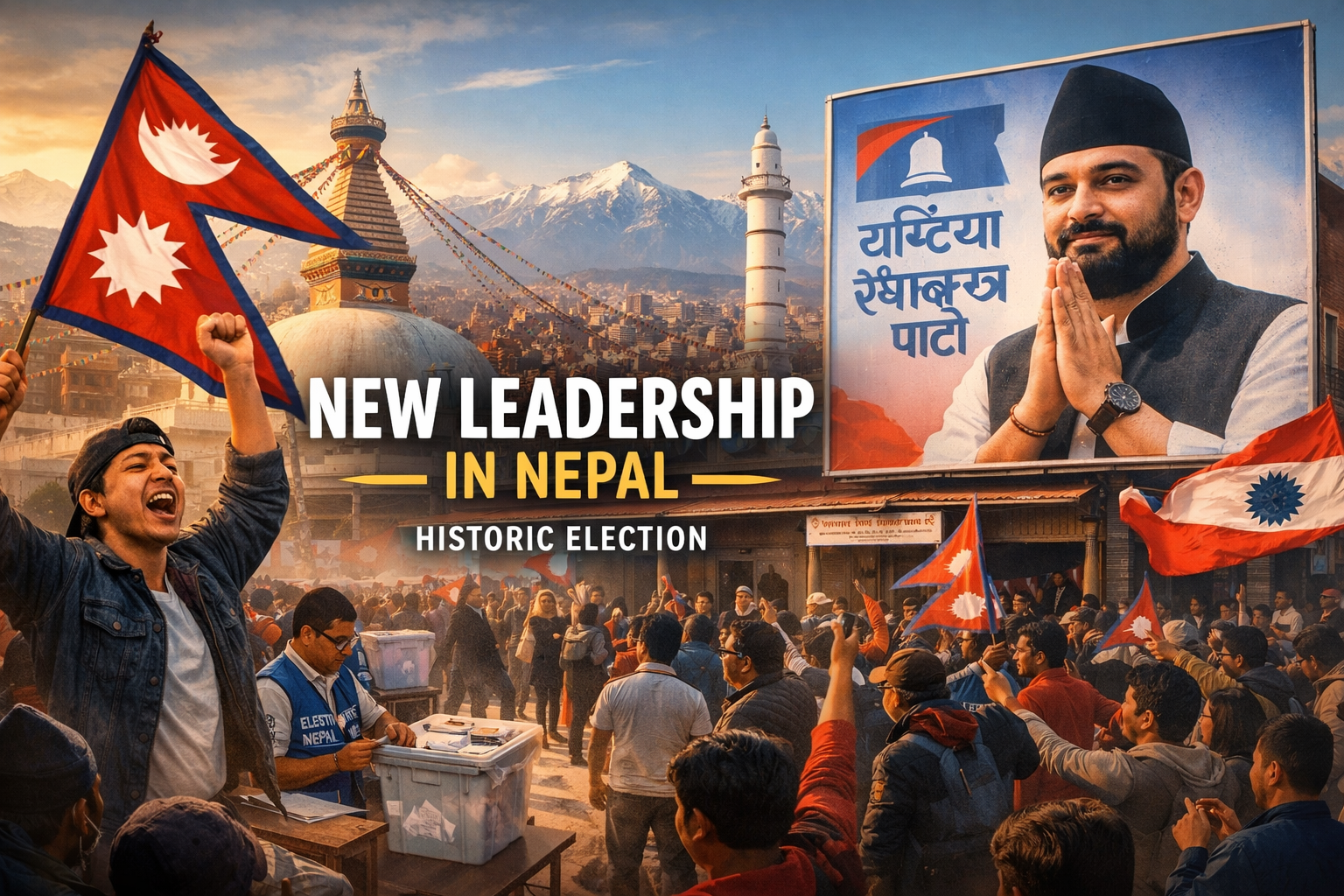
Voters in Nepal have signaled a major political shift as early trends from the country’s latest parliamentary election show growing support for new and younger leaders. The election is widely viewed as a turning point in Nepal’s political landscape following months of public unrest and demands for reform.
The polls come after the dramatic 2025 youth-led protests that forced the resignation of the previous government and sparked calls for a new political direction. Millions of voters across the Himalayan nation turned out to participate in what analysts describe as one of the most important elections in recent years.
Rise of a New Political Force
Early counting suggests that the Rastriya Swatantra Party (RSP) is performing strongly in several constituencies. The party has gained popularity, particularly among young voters seeking change in governance and transparency.
The movement is closely associated with Balendra Shah, the popular mayor of Kathmandu, who rose to prominence as a symbol of youth-driven politics and anti-corruption campaigns. His leadership has energized many first-time voters and urban youth.
Competition From Established Parties
Despite the rise of new political forces, traditional parties remain major contenders. The long-established Nepali Congress and the Communist Party of Nepal (Unified Marxist–Leninist) continue to hold strong support bases across the country.
Former Prime Minister K. P. Sharma Oli and other senior leaders are still influential in the political arena, making the election a closely watched contest between experienced leadership and emerging political figures.
Millions Cast Votes
According to election officials, around 19 million eligible voters participated in the election to choose representatives for Nepal’s 275-member House of Representatives. Of these seats, 165 members are elected directly, while 110 are selected through proportional representation, ensuring representation for smaller parties and diverse communities.
Voting was reported to be largely peaceful across most regions, though vote counting in remote mountainous areas may take additional time.
A Generational Change in Politics
Political analysts believe the election reflects a broader generational change in Nepal’s politics. Young voters are increasingly demanding transparency, economic opportunities, and an end to years of political instability.
If the current trends continue, the results could mark the beginning of a new era in Nepal’s democratic system, with a stronger presence of reform-oriented leaders in the national parliament.
What Happens Next
Final results are expected in the coming days once all ballots are counted. The party or coalition that secures a majority in parliament will form the next government, shaping Nepal’s political and economic direction for the coming years.
For many citizens, the election represents not only a political contest but also a chance to rebuild trust in democratic institutions and usher in a new chapter for the nation.