AI for Bharat
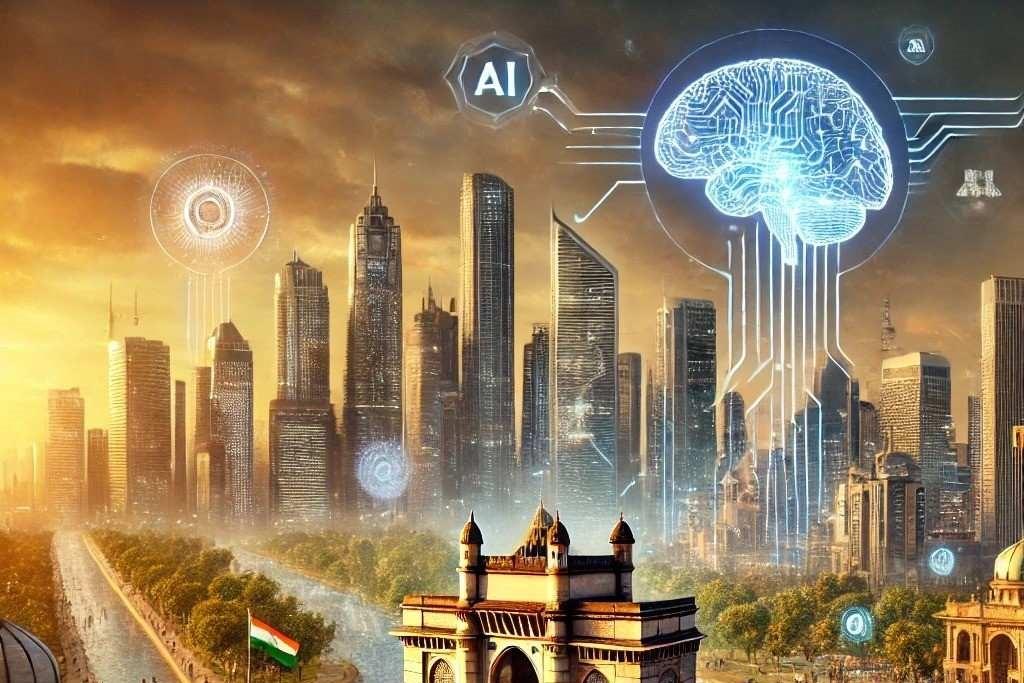
AI for Bharat: Building India's Intelligent Future
By Fernand Louis | Technology Researcher, Author & Solution Architect
India stands at a defining moment in its technological journey. Having established a significant digital ecosystem through digital identity, electronic payments and online public services, the country is now exploring how artificial intelligence can contribute to its next phase of economic and social development.
Artificial intelligence, commonly known as AI, is no longer confined to research laboratories or large technology companies. It is increasingly being applied to healthcare, agriculture, education, financial services, manufacturing and public administration.
For India, the central question is not simply how advanced its AI systems can become, but how effectively these technologies can address the everyday challenges faced by its citizens.
The vision of AI for Bharat should therefore extend beyond technological innovation. It should focus on building an intelligent, inclusive and accountable digital ecosystem in which technology improves access to essential services, supports economic opportunity and strengthens human decision-making.
India's expanding AI ecosystem
India has already taken important steps toward developing its domestic artificial intelligence capabilities.
In March 2024, the Union Cabinet approved the IndiaAI Mission with a budgetary allocation of ₹10,371.92 crore. The mission was designed to expand access to computing infrastructure, support indigenous AI development, improve data availability, encourage startups and promote responsible AI adoption.
Prime Minister of India
+1
In March 2026, the Ministry of Electronics and Information Technology reported that more than 38,000 graphics processing units had been onboarded through the IndiaAI compute portal to provide affordable computing resources to Indian startups and academic institutions.
Press Information Bureau
These initiatives address a fundamental challenge: developing advanced AI systems requires substantial computing power, high-quality data, specialized talent and sustained investment.
However, the availability of technology alone does not guarantee meaningful progress. Its value ultimately depends on whether businesses, researchers, public institutions and ordinary citizens can translate these resources into practical applications.
India's AI development must therefore be measured not only by the number of computing systems deployed or applications developed, but also by their accessibility, reliability and measurable social and economic outcomes.
Transforming public administration
One of the most significant opportunities for artificial intelligence lies in improving the delivery of public services.
Government departments manage enormous volumes of information relating to education, healthcare, infrastructure, agriculture, public finance and social welfare.
AI-based analytical systems could help administrators identify service gaps, detect unusual expenditure patterns, forecast demand and allocate resources more effectively.
For example, predictive analytics could assist healthcare administrators in anticipating medicine requirements, while intelligent document-processing systems could help reduce delays in handling applications and administrative records.
AI could also support the identification of duplicate records and inconsistencies in government databases, subject to appropriate safeguards and human verification.
The objective should not be to replace public officials with automated decision-making systems. Instead, AI should provide reliable information that enables officials to make better-informed decisions.
Any application affecting citizens' rights, eligibility for benefits or access to essential services must incorporate transparency, accountability, human review and accessible grievance mechanisms.
Healthcare: Expanding access to quality services
India's healthcare system faces challenges involving specialist availability, uneven distribution of medical facilities and differences in access between urban and rural communities.
Artificial intelligence offers potential applications in medical imaging, disease screening, hospital resource planning, patient monitoring and clinical decision support.
For instance, AI-assisted diagnostic tools may help healthcare professionals identify patterns in medical images that require further investigation. Predictive systems could also assist hospitals in planning staffing levels, medicine inventories and emergency resources.
In remote areas, AI-enabled telemedicine platforms could support healthcare professionals by improving access to clinical information and facilitating specialist consultations.
However, such applications require careful clinical validation, secure handling of patient information and continuous monitoring.
AI-generated recommendations must support qualified medical professionals rather than substitute for their clinical judgment.
The success of AI in healthcare should be evaluated through improvements in patient outcomes, accessibility, affordability and safety.
Education: Creating opportunities for every learner
India's educational landscape includes students from diverse linguistic, economic and geographical backgrounds.
Artificial intelligence could help address some of the differences in access to educational resources by supporting personalized learning, multilingual content and adaptive assessment systems.
An AI-enabled learning platform, for example, could identify areas where a student requires additional assistance and recommend suitable learning materials.
Teachers could use intelligent tools to develop instructional content, monitor learning progress and provide additional support to students who need it.
The development of AI systems capable of operating in Indian languages is particularly important.
Students should not be excluded from emerging technologies simply because they are more comfortable learning in Tamil, Hindi, Telugu, Bengali or another regional language.
At the same time, educational institutions must address concerns relating to inaccurate AI-generated information, student privacy, unequal digital access and excessive dependence on automated tools.
AI should strengthen the relationship between teachers and students rather than weaken it.
Agriculture: Bringing intelligence to the field
Agriculture remains central to the livelihoods of millions of Indian households.
Farmers regularly face uncertainties relating to rainfall, soil conditions, crop diseases, market prices and the availability of agricultural inputs.
AI-based systems could combine weather observations, satellite imagery, soil information and historical agricultural data to support more informed farming decisions.
Potential applications include early detection of crop stress, irrigation planning, pest identification and agricultural supply-chain management.
A farmer using a mobile application in a regional language could potentially receive information about weather risks, crop health or suitable agricultural practices.
However, the usefulness of such systems depends on the accuracy of local data, affordability of access and the availability of reliable agricultural extension services.
Technology must be adapted to the realities of small and marginal farmers rather than designed exclusively for large agricultural enterprises.
Strengthening India's digital economy
India's experience with digital public infrastructure provides an important foundation for future technological development.
According to the National Payments Corporation of India, the Unified Payments Interface processed approximately 24.51 billion transactions during August 2026, with a total transaction value of about ₹29.82 lakh crore.
NPCI
This demonstrates the scale at which digital services can operate when supported by accessible infrastructure and widespread participation.
Artificial intelligence could build upon this ecosystem by supporting fraud detection, financial risk analysis, customer assistance and improved business operations.
For micro, small and medium enterprises, AI tools could assist with inventory management, demand forecasting, customer communication and operational planning.
Manufacturing companies could use intelligent systems to identify equipment failures, improve quality control and reduce material wastage.
However, AI-driven financial decisions require particular care. Automated credit assessments, fraud alerts and customer-risk classifications must be designed to minimize discrimination, protect personal information and provide meaningful opportunities for review.
The goal should be to expand economic participation without creating new forms of digital exclusion.
Employment and the changing workforce
The growth of artificial intelligence will also influence the nature of employment.
Some routine tasks may become increasingly automated, while new responsibilities may emerge in software development, data management, cybersecurity, AI evaluation and technology-enabled services.
The impact will differ across industries, occupations and skill levels.
India therefore needs sustained investment in digital literacy, vocational education, professional reskilling and advanced technical training.
Educational institutions, employers and technology organizations should collaborate to prepare workers for the changing requirements of the labour market.
Particular attention should be given to young graduates, workers in smaller cities and individuals whose existing occupations may be affected by automation.
The objective should be to enable workers to participate in technological change rather than leave them to manage its consequences without adequate support.
Responsible AI: Building trust alongside innovation
The expansion of artificial intelligence raises important questions concerning privacy, cybersecurity, algorithmic bias, transparency and accountability.
In November 2025, the Ministry of Electronics and Information Technology unveiled India's AI Governance Guidelines, establishing a framework intended to support safe, inclusive and responsible AI development and adoption.
Press Information Bureau
+1
Internationally, UNESCO's Recommendation on the Ethics of Artificial Intelligence emphasizes human rights, fairness, transparency, privacy and human oversight.
UNESCO
+1
These principles are especially relevant when AI systems are used in areas involving sensitive personal information or decisions that directly affect people's lives.
Organizations deploying AI should establish clear responsibilities for data protection, system testing, error correction and independent oversight where appropriate.
Citizens should also have understandable explanations of how automated systems influence consequential decisions and practical ways to challenge errors.
Public trust cannot be established through technological sophistication alone. It must be earned through reliable performance, responsible governance and meaningful accountability.
Building an intelligent future for every Indian
India's AI ambitions will be shaped by the choices made in research, education, infrastructure development, institutional capacity and responsible technology deployment.
An effective national AI ecosystem must accommodate the country's linguistic diversity, regional economic differences and varying levels of digital access.
It must also create opportunities for universities, startups, public institutions, established businesses and independent researchers to contribute to technological innovation.
The development of artificial intelligence should not be viewed solely as a competition to produce more advanced algorithms.
Its broader purpose should be to help address practical challenges: improving healthcare access, strengthening education, supporting farmers, increasing business productivity and making public services more responsive.
The measure of progress will be whether these technologies deliver demonstrable improvements in people's lives while preserving human dignity, privacy and accountability.
India's intelligent future will not be defined by machines replacing human capabilities, but by the ability of people and institutions to use technology responsibly and effectively.
AI for Bharat must ultimately be about building technology that works for every Indian.