ARUNACHAL PRADESH ON HIGH ALERT AS CENTRE RUSHES RAF TO PASIGHAT
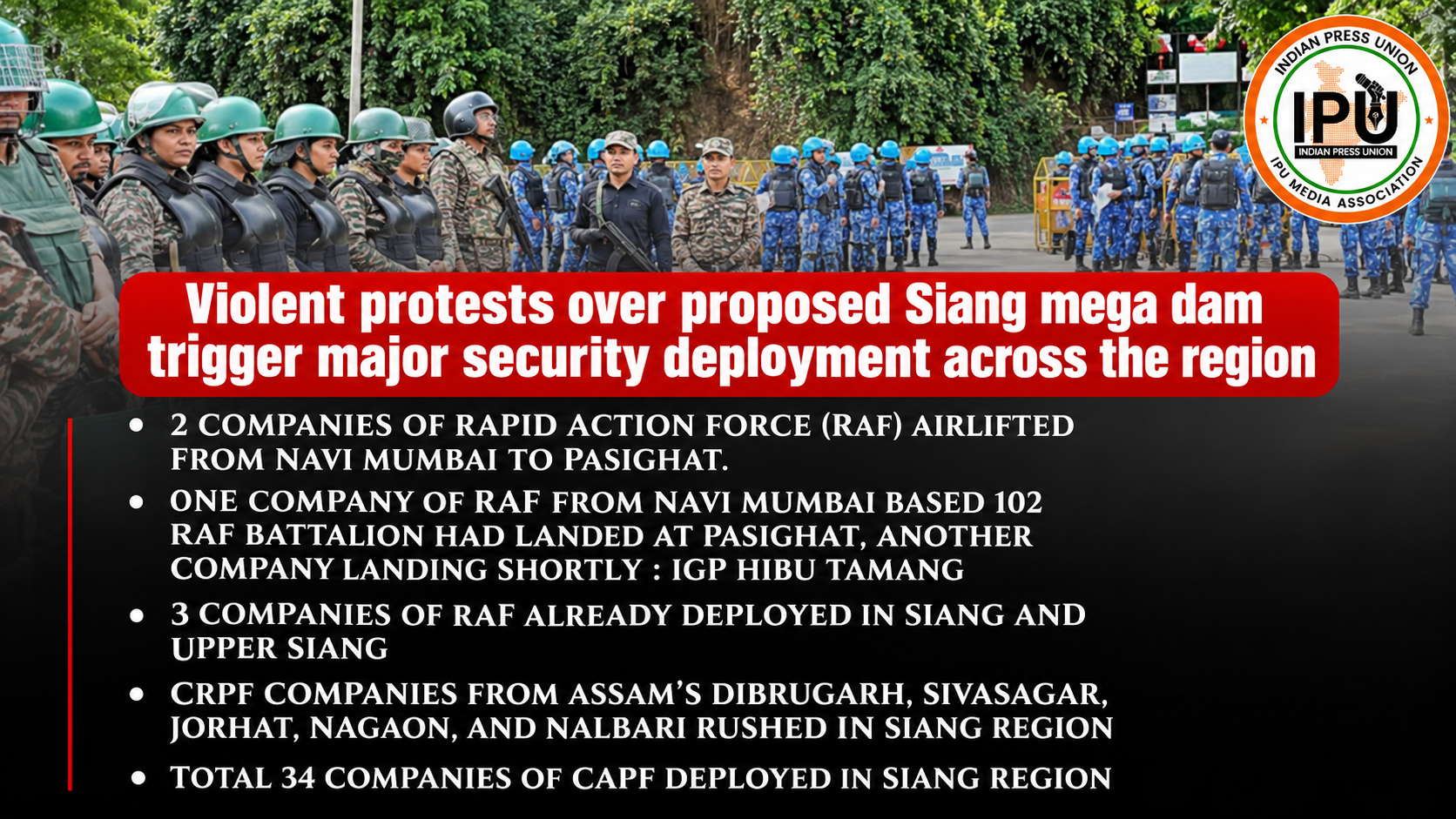
Violence in Pasighat: RAF Deployed Amid Protests Over Siang Project
PASIGHAT, ARUNACHAL PRADESH | October 25, 2026
Security has been strengthened in Arunachal Pradesh following violent protests in Pasighat over the proposed 11,200-megawatt Siang Upper Multipurpose Project. The Centre has dispatched two companies of the Central Reserve Police Force's (CRPF) Rapid Action Force (RAF) to the region to help maintain public order and prevent further unrest.
According to officials cited in media reports, the two RAF companies comprise approximately 250 personnel. The Ministry of Home Affairs directed that the personnel be airlifted from Navi Mumbai aboard an Indian Air Force transport aircraft, with deployment planned for October 25.
The deployment follows violence that erupted in East Siang district on the night of October 23, leaving several police and security personnel injured and causing damage to public infrastructure.
Violence Reported in Pasighat
According to police officials cited in published reports, protesters allegedly set fire to an office of the National Hydroelectric Power Corporation (NHPC) and a police station. The residences of three political leaders, including the state BJP president, were also reportedly vandalised.
The incidents occurred after a 12-hour bandh called by organisations opposing the proposed project. Although the shutdown was reported to have remained largely peaceful in several areas, violence broke out in Pasighat after it ended and continued into the early hours of October 24.
Authorities have increased security in the affected areas. Reports have also described injuries among police personnel and damage to vehicles and other property during the unrest.
Additional Security Across the Siang Region
CRPF units were already operating in parts of the affected region before the additional RAF companies were ordered to move in. The new deployment is intended to strengthen the security response following the clashes.
Claims circulating on social media about additional RAF companies and the movement of CRPF personnel from several districts of Assam should be treated cautiously unless independently confirmed by officials or reliable reporting.
Why Are Residents Opposing the Project?
At the centre of the unrest is the proposed Siang Upper Multipurpose Project, a major hydropower and water-storage initiative planned for the Siang river basin.
Sections of the local population and indigenous organisations have expressed concerns about the project's possible effects on ancestral land, agricultural livelihoods, the environment and the future of communities living along the river. Potential displacement and the long-term ecological consequences are among the issues driving opposition.
The project also has a strategic dimension. The Indian government has highlighted concerns about China's upstream hydropower development and the importance of water storage and management in the Siang basin.
However, the project's potential benefits and consequences remain subjects of public debate. Addressing local concerns through transparent communication and meaningful consultation will be important as the proposal progresses.
Chief Minister Appeals for Peace
Arunachal Pradesh Chief Minister Pema Khandu has condemned the violence and appealed to residents to maintain peace. He has reiterated that peaceful protest is a democratic right but that demonstrations must remain within the law and should not result in violence or damage to property.
The state government has also indicated its willingness to engage with organisations and community representatives who have questions or concerns about the project.
Balancing Public Order and Community Concerns
The escalation in Pasighat highlights the challenge of maintaining public order while addressing concerns about a major infrastructure proposal. The deployment of specialised anti-riot forces may help authorities prevent further violence, but security measures alone are unlikely to resolve the underlying disagreement.
For residents of the Siang valley, the debate extends beyond law and order. It concerns land rights, livelihoods, environmental protection and the future of communities that have lived along the river for generations.
The immediate priority is to restore peace and prevent further injuries or property damage. A lasting resolution will also depend on transparent information, credible environmental and social assessments, and constructive engagement with affected communities.