Civic Sense-A National Responsibility
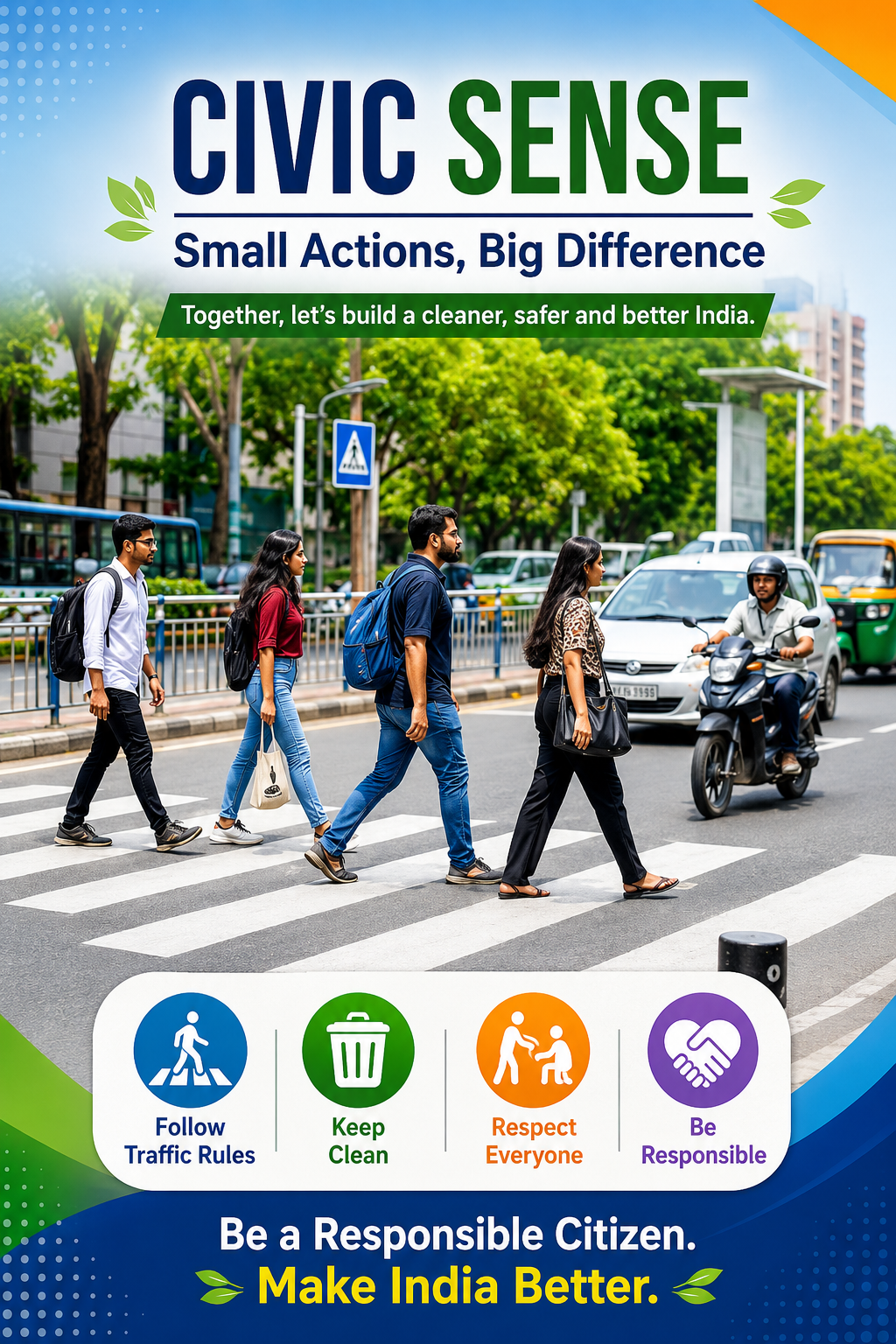
Small Changes in Daily Life Can Make a Big Difference to Society
We travel daily from one place to another for personal or official work, and sometimes roam around cities for leisure and entertainment. We enjoy our activities, but do we always give priority to our social responsibilities? Often, we tend to prioritise our personal preferences and convenience.
However, if we make just two positive changes in our daily lives, we can contribute more to society than we may imagine:
- Follow traffic rules strictly.
- Keep our surroundings clean.
Traffic Rules
- Follow lane discipline: Use lanes according to the road markings and traffic regulations. Keep to the appropriate lane for your speed and vehicle type, and use the overtaking lane only when permitted and safe.
- Obey traffic signals: Do not cross amber or red lights when it is unsafe or prohibited. Stop behind the designated stop line or zebra crossing.
- Avoid zigzag driving: Maintain a steady course and change lanes only when it is safe and permitted.
- Give way and avoid overspeeding: Follow speed limits, maintain a safe distance and give way when required by traffic rules.
- Be patient while driving: Avoid unnecessary honking, aggressive driving and road rage.
- Be a responsible citizen: Follow the directions of traffic authorities and always give way to emergency service vehicles such as ambulances, fire engines and police vehicles.
Positive Effects
- Better traffic discipline can reduce unnecessary delays and make journeys more comfortable.
- Following traffic rules and avoiding unnecessary acceleration can help reduce fuel consumption and expenses.
- Responsible driving can contribute to safer roads and reduce the risk of accidents.
Keep Our Surroundings Clean
We must also take responsibility for keeping our surroundings clean. Waste should be disposed of in appropriate bins or through the waste-segregation system followed by the local municipal authority.
Waste segregation helps separate recyclable and non-recyclable materials. Paper, plastic, glass and metal should be recycled wherever appropriate. Proper recycling can help reduce pollution and conserve natural resources.
We should also avoid single-use plastics whenever possible and choose eco-friendly alternatives. Reusable paper or cloth bags can be preferred where suitable.
A simple initiative can begin with a small group of households in a neighbourhood. For example, five nearby families can work together to promote cleanliness and waste segregation. They can prepare a simple checklist, divide responsibilities and rotate duties among participating households on a weekly basis.
Small and consistent efforts can create a positive change in our neighbourhoods. When individuals take responsibility for their actions and work together, they can contribute to a cleaner, safer and more responsible society.
Social responsibility begins with us. By following traffic rules and keeping our surroundings clean, we can take two simple but meaningful steps towards building a better society.