Delhi High Court Hears Plea for Urgent Medical Intervention as Sonam Wangchuk's Hunger Strike Enters 18th Day
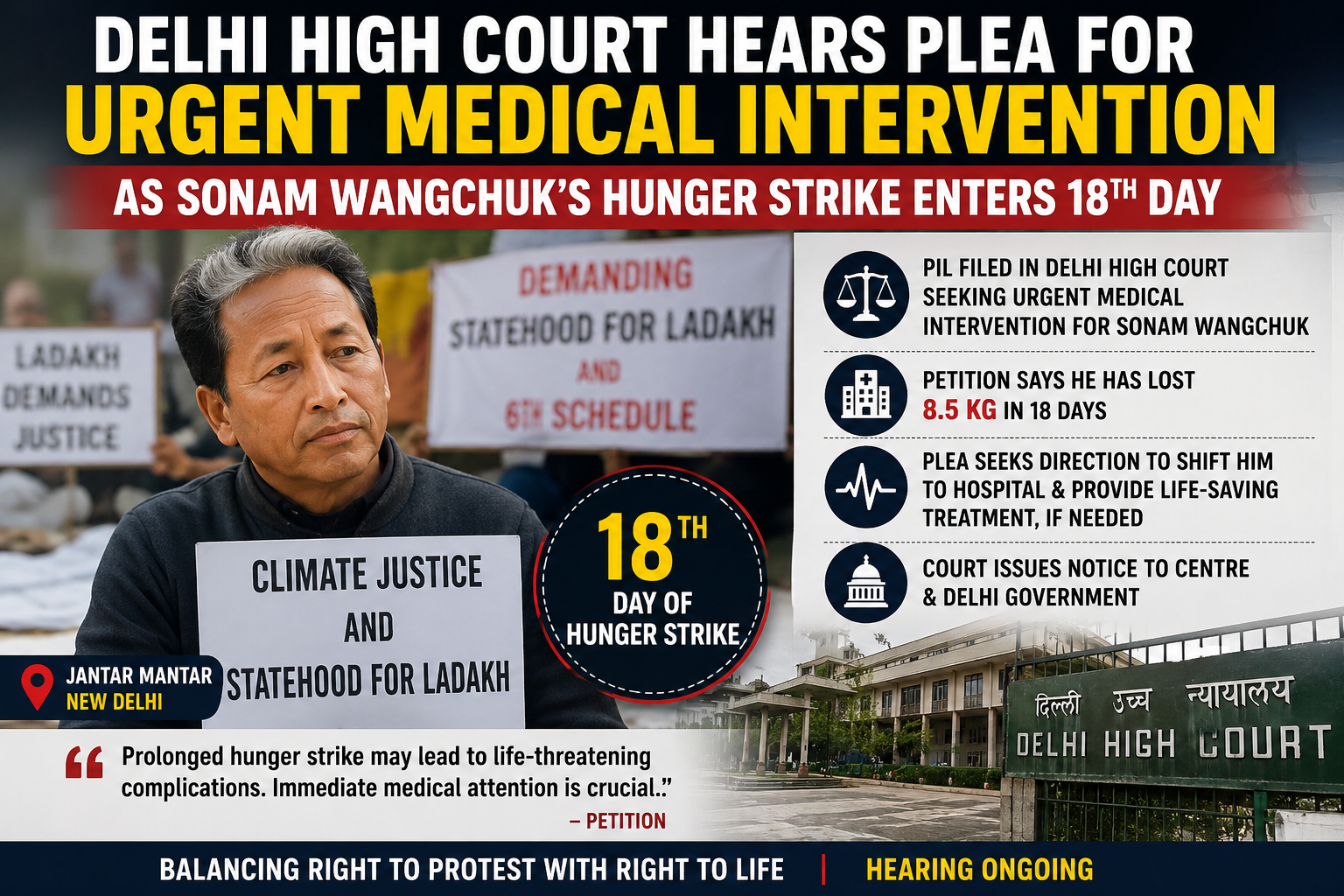
New Delhi, July 15: The Delhi High Court has taken up a Public Interest Litigation (PIL) seeking urgent medical intervention for renowned climate activist and education reformer Sonam Wangchuk, whose indefinite hunger strike has entered its 18th day. The petition raises serious concerns about his deteriorating health and urges authorities to take immediate steps to protect his life.
According to the PIL, Wangchuk has reportedly lost around 8.5 kilograms since beginning his fast at Delhi's Jantar Mantar. Medical concerns highlighted in the petition suggest that his condition has become critical, with warnings that prolonged fasting could result in life-threatening complications if immediate treatment is not provided.
The petition requests the court to direct the Central Government and the Delhi Government to shift Wangchuk to a government hospital for continuous medical supervision. It further seeks permission for doctors to administer a medically supervised liquid diet or other life-saving treatment if they determine that his condition requires urgent intervention.
During the hearing, the Delhi High Court issued notices to both the Centre and the Delhi Government, asking them to respond to the concerns raised in the PIL and explain the measures taken to monitor Wangchuk's health. The court's decision reflects the seriousness of balancing an individual's right to protest with the state's responsibility to preserve life.
Sonam Wangchuk, widely recognized for his work in sustainable development and educational innovation in Ladakh, has remained firm in continuing his fast despite repeated appeals from supporters and public figures to end the protest. Reports indicate that he has refused to discontinue the hunger strike even as his physical condition has worsened.
The hunger strike has attracted widespread national attention, with supporters gathering at Jantar Mantar to express solidarity. Several organizations and activists have also announced peaceful demonstrations and solidarity fasts, urging authorities to address the issues raised by Wangchuk while ensuring his safety and well-being.
Medical experts generally warn that prolonged fasting without adequate nutrition can lead to dehydration, muscle loss, organ damage, electrolyte imbalance, and other potentially life-threatening complications. These risks become significantly higher as the duration of a hunger strike increases, making regular medical monitoring essential.
The legal debate surrounding the case also raises important constitutional questions. While peaceful protest is a fundamental democratic right, courts have often considered whether the government has a duty to intervene when a protester's life is in imminent danger. The PIL argues that preserving life is a constitutional obligation that may require emergency medical action under exceptional circumstances. As the matter proceeds before the Delhi High Court, the government's response and any future directions from the court will likely determine the next course of action regarding Wangchuk's medical care. The case has sparked discussion across the country on the balance between democratic protest, personal autonomy, and the state's responsibility to protect life.
For now, Sonam Wangchuk continues his hunger strike while supporters await the court's next hearing and the government's response. The outcome is expected to have significant implications not only for this protest but also for the broader legal and ethical questions surrounding hunger strikes in India.