Devendra Nath Mahato’s Hunger Strike and Police Action Put Jharkhand’s Student Movement in Spotlight
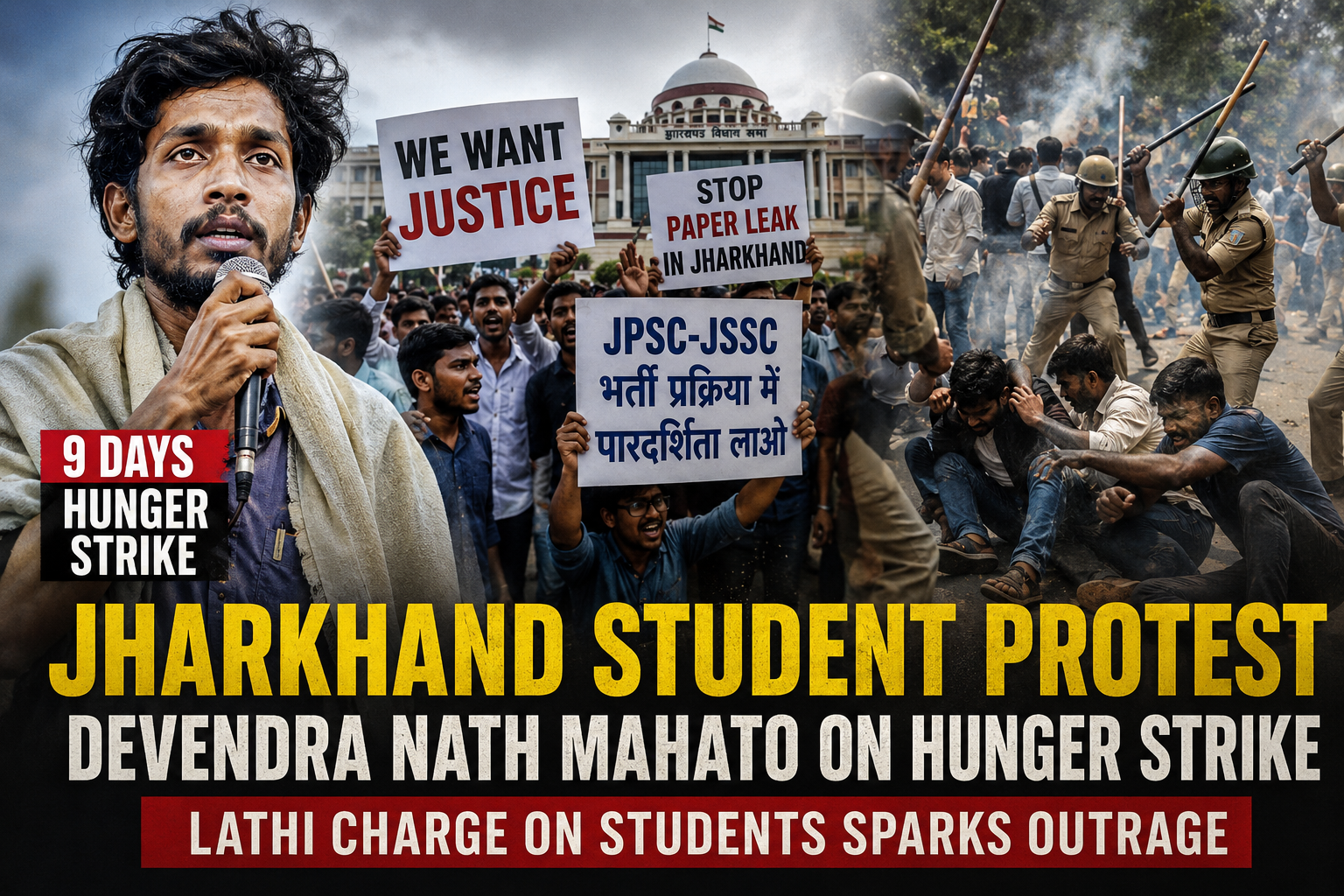
Students demand transparency and accountability in recruitment examinations as protest intensifies in Ranchi
Ranchi, Jharkhand: The ongoing student movement in Jharkhand has intensified, bringing renewed attention to concerns surrounding the state’s recruitment examination system and the treatment of protesters. At the centre of the latest developments is student leader Devendra Nath Mahato, who has been on an indefinite hunger strike while demanding action on issues raised by aspirants concerning the JPSC and JSSC examination processes.
The protest has gained momentum in Ranchi, with students and job aspirants demanding greater transparency, fairness and accountability in the recruitment system. On August 10, Mahato joined a march towards the Jharkhand Legislative Assembly despite his continuing hunger strike. Reports said he arrived by ambulance because of his deteriorating health but remained determined to participate in the demonstration.
The movement has also drawn attention because of clashes between protesters and police. Reports published following the August 10 demonstration said police used lathis to disperse protesting students during the march. The incident has triggered criticism from supporters and others who believe that the concerns of young people should be addressed through dialogue rather than confrontation.
Mahato's protest is connected to broader concerns among students and aspirants regarding recruitment examinations conducted by the Jharkhand Public Service Commission (JPSC) and Jharkhand Staff Selection Commission (JSSC). Protesters have been demanding transparency in the examination and selection process and action over alleged irregularities.
A Hunger Strike That Has Drawn Public Attention
An indefinite hunger strike is a serious form of protest, particularly when it continues for several days. Mahato's decision to continue the fast despite health concerns has become one of the major talking points surrounding the movement.
According to recent reports, his health deteriorated following the August 10 protest, and he was subsequently admitted to hospital. One report said he was placed on oxygen support and that his condition was serious.
The development has increased concern among supporters, who are calling for the authorities to take the students' demands seriously and find a peaceful solution.
The protest is not simply about one individual. For many young people preparing for government examinations, recruitment tests represent years of preparation and hope for stable employment. Any allegation of irregularity, lack of transparency or unfair treatment can therefore have a significant impact on their careers.
Questions Over the Use of Force
The reported lathi charge has once again raised questions about the balance between maintaining public order and protecting the democratic right to peaceful protest.
Police authorities have the responsibility to maintain law and order, particularly during large demonstrations. At the same time, protesters have the right to express their grievances within the limits of the law.
The challenge for any democratic government is to ensure that public order is maintained without unnecessarily escalating tensions.
The latest controversy is particularly significant because Devendra Nath Mahato has previously been associated with student protests in Jharkhand. In December 2024, police used a lathi charge to disperse candidates protesting near the JSSC office in Ranchi, and Mahato, who was leading the demonstration, was detained.
The repeated confrontations between student protesters and authorities demonstrate that concerns surrounding recruitment examinations have not disappeared.
Why Recruitment Examinations Matter
For thousands of young people in Jharkhand, government recruitment examinations are closely connected to their hopes for employment and financial security.
Candidates spend months and sometimes years preparing for competitive examinations. They invest money in coaching, books, accommodation and travel. When allegations of irregularities arise, candidates can feel that their efforts and opportunities are at risk.
This is why students are demanding a recruitment system that is transparent, predictable and fair.
Whether every allegation made by protesters is ultimately proven is a matter for competent authorities and, where necessary, independent investigation. However, the concerns themselves deserve to be heard and examined through an appropriate process.
A Larger Question for Indian Democracy
The developments in Jharkhand have also prompted a broader discussion about the relationship between citizens, students and government institutions.
India has been independent for nearly eight decades. Democracy is not only about elections; it is also about allowing citizens to question authorities, demand accountability and peacefully express disagreement.
Student movements have historically played an important role in Indian public life. Young people are among the most directly affected by decisions concerning education, recruitment, examinations and employment.
When students protest, their concerns should not automatically be viewed as a law-and-order problem. At the same time, protesters also have a responsibility to remain peaceful and respect legal restrictions.
The most constructive path forward is therefore dialogue.
What Happens Next?
The immediate priority is Mahato's health and the safety of the students participating in the movement. With reports of his hospitalization following the August 10 demonstration, pressure is likely to increase on the authorities to respond to the protest.
The government and concerned examination bodies could help reduce tensions by communicating clearly with the protesting students, explaining the steps being taken and addressing legitimate concerns through a transparent process.
An independent review or investigation, where appropriate, could also help establish facts and restore confidence among candidates.
The Jharkhand student movement has now moved beyond a single protest. It has become a wider conversation about examination transparency, employment opportunities, accountability and the right of young people to have their voices heard.
For many observers, the central question is simple: When students raise concerns about their future, will authorities respond with force—or with dialogue and solutions?
As the protest continues, Jharkhand is watching closely. The way the government handles the situation could have consequences not only for the current group of students but also for public confidence in the state's recruitment system.