Dhruv Rathee and the Politics of Influence: When Commentary Risks Becoming a One-Sided Narrative
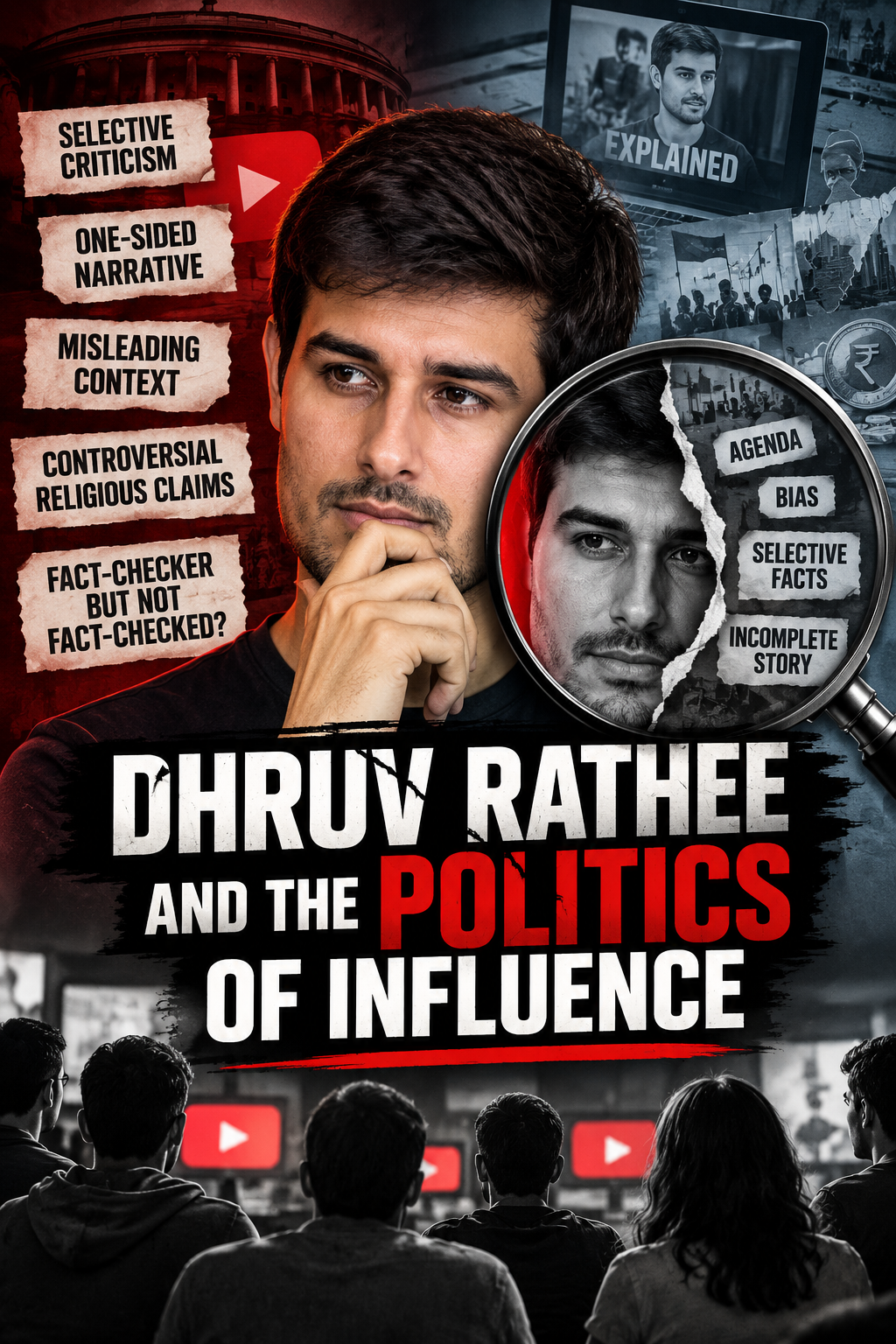
Political Commentators and Public Accountability: Why Media Literacy Matters
In today's digital age, online influence can shape public opinion, political conversations and how audiences understand their country. With that influence comes a responsibility to present evidence accurately, provide relevant context and correct mistakes transparently.
Dhruv Rathee is among India's widely recognised political content creators. His videos explain complex issues, scrutinise those in power and reach large audiences. His work also raises a broader question relevant to all political commentators: how can viewers distinguish documented facts from interpretation and persuasive storytelling?
1. Selective Criticism and Political Context
Questioning the government is an essential part of democratic debate. However, audiences should assess how commentators select topics, present evidence and address counterarguments. Rathee's commentary has frequently examined the Modi government and the BJP, but evaluating whether his analysis is consistent requires comparing specific videos, claims and sources rather than relying on general impressions.
Commentators do not have to divide their criticism equally among political parties. They should, however, make their reasoning and supporting evidence available so viewers can assess their conclusions independently.
2. The Limits of Simplified Explanations
Political explainers can make complicated subjects more accessible. At the same time, economic policy, national security, constitutional questions and international relations often involve competing evidence and different interpretations.
Strong presentation does not automatically establish that a conclusion is correct. Viewers should examine original documents, credible reporting, relevant data and reasonable counterarguments before accepting a political claim.
3. Corrections and Fact-Checking
Accuracy is essential to political commentary. Errors can occur in any form of journalism or digital publishing, but transparent corrections and reliable sourcing help audiences assess credibility.
Rathee maintains a public corrections page listing identified mistakes in videos published from January 2024 onwards. The page demonstrates that errors can occur and that a correction record can provide transparency. It does not, by itself, establish deliberate misinformation or determine the overall accuracy of his work.
The same standards should apply to government-supporting commentators, opposition supporters, television journalists and independent creators. Claims should be supported by evidence, and significant mistakes should be corrected clearly.
4. Religious Commentary and Responsible Interpretation
Political and historical discussions involving religious figures and sacred texts require particular care. In 2026, a video by Rathee concerning whether Hindu deities consumed meat or alcohol prompted a complaint alleging that the content misrepresented religious scriptures and hurt religious sentiments.
According to reporting by The Indian Express, the Delhi Police informed a court in September 2026 that its inquiry was continuing. The report described allegations and procedural developments, not a final judicial finding that the allegations were proven.
Religious history can be examined through scholarship and textual evidence. Creators should distinguish primary-source wording from scholarly interpretation and personal conclusions, provide context for disputed passages and avoid presenting contested interpretations as settled facts. These principles should apply consistently across religions and communities.
Freedom of expression protects the discussion of difficult questions, while responsible commentary requires careful research and openness to scrutiny.
5. The Risks of Personality-Driven News
The Reuters Institute for the Study of Journalism has documented the importance of digital platforms and news creators in India's media environment. Its reporting has also identified Rathee as a prominent creator whose videos address politics and social issues.
Popularity, however, is not a guarantee of accuracy. Nor does criticism of a creator automatically make that criticism valid. Audiences should compare sources, check dates and figures, read original reports and remain willing to reconsider their views when credible evidence changes.
6. Accountability Must Apply to Everyone
Public officials should explain their decisions, and commentators should be prepared to explain the evidence behind their claims. Both should correct significant errors and distinguish established facts from allegations and opinion.
This does not require commentators to support the government or provide identical attention to every political party. It requires evidence-based criticism, relevant context and a willingness to address important counterarguments.
Conclusion: Question the Argument, Not Just the Speaker
Dhruv Rathee's reach illustrates the influence independent digital commentary can have. That influence makes careful scrutiny important, but scrutiny should be based on verifiable claims rather than assumptions about political loyalties or motives.
India needs commentators who question those in power and audiences who evaluate the commentators themselves. Blind trust in governments, opposition leaders, traditional media or online influencers can weaken informed public debate.
The ultimate test of political commentary is whether its claims withstand independent examination. Question the government, the opposition, the media and the online personalities you follow. Public discussion is stronger when evidence—not political allegiance—determines which arguments deserve to be believed.