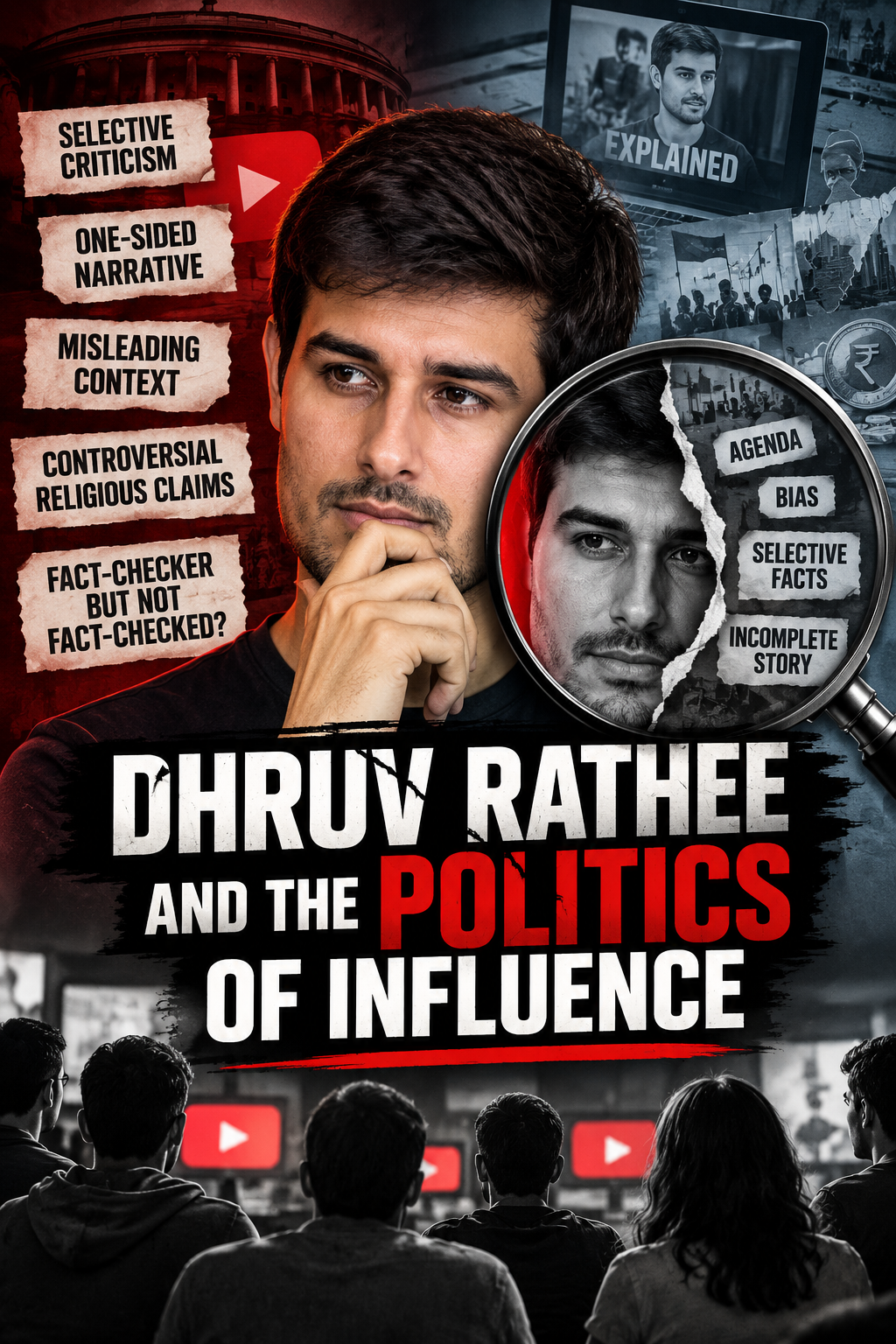
Disagreeing with Dhruv Rathee or the ‘Cockroach Janta Party’ Does Not Make Someone an ‘Andhbhakt’
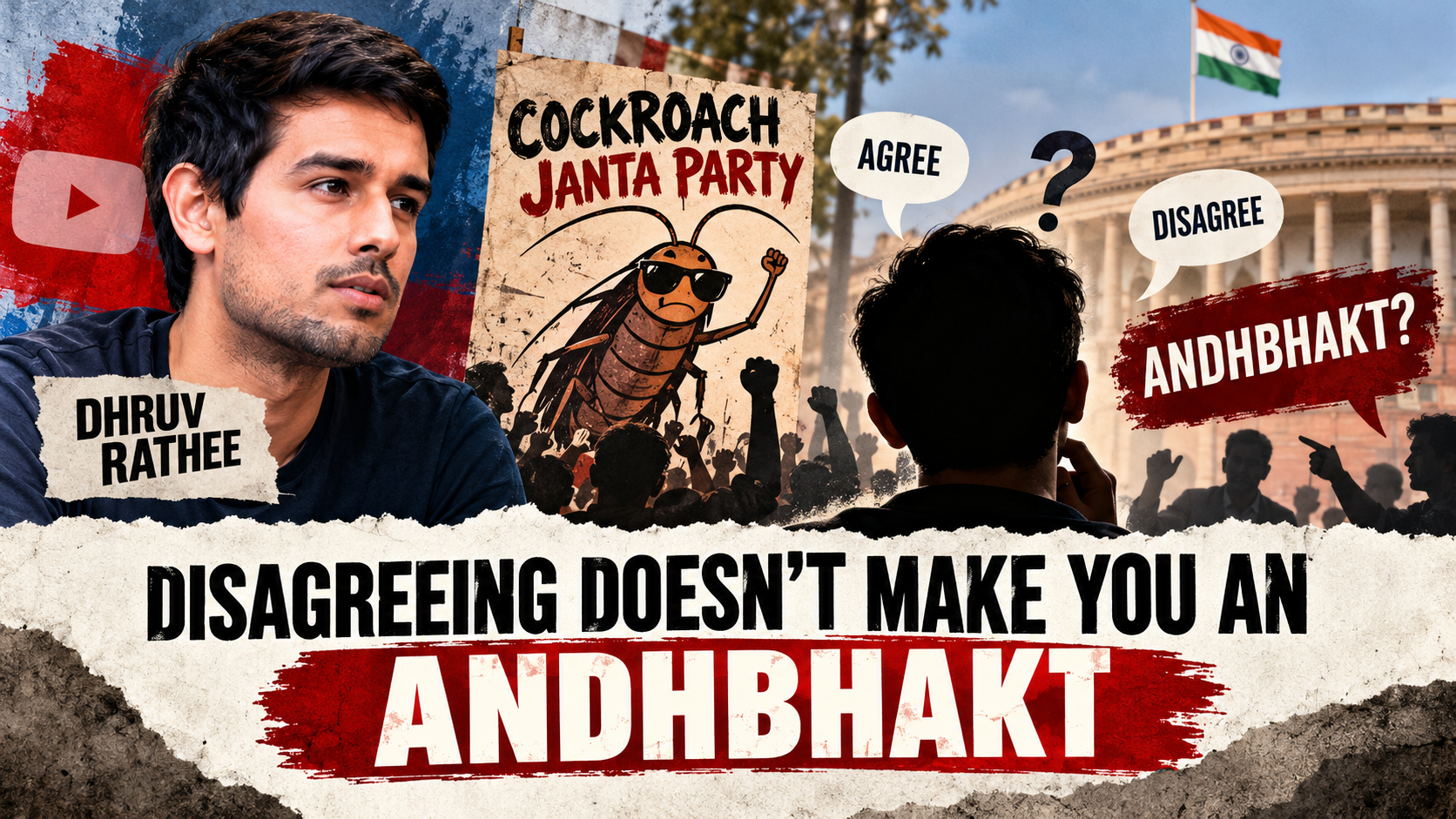
Political Disagreement Is Not Blind Loyalty: Why Evidence Matters in Public Debate
In an increasingly polarised political environment, disagreement is often reduced to labels. People who question a political commentator, challenge a movement or support a particular government policy may be accused of blind loyalty. However, disagreement alone does not establish whether someone is politically independent or biased.
When Political Disagreement Becomes Personal
Social media has expanded opportunities for citizens to debate public policy and question political leaders. At the same time, political discussions can become personal when people judge others by their perceived affiliations instead of examining their arguments.
Supporting one government initiative does not require endorsing every government decision. Similarly, criticising a government does not automatically make every allegation made by its critics accurate. Constructive debate requires consistent standards, credible evidence and a willingness to reconsider one's position.
Political Satire Also Deserves Scrutiny
The Cockroach Janta Party has attracted attention as a satirical political movement. Its messaging touches on public concerns, including unemployment and accountability. Like other political movements and campaigns, its claims and proposals should be examined on their merits.
Satire can draw attention to social and political concerns, but it should not be treated as proof of every claim it makes. Citizens can agree with a movement's stated concerns while questioning its methods, conclusions or public messaging.
Evaluating Dhruv Rathee's Commentary
Dhruv Rathee is a prominent online political commentator whose videos have attracted both support and criticism. His work, like that of other commentators, should be assessed claim by claim.
Viewers should distinguish verifiable facts from interpretation and opinion. Original documents, official data, court records and credible independent reporting can help establish whether a particular claim is supported by evidence.
Rathee's website includes a corrections page listing errors identified in some videos. Such records reinforce the importance of checking claims rather than treating any commentator as infallible. An error in one video, however, does not establish that all of the creator's other claims are incorrect.
What Does Independent Thinking Look Like?
Political independence is better assessed by examining how people evaluate evidence than by asking which leader or commentator they support. Do they question claims made by their own political side? Are they willing to acknowledge mistakes by leaders they admire? Do they apply the same standards to the government and the opposition?
These questions provide a more meaningful basis for evaluating political judgement than labels such as “andhbhakt”. Supporting a policy after considering the available evidence is different from defending a leader regardless of the facts.
Democracy Requires Scrutiny of Every Side
Governments, opposition parties, political movements, journalists, activists and online commentators should all remain open to scrutiny. Public support or ideological alignment should not place any individual or organisation beyond criticism.
At the same time, criticism should be based on verifiable information rather than personal attacks. When political debate becomes a contest of labels, substantive issues such as employment, education, inflation, corruption and electoral transparency can be pushed aside.
Conclusion
Disagreeing with Dhruv Rathee does not automatically make someone an “andhbhakt”. Questioning the Cockroach Janta Party does not automatically establish blind support for the government. Nor does agreeing with either necessarily prove political bias.
Independent thinking means examining evidence, challenging weak arguments, acknowledging inconvenient facts and applying consistent standards—even to the people and ideas one supports. A healthy democracy benefits when citizens can disagree without hostility and debate public issues on the strength of their arguments.