India-China Border Tensions Continue: Is Modi's Government Losing Ground on Its National Security Promises?
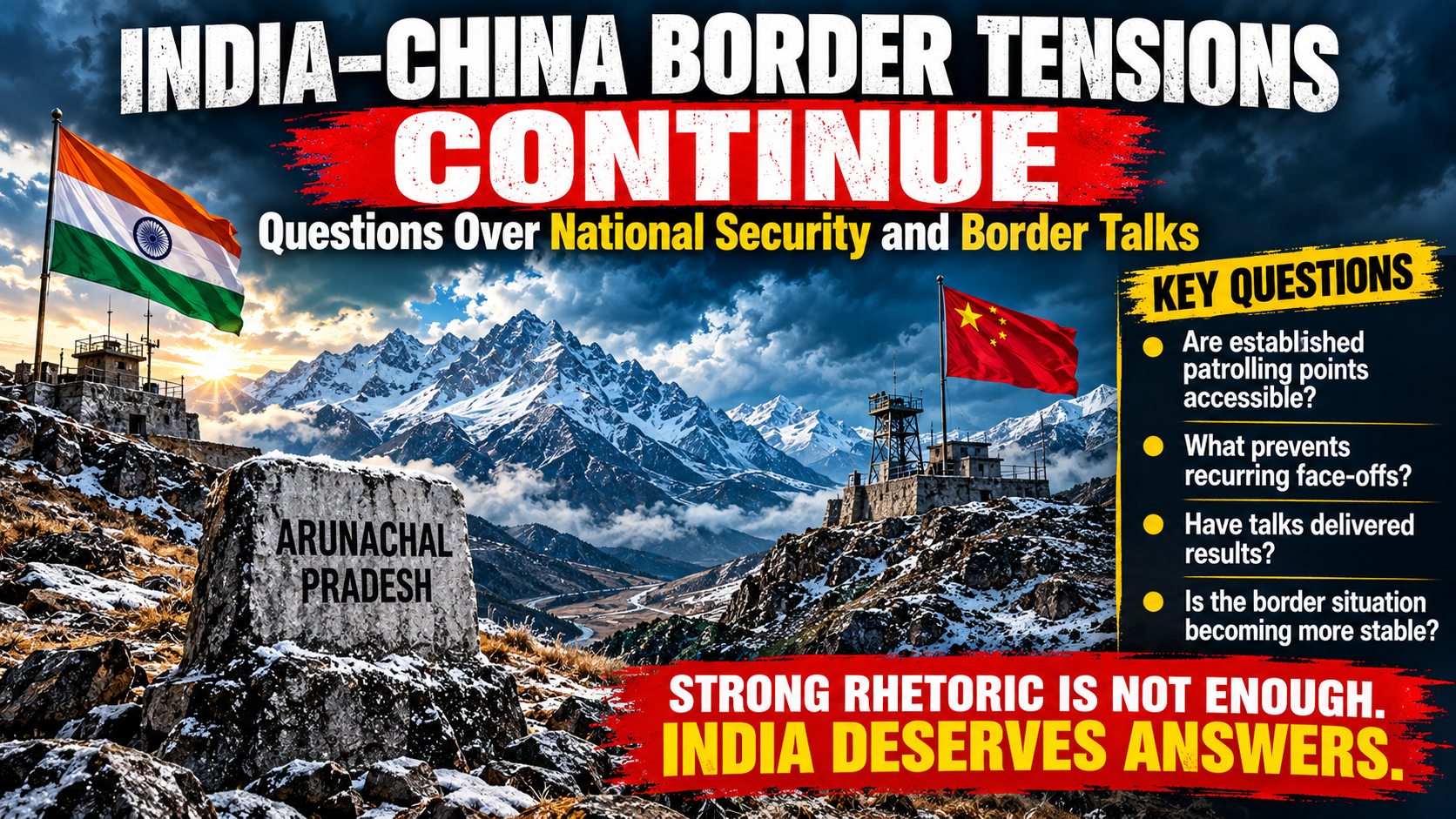
Arunachal Pradesh, October 24, 2026: India's border security has come under renewed attention following reports that Indo-Tibetan Border Police (ITBP) Director General Shatrujeet Singh Kapur referred to face-offs between Indian and Chinese troops at several locations along the Arunachal Pradesh frontier.
The reported remarks have renewed questions about the challenges India faces in maintaining stability along its border with China, despite ongoing diplomatic engagement and efforts to strengthen military preparedness.
While the ITBP chief reportedly did not confirm that confrontations were occurring daily, the remarks indicate that tensions at multiple locations remain a concern.
Border Tensions Persist Despite Diplomatic Efforts
Kapur reportedly made the remarks at an ITBP event in Alwar, Rajasthan, on October 22. He acknowledged confrontations at several locations in Arunachal Pradesh and praised the performance of the force's specialised Shaurya commando units.
Arunachal Pradesh remains a sensitive area along the India-China frontier, where the two countries have competing territorial claims. Differences over patrolling and border perceptions have contributed to tensions in the region.
The continuing face-offs raise questions about the effectiveness of existing arrangements for managing the border and preventing confrontations. However, assessing whether the situation has improved requires reliable information about the frequency and circumstances of such incidents.
Diplomacy and Border Management
Since taking office in 2014, Prime Minister Narendra Modi has placed national security and military preparedness among his government's stated priorities. India has also continued diplomatic and military-level engagement with China to address border-related concerns.
Diplomatic meetings alone cannot establish whether all border issues have been resolved. Relevant indicators include the implementation of patrolling arrangements, the frequency of confrontations and progress in negotiations between the two countries.
Providing clear, verified information about these issues would help the public better understand the situation along the frontier and the measures being taken to manage it.
The Legacy of the Galwan Clash
The latest reports also recall the deadly clash in the Galwan Valley in June 2020, in which 20 Indian soldiers lost their lives. The incident marked a serious deterioration in India-China relations and was followed by a prolonged military standoff.
The reported face-offs in Arunachal Pradesh should not automatically be equated with the Galwan clash. The available information does not establish that another major confrontation is imminent or that India has lost additional territory.
Nevertheless, the continuing tensions highlight the difficulty of achieving lasting stability along the disputed frontier. The progress of diplomatic engagement must be assessed through verifiable developments on the ground.
Need for Greater Clarity
India has maintained that diplomatic and military channels remain important for addressing outstanding border issues. The effectiveness of these mechanisms can be assessed by examining whether confrontations are declining, patrolling arrangements are being respected and the situation is becoming more predictable.
Any assessment of the government's handling of the border should distinguish confirmed developments from political interpretations. Specific claims about territorial changes, military access or the outcomes of negotiations require reliable evidence and clear attribution.
A Continuing Test for Border Security
The reported face-offs underline the continuing challenges of managing the India-China frontier. For the government, the priorities include maintaining operational preparedness, supporting personnel deployed along the border and pursuing diplomatic efforts to prevent escalation.
For the public, accurate and timely information is essential to understanding developments in the region. The government's border strategy will continue to face scrutiny as India seeks to protect its territorial interests while maintaining stability along the frontier.