Karva chauth Festival
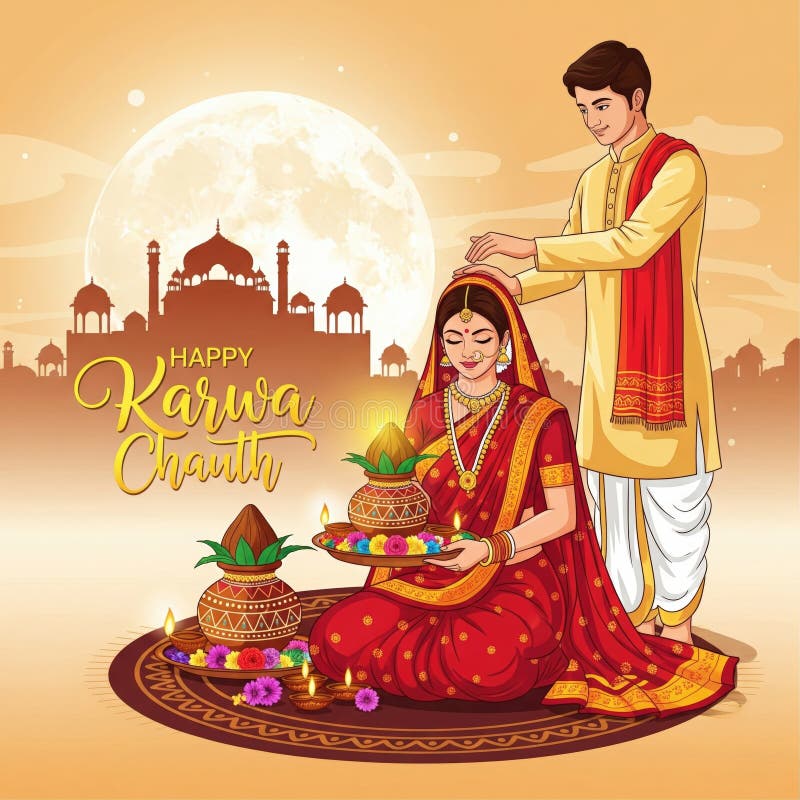
Karwa Chauth is a traditional Hindu festival during which many married women observe a fast from sunrise to moonrise and pray for the long life, good health, and well-being of their husbands. In many traditions, the fast is observed without food or water and is known as a nirjala vrat.
The festival also holds significance for some unmarried women who observe the fast in the hope of finding a suitable life partner. In recent years, some husbands have also begun fasting on this occasion to pray for the health and well-being of their wives.
An Essence of Love and Marital Bonds
Karwa Chauth symbolises love, devotion, and the importance of marital relationships. The name is commonly associated with two words: “Karva,” referring to an earthen pot, and “Chauth,” meaning the fourth day. The earthen pot is an important part of several regional rituals, particularly those involving offerings and prayers. The festival is widely celebrated as an occasion to strengthen emotional bonds and honour the traditions associated with marriage.
Mythological Stories Associated with Karwa Chauth
Karwa Chauth is associated with several traditional stories. One well-known tale is that of Savitri and Satyavan, in which Savitri's devotion and determination lead her to confront Yama, the god of death, to save her husband. Another popular story concerns Veervati, a woman whose brothers deceive her into believing that the moon has risen because they cannot bear to see her continue fasting. She breaks her fast prematurely, and the story explains the importance of completing the prescribed rituals.
Rituals and Traditions
As the afternoon progresses, women in many communities gather with their pooja thalis, which may contain fruits, sweets, dry fruits, a diya (lamp), a glass of water or another traditional drink, and other ritual items. The contents of the thali vary according to regional and family customs.
In some traditions, women sit together in a circle and listen to the Karwa Chauth story narrated by an elderly woman. They may also participate in the ritual known as thali batana, in which the thalis are passed or rotated while devotional songs are sung. Prayers may be offered to Goddess Parvati, who is associated with marital devotion and auspiciousness.
Food traditions also vary by region. In Punjab, festive meals may include whole lentils, such as sabut dal, along with pooris, rice, and traditional sweets. In some households, special foods are prepared before the fast begins or after it is completed.
Moonrise and the Breaking of the Fast
The evening rituals are among the most significant parts of Karwa Chauth. Women often dress in traditional attire, wear jewellery, and gather with family members or neighbours for prayers. In traditions that follow the customary fast, women wait for the moon to appear before completing their prayers and breaking the fast.
In some parts of Uttar Pradesh, regional customs may include drawing a representation of the moon on the ground using rice paste. Offerings such as kumkum, rice, flowers, and sweets may also form part of local rituals.
A Celebration of Love and Togetherness
Karwa Chauth is more than a religious observance for many families; it is also an occasion to celebrate love, commitment, and togetherness. Through fasting, prayers, family gatherings, and traditional customs, the festival continues to hold cultural and emotional significance for many people across India.