KOLKATA HOWRA BRIZE ESTABLISHMENT HISTORY
Howrah Bridge: The History and Engineering Behind Kolkata's Iconic Rabindra Setu
The Howrah Bridge, officially known as Rabindra Setu, is one of Kolkata's most recognised landmarks. Built over the Hooghly River, it connects Kolkata with Howrah and serves as an important route for commuters, pedestrians and commercial traffic.
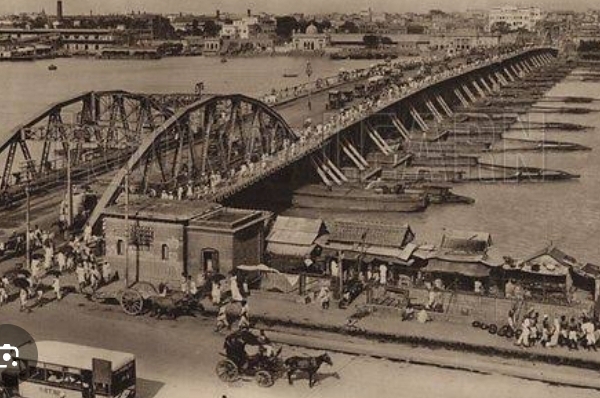
Early History and the Pontoon Bridge
The need for a permanent connection between Kolkata and Howrah increased with the growth of commercial and railway activities during the 19th century.
In 1874, a floating pontoon bridge designed by Sir Bradford Leslie was opened across the Hooghly River. It connected the two cities but gradually became inadequate as traffic and transportation requirements increased.
The growing demand for a stronger and more efficient connection eventually led to the construction of a new bridge.
Construction and Opening
The new Howrah Bridge was designed by the consulting engineering firm Rendel, Palmer and Tritton. Construction began in 1936 and was completed in 1942.
The bridge was opened to public traffic on February 3, 1943, during the Second World War. It was initially known as the New Howrah Bridge.
The structure was built using approximately 26,500 tonnes of steel, including high-tensile steel. One of its notable engineering features is its riveted construction, which does not use conventional nuts and bolts.
Its balanced cantilever design allows the Hooghly River to remain navigable without central supporting pillars in the riverbed.
Renaming as Rabindra Setu
On June 14, 1965, the bridge was officially renamed Rabindra Setu in honour of Nobel laureate Rabindranath Tagore.
Although its official name changed, it continues to be widely recognised as Howrah Bridge among residents and visitors.
Importance in Modern Kolkata
Howrah Bridge remains an important transport connection between Kolkata and Howrah, particularly for people travelling to and from Howrah railway station.
The bridge is also known for its heavy daily traffic and its importance in the city's transportation network.
Conclusion
From the floating pontoon bridge of 1874 to the steel structure opened in 1943, Howrah Bridge reflects the development of transportation and engineering in Kolkata. Today, officially known as Rabindra Setu, it continues to serve as both a vital transport link and an important historical landmark.