"Manipur: Beyond the Conflict, Unlocking a Land of Valour, Beauty and Opportunity"
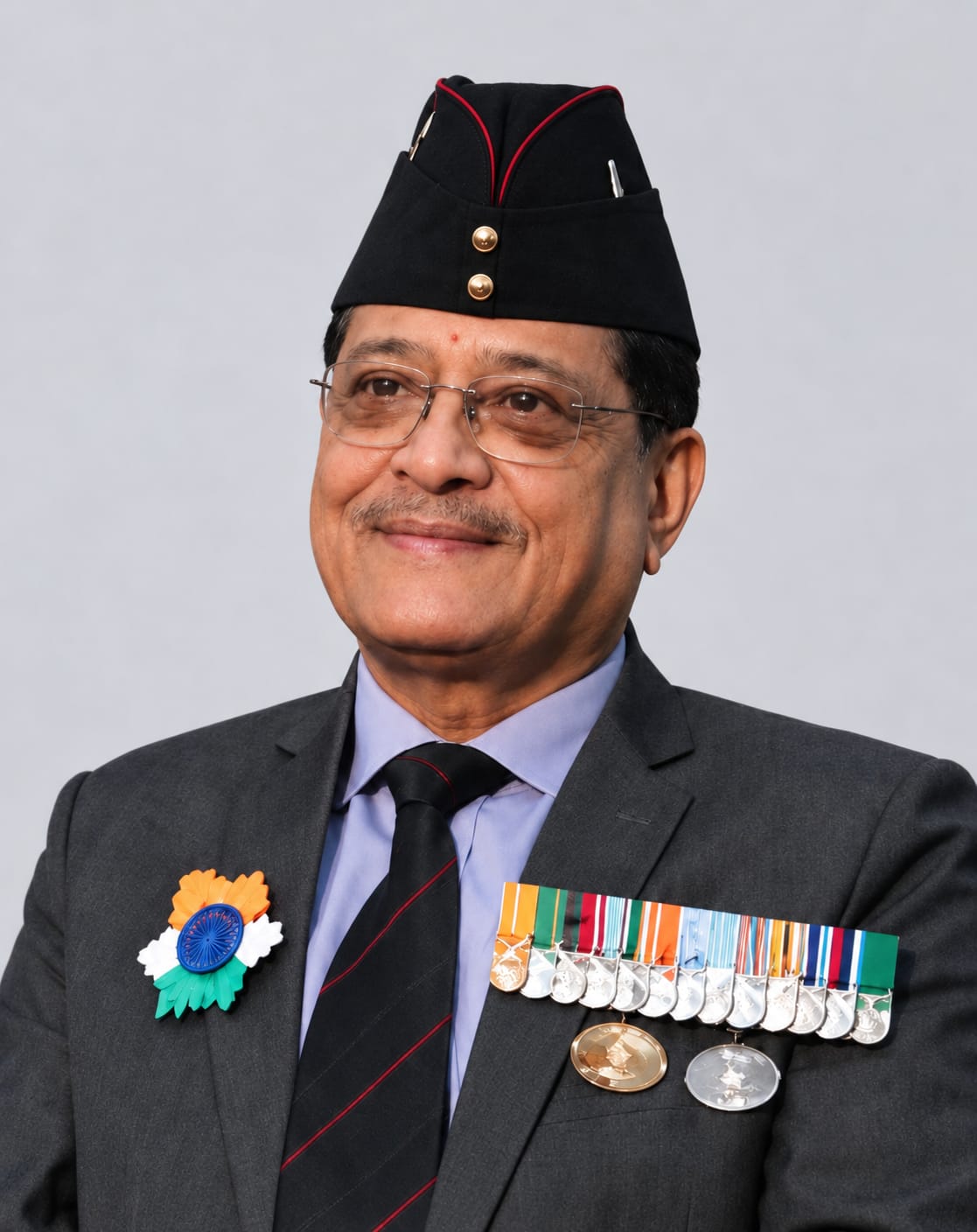
By
Col (Dr.) Ashwani Kumar, MiD, VSM (Retd)
There are places one visits as a tourist, and there are places one understands only after seeing them through the eyes of a soldier. Manipur belongs to the latter category.
Having served and travelled extensively in the Northeast, I have visited Tusom Post, Imphal, Moirang and several other parts of Manipur, interacted with local communities and witnessed the region in both peaceful and difficult periods. Visits to historical sites associated with the Second World War, including the Imphal War Cemetery and Red Hill, further deepened my understanding of the strategic importance of this land.
More importantly, interactions with local people before and after the recent tensions gave me an opportunity to understand their concerns, aspirations and anxieties beyond what statistics can convey.
A soldier learns that terrain is never merely terrain. A mountain can be an obstacle or an advantage. A road can be a military lifeline or an economic corridor. A remote border post can be a security position today and, with the right infrastructure, part of an economic network tomorrow.
Manipur stands at precisely such a crossroads.
For years, national attention has focused on violence, ethnic tensions and security challenges. These concerns cannot be wished away. But Manipur is much larger than its present crisis. It is a land of extraordinary beauty, ancient traditions, sporting excellence, military history and immense economic potential.
The challenge is not simply to restore normalcy. It is to unlock Manipur's potential and make development an instrument of lasting peace.
A Land of Beauty and Valour.
The serene waters of Loktak Lake, with its floating phumdis, and the unique Keibul Lamjao National Park, home to the endangered Sangai, represent Manipur's extraordinary natural heritage.
The Shirui Hills, Ukhrul, Khangkhui caves, Sadu Chiru waterfalls, Senapati and numerous lesser known destinations add to its tourism potential. Yet Manipur's greatest attraction may not be its landscape. It is its people and their culture.
Manipuri dance, Thang-Ta, indigenous traditions, handloom, handicrafts and the state's association with polo reflect a rich cultural inheritance. The historic Ima Keithel, Imphal's famous women's market, also demonstrates the strength of women's participation in the local economy.
Manipur's history is equally compelling. The Khongjom War Memorial recalls Major General Paona Brajabashi and the resistance during the Anglo-Manipur War of 1891. At Moirang, the Indian National Army flag was unfurled on 14 April 1944.
For a soldier, the Imphal War Cemetery and Red Hill carry a special significance. They remind us that this apparently remote region was once a major theatre of the Second World War. My visits to these places reinforced one thought, Manipur is not on the margins of India's history, it has repeatedly stood at important crossroads of India's military and national story. Its sporting achievements, particularly in boxing, football, weightlifting and other disciplines, add another dimension to this remarkable identity. Manipur does not need to manufacture a new identity. It already possesses one. What it needs is to convert its strengths into opportunity.
Beyond the Present Crisis.
No serious discussion can ignore the violence and social divisions that have affected Manipur since 2023. My interactions with local people before and after the tensions reinforced an important understanding, behind statistics are families, livelihoods, memories and aspirations. Displacement, disrupted livelihoods and damaged trust create challenges that cannot be addressed by security measures alone. The way forward must therefore bring together security, reconciliation, rehabilitation, governance and economic development.
For ordinary citizens, peace must become visible in everyday life. It means schools reopening, markets functioning, farmers reaching markets safely, young people finding employment and families being able to rebuild their lives. A peace process that leaves young people without jobs and families without livelihoods will remain fragile.
A Soldier's View of the Terrain.
During my years in the Northeast, I learned that a road has a significance far beyond its engineering value.
For a soldier, it provides mobility and logistics. For a villager, it means access to a hospital, school and market. For a tourist, it opens a destination. For an entrepreneur, it can determine whether a business survives. This is why connectivity must become central to Manipur's transformation.
Manipur's location along India's frontier with Myanmar gives it strategic importance. Moreh, in particular, can become more than a border town with appropriate infrastructure and security, it can develop into a logistics, trade and services centre connecting India's Northeast with Southeast Asia. India's Act East policy provides the broader strategic framework.
The question is therefore not merely:-
How do we secure the border?
It is also:
How do we make the border economically productive for the people living around it?
From Tourism to Tourism Economy.
Manipur should not attempt to compete with conventional mass tourism destinations. Its strength lies in nature, culture, history, adventure and community based tourism. A carefully designed circuit could connect:
Imphal, Kangla,Moirang,Loktal,
Keibul, Lamjao, Sendra, Ukhrul, Shirui, Senapati, Khongjom, Red Hill, Imphal War Cemetery and other WWII sites.
Homestays, local guides, transport, restaurants, handicrafts, adventure activities and cultural performances can ensure that tourism generates employment beyond the major towns. The objective should be simple, Tourism revenue must reach the village, not stop at the capital. Think beyond tourism.
Tourism alone cannot transform Manipur.
The state can build on horticulture, agriculture, bamboo, handloom, handicrafts, food processing, floriculture, medicinal plants, fisheries and cold-chain infrastructure. Traditional products can be connected to national and international markets through modern design, branding, e-commerce and logistics. But Manipur should aim even higher.
Why Not Build a Major IT and Knowledge Hub?
For decades, students and young professionals from the Northeast have travelled towards Delhi, Bengaluru, Hyderabad, Mumbai and other metropolitan centres for education and employment. There is nothing wrong with mobility. But the vision should be bigger. Why should India not also move towards the Northeast?
Manipur can develop IT parks, digital-service centres, start-up incubators, research facilities, educational institutions and skill development hubs, supported by reliable power and high-speed digital connectivity.
A young person from Uttar Pradesh, Bihar, Delhi, Maharashtra or Karnataka should one day have a reason to come to Manipur not only as a tourist, but as a student, researcher, technology professional, entrepreneur or investor. For decades, talent has predominantly travelled from the Northeast towards the rest of India. The time has come to create conditions in which India also travels east.
Manipur should not merely receive development. It should become a destination for development.
Sport as an Economic Asset.
Manipur's sporting achievements offer another opportunity. The state can build a complete sports economy around academies, sports science, coaching, physiotherapy, equipment manufacturing, tournaments and sports tourism.
Its success in producing athletes can therefore generate careers not only for sportspersons, but also for coaches, trainers, administrators, medical professionals and equipment manufacturers.
Five Priorities to be taken into consideration. From my experience, five priorities deserve attention they are as under:
First, secure the environment through effective law and order and border management.
Second, rebuild trust through constitutional and democratic mechanisms and dialogue among communities.
Third, reconnect the state through roads, railways, telecommunications, power and digital connectivity.
Fourth, create local employment through tourism, agriculture, industry, IT, sport and entrepreneurship.
Fifth, change the national narrative so that Manipur is increasingly seen not only through conflict, but through culture, education, tourism, technology, sport and opportunity.
The Manipur We Should Build.
A soldier learns another lesson from difficult terrain:
The most challenging ground is often the ground with the greatest strategic value.
Manipur's mountains, valleys and border location can become economic assets.
Its history can become heritage tourism.
Its biodiversity can become responsible eco-tourism.
Its athletes can become the foundation of a sports economy.
Its artisans can become entrepreneurs.
Its universities can attract students from across India.
Its IT hubs can attract young professionals and start-ups.
Its border can become a gateway to Southeast Asia.
The objective should not be to erase Manipur's diversity. It should be to create conditions in which diversity becomes a cultural and economic strength rather than a source of permanent division. Manipur does not need sympathy alone.
It needs confidence, connectivity, investment, justice, opportunity and a long-term national vision.
The real transformation will begin when a young Manipuri sees the state not as a place from which to escape, but as a place in which to build a future and when young people from the rest of India begin looking eastward towards Manipur for education, tourism, enterprise and opportunity.
Manipur has already given India warriors, athletes, artists and patriots. The next chapter can be about entrepreneurs, innovators, students, tourists, investors and a new generation of nation-builders.
The land of valour and beauty can become a land of opportunity. And from a soldier's perspective, that would be the most meaningful victory of all not merely securing the terrain, but unlocking its potential and securing the future of its people.
Author's Note:
Having served and travelled extensively in the Northeast, including visits upto Tusom Post, Imphal and Moirang, interactions with local communities before and after the recent tensions, and visits to historical and World War II sites, I have observed its difficult terrain, rich cultures, historical legacy, resilient people and immense strategic potential from close quarters. This article is written from the perspective of a soldier who believes that security, connectivity, education and economic opportunity must advance together. As a follower of Shankaracharya ji of Sharda Sarvagy Peeth Jammu and Kashmir my experience was also to spread peace in the area and proposed for the prosperity in the coming days.
Disclaimer:
This article represents the author's personal views and is intended as a constructive perspective on tourism, development, security and economic opportunity in Manipur. It does not represent the official position of any government, organisation or institution.