Nana Patekar (1951–2026): The Man Who Never Needed a Hero’s Entry to Steal the Show
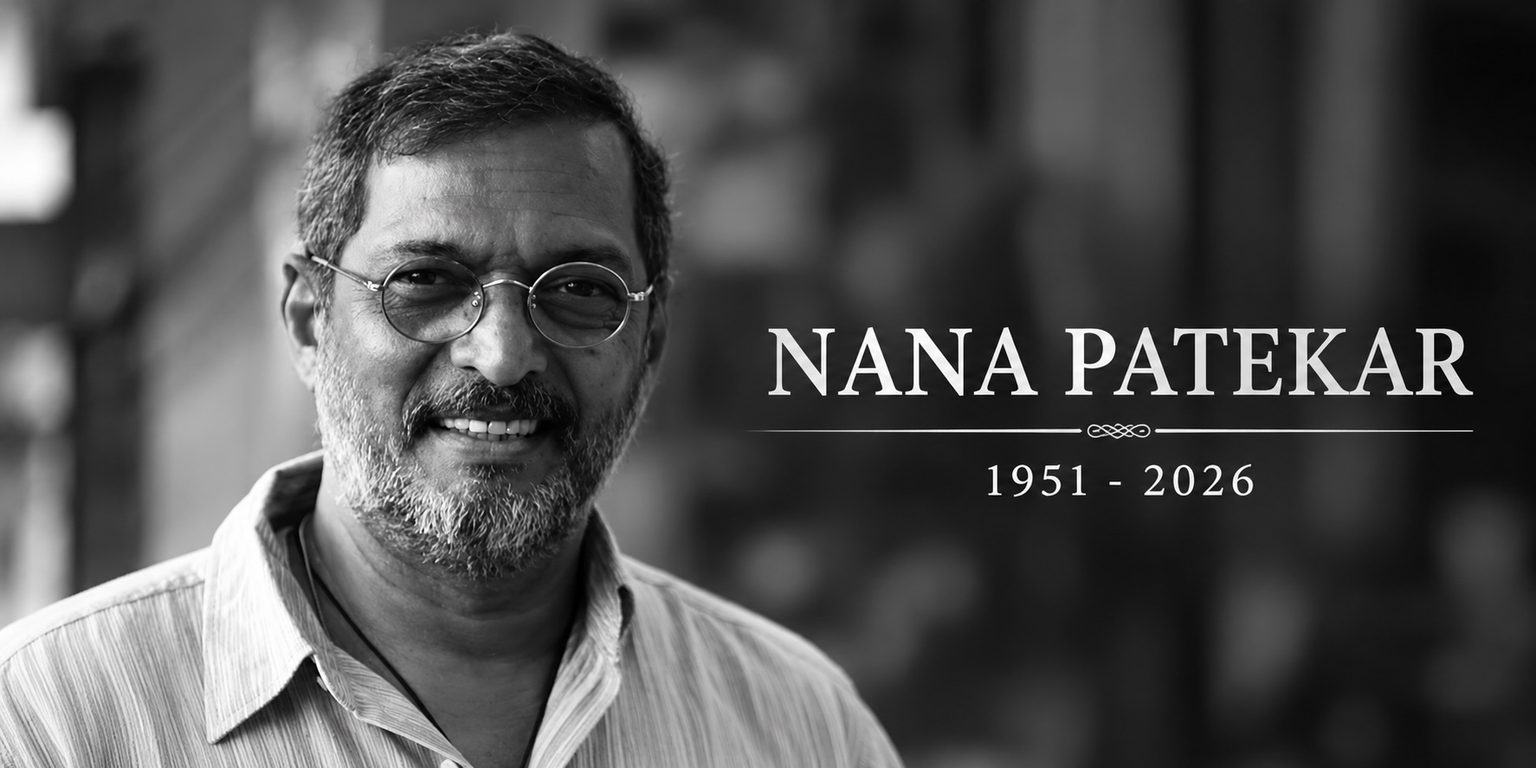
From the terrifying Anna in Parinda to the unforgettable Uday Shetty in Welcome, Nana Patekar gave Indian cinema some of its most memorable characters. As the legendary actor passes away at 75, we look back at a career that was anything but ordinary.
October 8, 2026 | A Tribute
There are actors whose films we remember, and then there are actors whose dialogues become part of everyday conversations. Nana Patekar belonged to that rare category.
How many actors could make an entire cinema hall erupt in applause with an intense monologue, leave audiences disturbed with a villainous stare, bring tears to their eyes without uttering a word, and years later have audiences laughing with a simple "Control, Uday, control"?
That was Nana Patekar.
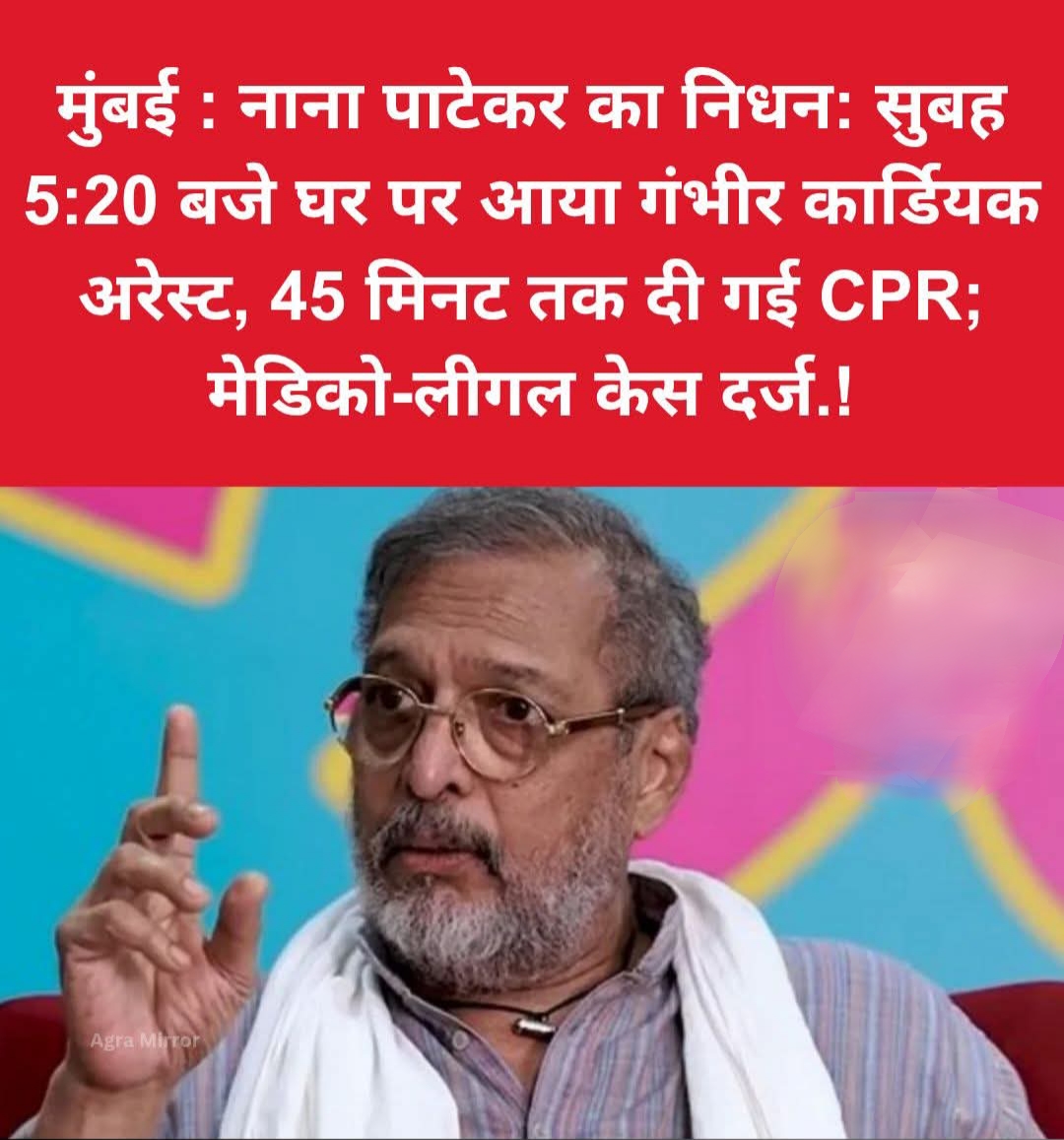
On Thursday, October 8, 2026, the veteran actor passed away at the age of 75 following a cardiac arrest in Goa. With his passing, Indian cinema has lost one of its most distinctive performers, a man who spent nearly five decades building a career on his own terms.
For those who grew up watching Hindi films in the 1990s and 2000s, Nana Patekar was never just another actor. His voice, expressions, sudden bursts of anger, perfectly timed pauses and distinctive dialogue delivery made him difficult to ignore.
And perhaps that is why the news of his passing feels particularly significant to generations of movie lovers.
A Different Kind of Bollywood Hero
When Nana entered Hindi cinema with Gaman in 1978, Bollywood was a very different place. The industry was dominated by larger-than-life heroes, glamorous heroines and clearly defined villains.
Nana did not quite fit any of those categories.
With his roots in Marathi theatre, he brought a different energy to the screen. He was not interested in looking like a conventional film star. Instead, he made characters believable, even when they were violent, unreasonable or deeply flawed.
His portrayal of Anna in Vidhu Vinod Chopra's Parinda (1989) remains one of the notable performances of his career. Here was a gangster who could appear calm one moment and turn threatening the next. Nana's performance was effective because of its realism.
The role earned him the National Film Award for Best Supporting Actor and established him as a serious acting talent.
Then came films like Prahaar, Angaar, Tirangaa and Krantiveer, each adding to his growing reputation.
Who can forget his fiery dialogue from Tirangaa?
"Pandrah sau ki naukri karne waala, ek din tujhe dedh sau ka kafan pehnayega."
It was the sort of line audiences remembered long after leaving the theatre. Not simply because it was well written, but also because of the conviction with which Nana delivered it.
Nana had a gift for making dialogue sound like conviction rather than performance.
And nowhere was that more evident than in Krantiveer.
Krantiveer: When Nana Spoke, India Listened
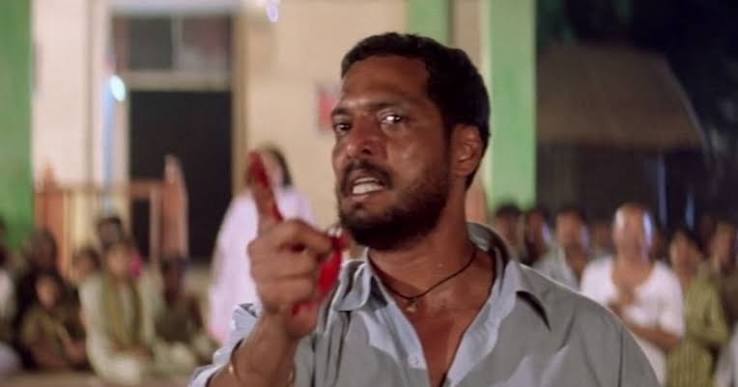
Released in 1994, Krantiveer gave us Pratap Narayan Tilak, one of the most memorable characters of Nana Patekar's career.
Angry, disillusioned and unwilling to remain silent against injustice, Pratap represented the frustration of an ordinary man watching society fall apart around him.
"Aa gaye meri maut ka tamasha dekhne."
Even today, those words can bring Nana's distinctive voice to mind.
But Krantiveer was more than a collection of powerful monologues. The film addressed corruption, communal hatred and the failure of society to stand up for what was right.
The famous sequence in which Nana questions the difference between Hindu and Muslim blood remains one of the film's most remembered moments.
"Yeh Musalman ka khoon, yeh Hindu ka khoon…"
The sequence delivered a strong criticism of religious division through Nana's intense performance.
The film won him both the National Film Award and Filmfare Award for Best Actor. It also strengthened his position as one of the leading performers of his generation.
While Krantiveer showcased his anger and intensity, Nana was far too versatile to be restricted to one kind of role.
In Khamoshi: The Musical (1996), he played a deaf father whose love, frustration and vulnerability were conveyed largely through gestures and expressions. For an actor celebrated for his dialogue delivery, it was a reminder that he could be equally effective in silence.
His portrayal of an abusive husband in Agni Sakshi earned him another National Film Award, while Ab Tak Chhappan introduced audiences to Sadhu Agashe, an encounter specialist operating in the morally complicated world of crime and policing.
Each character was different, but all carried the unmistakable Nana Patekar stamp.
From Krantiveer to Uday Shetty: A Reinvention Nobody Saw Coming
If the 1990s showcased Nana as an intense performer, 2007 introduced an entirely different side of him.
Enter Uday Shetty.
When Welcome released, audiences discovered that the man who had terrified them in Parinda and shaken them in Krantiveer could also be effortlessly hilarious.
As Uday Shetty, the gangster with a soft corner for his sister and an enormous amount of misplaced self-confidence, Nana created memorable comic moments alongside Anil Kapoor's Majnu Bhai.
"Bhagwan ka diya hua sab kuch hai. Daulat hai. Shohrat hai. Izzat hai."
And of course:
"Control, Uday, control!"
Years later, the character continues to live through memes, social media reels and everyday jokes.
That is perhaps one of the most fascinating aspects of Nana's career. He remained relevant to different generations without fundamentally changing his identity as an actor.
Someone who discovered Nana through Welcome could go back and watch Parinda or Krantiveer and see a very different side of the same performer.
Very few actors have demonstrated that kind of range and longevity.
Natsamrat: Perhaps His Most Personal Performance
If there was one film that captured the depth of Nana Patekar's talent in his later years, it was the Marathi film Natsamrat (2016).
Playing Ganpatrao Belvalkar, a celebrated theatre actor struggling with old age, changing family relationships and the loss of his place in the world, Nana delivered a deeply moving performance.
There was no larger-than-life villain to confront, no corrupt system to fight and no comic gangster to entertain the audience.
Just an ageing man attempting to hold on to his dignity.
For someone who had spent his career commanding audiences through his voice, Natsamrat was a fitting reminder of his ability to communicate pain through subtle expressions.
The performance was widely appreciated and introduced another generation of viewers to the talent that Marathi theatre had contributed to Indian cinema.
It is difficult to separate the role from Nana's distinctive combination of pride, vulnerability and emotional depth.
The Awards, the Recognition and the Man Beyond Cinema
Over nearly five decades, Nana Patekar built a body of work that few actors can match.
He won three National Film Awards: Best Supporting Actor for Parinda and Agni Sakshi, and Best Actor for Krantiveer. His Filmfare honours included recognition for Parinda, Angaar, Krantiveer and Apaharan.
In 2013, he was awarded the Padma Shri for his contribution to the arts.
His work extended across Hindi, Marathi and other Indian-language films, with memorable appearances in Salaam Bombay!, Raju Ban Gaya Gentleman, Raajneeti, Dr. Prakash Baba Amte, Natsamrat and Kaala.
But there was another side of Nana that also deserves to be remembered.
Despite his celebrity status, he maintained a connection with rural Maharashtra and its farming communities.
In 2015, he joined hands with fellow actor Makarand Anaspure to establish the NAAM Foundation, an initiative dedicated to supporting drought-affected farmers, improving water access and contributing to rural development.
His interest in farming was also reflected in his public statements and involvement with rural issues. He spent considerable time on his own farmland and spoke about the difficulties faced by rural communities.
Nana was known for his blunt opinions and uncompromising personality. He was not someone who always tried to say what people wanted to hear. That candidness was part of his public image, just as his performances were.
A Final Curtain Call
It is difficult to pick one Nana Patekar film as his greatest.
For some, he will always be the menacing Anna from Parinda. For others, the fearless Pratap Narayan Tilak from Krantiveer. Some will remember Sadhu Agashe from Ab Tak Chhappan, while younger audiences may forever associate him with the hilariously temperamental Uday Shetty.
And those who watched Natsamrat will remember an actor capable of conveying deep emotion through a quiet expression.
That was the range of Nana Patekar's career. He never allowed himself to become predictable.
Indian cinema has seen many great actors, but Nana belonged to a distinctive group of performers who could command the screen without relying on glamour, elaborate action sequences or conventional heroism.
He made audiences listen. Sometimes he made them uncomfortable. Often he made them think. And when he decided to make them laugh, he was equally convincing.
Today, as tributes pour in from across the country, perhaps one of the best ways to remember him is to revisit the films that made him an important part of Indian cinema.
Watch Parinda for the actor who could frighten you with a glance. Watch Krantiveer for the voice that challenged injustice. Watch Khamoshi for the father who needed no words. Watch Welcome for the comic performer we did not know was waiting in plain sight. And watch Natsamrat to appreciate the depth of his craft.
Each film offers a different Nana Patekar. Together, they tell the story of a remarkable actor.
Nana Patekar may have delivered his last performance, but his characters, dialogues and memories are likely to remain with audiences for generations.
The next time someone says "Control, Uday, control", a fan may smile. The next time Krantiveer plays on television, someone may stop changing channels. And somewhere, a first-time viewer may discover Parinda and understand why Nana was regarded as one of India's notable actors.
That's how great cinema keeps its actors alive.
Alvida, Nana. Thank you for the performances, the memories and the countless dialogues that became part of our lives.
January 1, 1951 – October 8, 2026
Rest in peace, Natsamrat.