NEET Row Sparks Fresh Debate as Student Concerns Intersect with Political Narratives
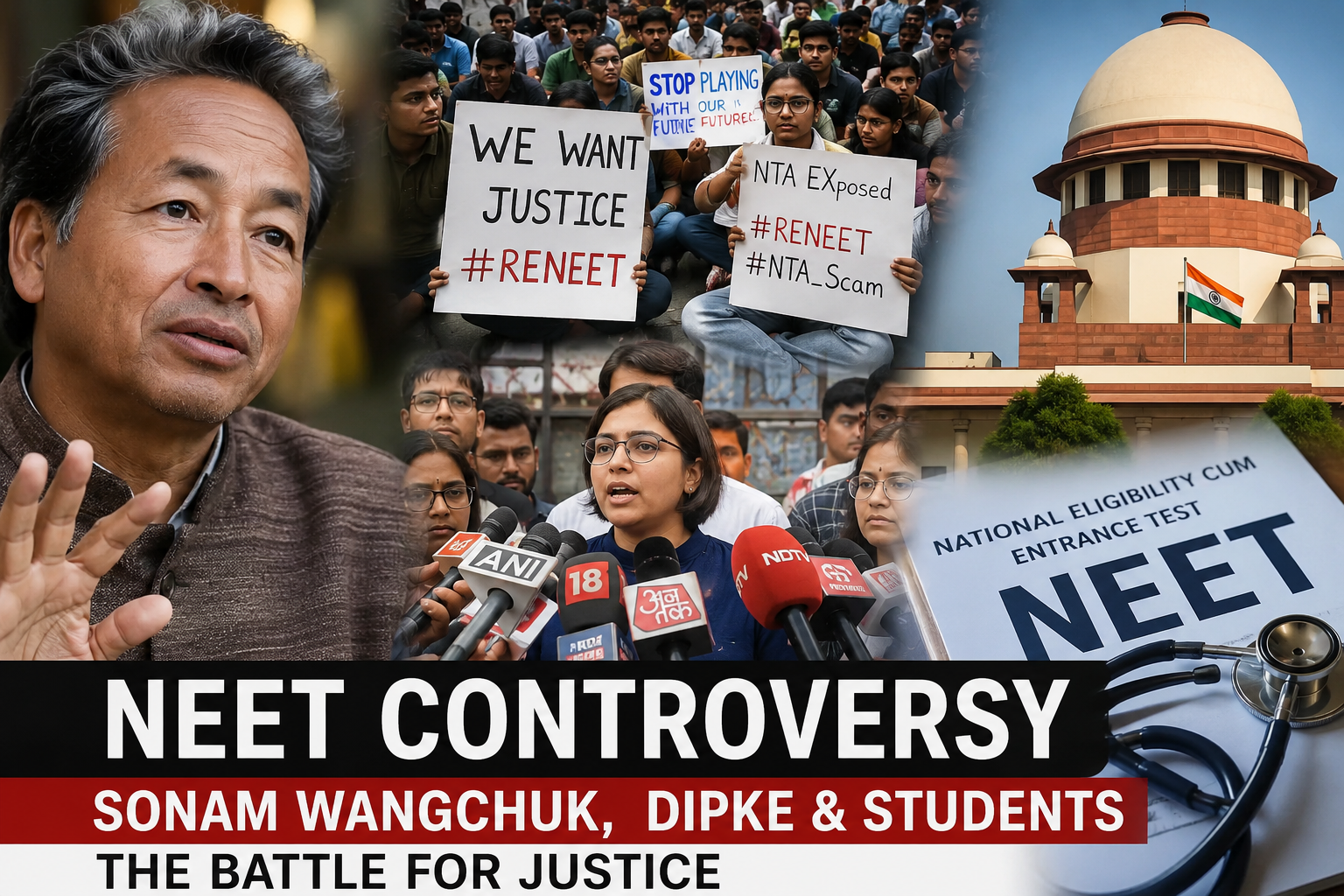
The ongoing debate surrounding the National Eligibility cum Entrance Test (NEET) has once again taken center stage, with students, education activists, and public figures voicing concerns over the future of one of India's most competitive entrance examinations. While genuine issues relating to examination transparency and student welfare continue to dominate discussions, the controversy has increasingly acquired political overtones, drawing mixed reactions from observers.
Several student groups have organized demonstrations demanding greater accountability and institutional reforms. They argue that any uncertainty surrounding examination procedures directly affects the aspirations of lakhs of candidates who dedicate years of preparation to securing admission into medical colleges. Calls for timely investigations, transparent communication, and swift resolution have remained consistent among student representatives.
Social activist Sonam Wangchuk and other public personalities have also commented on the matter, bringing additional public attention to the issue. Their interventions have generated widespread discussion on social media, where opinions remain sharply divided. While some view such participation as a necessary expression of public concern, others believe that the involvement of prominent figures has shifted focus away from the core academic issues affecting students.
Political parties have also responded with statements and criticism, reflecting the broader political environment surrounding national issues. Analysts note that education-related controversies often become subjects of political debate, particularly when they affect a large section of young voters. However, many education experts believe that sustained political confrontation may not necessarily contribute to quicker solutions for students awaiting clarity.
The Union Government has reiterated its commitment to maintaining the credibility of national examinations and has emphasized that appropriate mechanisms exist to investigate irregularities wherever evidence is established. Officials have maintained that preserving the integrity of competitive examinations remains a priority while ensuring that deserving candidates are not unfairly disadvantaged.
Education policy experts suggest that public discourse should remain focused on institutional reforms, stronger examination safeguards, and student welfare rather than partisan narratives. They argue that prolonged political exchanges risk overshadowing the concerns of aspirants who seek certainty, fairness, and confidence in the examination system.
As the discussion continues, stakeholders across the spectrum agree on one point: the interests of students should remain paramount. Regardless of political perspectives, ensuring transparency, accountability, and trust in India's examination process will ultimately serve both the education system and the nation's future.