Students on the Streets, Democracy at the Crossroads
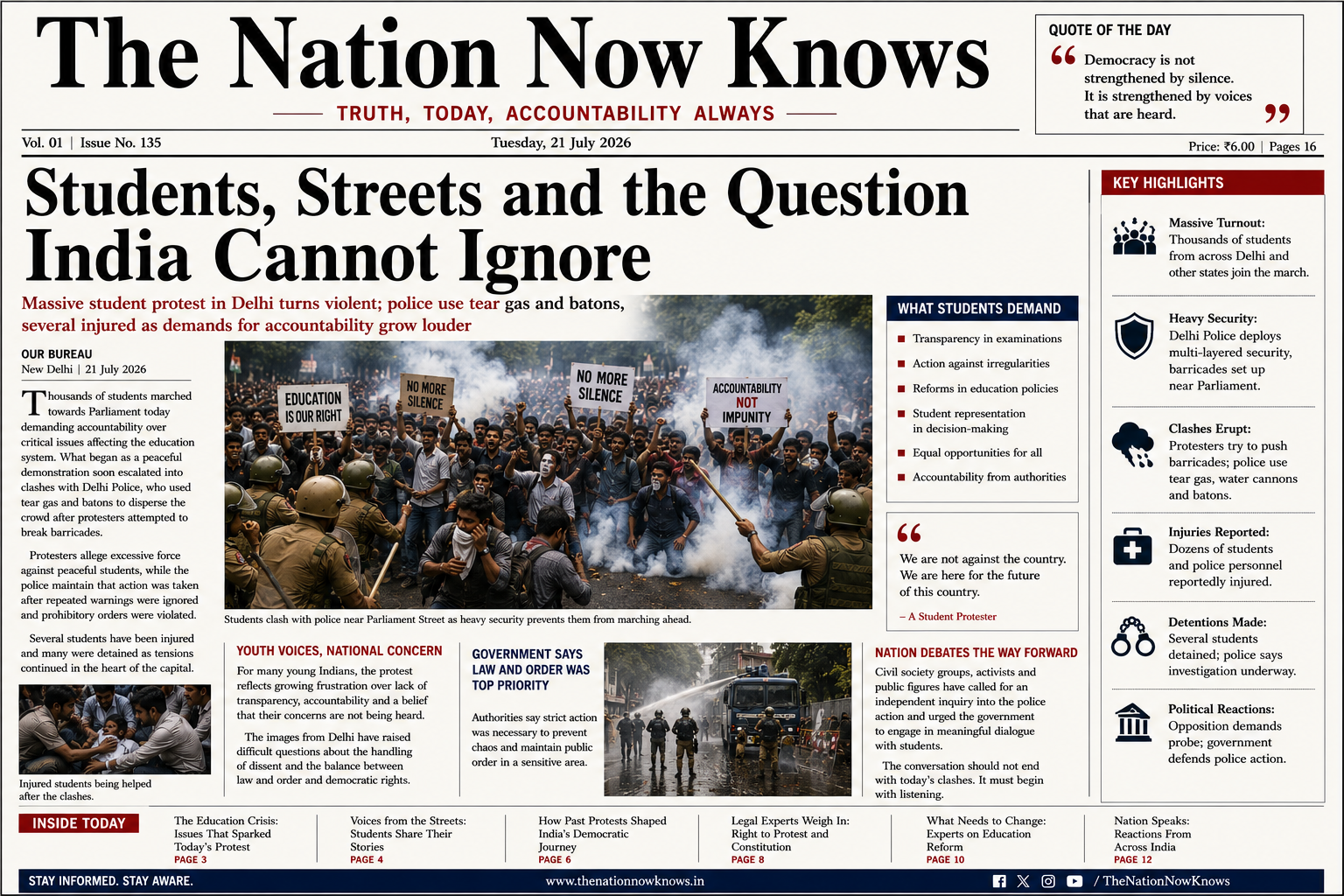
New Delhi | 21 July 2026
What unfolded on the streets of Delhi today was more than another protest. It became a defining moment in the conversation between India's youth and its institutions.
Thousands of students stepped out believing their concerns deserved a hearing. They carried banners, raised slogans and marched with the expectation that their voices would reach those entrusted with making decisions about their future. Instead, the day was overshadowed by barricades, confrontations and images that have now spread across the country.
Every protest presents a difficult challenge. Authorities have the responsibility to maintain public order and protect public property. Protesters, in turn, have a responsibility to demonstrate peacefully and respect the law. But when a movement involving students ends with allegations of force, injuries and detentions, the nation is left asking whether the situation could have been handled differently.
The incident has reignited a larger debate that extends far beyond a single day in Delhi. It is about whether young citizens feel that democratic institutions are listening to them. For many students, today's march was not just about one issue—it was about participation, accountability and the belief that their future deserves serious attention.
A confident democracy is not measured by the absence of criticism. It is measured by its willingness to engage with criticism without allowing disagreements to descend into confrontation. Strong institutions do not fear questions; they answer them with transparency, patience and dialogue.
The events of today have also reminded the country of the enormous responsibility carried by both protesters and law-enforcement agencies. Peaceful demonstrations must remain peaceful, and public order must be maintained in a manner that protects the rights guaranteed by the Constitution. The balance between security and civil liberty is delicate, but it is one that every democracy must strive to preserve.
As investigations continue and political reactions intensify, one truth remains clear: the conversation should not end where the protest ended. If the voices of students are dismissed rather than heard, frustration will only deepen. If those voices are met with meaningful dialogue, today's tensions could become tomorrow's reforms.
History rarely remembers the slogans shouted on the streets.
It remembers how a nation chose to respond when its young people asked to be heard.