Supreme Court: Internet access is a fundamental right, including for children.
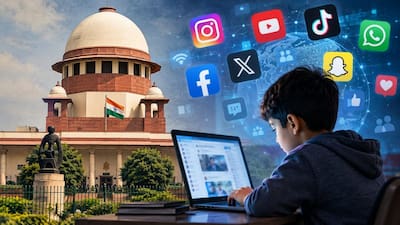
Supreme Court Recognises Internet Access as a Fundamental Right for Children
The Supreme Court of India has held that the right to access and use the internet is a fundamental right under Articles 21 and 19(1)(a) of the Constitution, including for children irrespective of their age. The Court emphasised that protecting children from online harm should not mean denying them digital access altogether.
The ruling came on October 15, 2026, in Just Rights for Children Alliance and Another v. S. Harish and Others (2026 INSC 1149). A Bench comprising Justices J.B. Pardiwala and K. Vinod Chandran issued further directions to strengthen the detection and removal of child sexual exploitation and abuse material (CSEAM) from online platforms.
Focus on Platforms and Harmful Content
The proceedings arose from concerns about the implementation of the Court’s September 2024 judgment on online child sexual abuse material. The Court examined reported shortcomings in the compliance of social media intermediaries and other platforms with existing requirements.
It called for stronger mechanisms to identify and remove such material, including a comprehensive national database to support faster identification. The order also addressed reporting procedures, grievance redressal and the responsibilities of intermediaries.
Blanket Restrictions Not the Answer
In its observations on children’s internet access, the Court rejected the idea that children should be excluded from the internet altogether in the name of safety. It observed that protective measures should target harmful content and those responsible for it rather than penalising children through total exclusion.
The Court also noted that blanket restrictions may push children towards unregulated platforms and discourage them from reporting online threats to parents, guardians or other trusted adults.
Age-Appropriate Safeguards
The judgment discussed possible safeguards, including parental oversight, dedicated child modes, private account settings and restrictions on contact from unknown adults. It also clarified that its observations do not prevent restrictions on specific categories of content or services that are inherently harmful to children, such as adult-content websites.
The ruling underscores the need to address online exploitation while respecting children’s constitutional rights. Its practical implementation will depend on effective platform accountability, proportionate safeguards and measures to improve digital safety.
Case: Just Rights for Children Alliance and Another v. S. Harish and Others
Decision date: October 15, 2026
Reference: 2026 INSC 1149