
THE BENGAL TIGAR
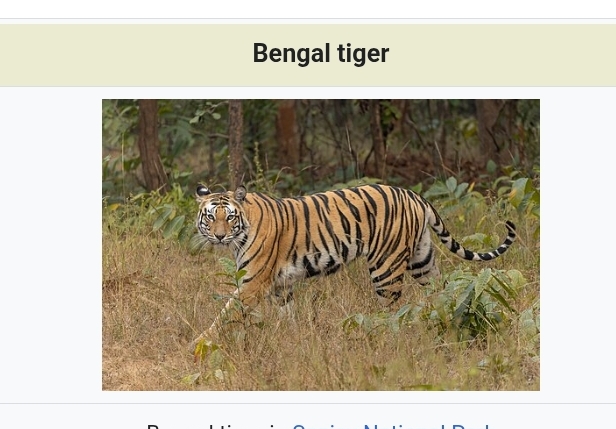
Bengal Tiger: Physical Characteristics, Habitat, Behaviour and Conservation
The Bengal tiger (Panthera tigris tigris) is a tiger population native to the Indian subcontinent. It is primarily found in India, Bangladesh, Nepal and Bhutan. Tigers also survive in parts of Asia outside this region, but their distribution varies by population.
Taxonomy and Physical Characteristics
- Scientific Name: Panthera tigris tigris.
- Coat and Colour: Bengal tigers generally have a yellowish-orange to reddish-orange coat with dark brown or black stripes. White tigers are rare colour variants associated with a genetic condition.
- Size and Weight: Adult males are generally larger than females. Their size and weight vary according to habitat, prey availability and individual characteristics.
- Life Expectancy: Tigers typically live around 10–15 years in the wild, although some individuals may live longer.
Distribution and Habitat
Bengal tigers are primarily found in India, Bangladesh, Nepal and Bhutan. India supports the largest population of wild tigers. Tiger populations in China are generally associated with other regional populations, and southwestern China should not be listed as a major Bengal tiger stronghold without specific supporting evidence.
Their habitats include tropical and subtropical forests, moist and dry deciduous forests, grasslands and mangrove ecosystems such as the Sundarbans. Suitable habitat, sufficient prey and effective protection are essential for their survival.
Ecology and Behaviour
- Social Structure: Tigers are generally solitary and territorial animals, except when females are raising their cubs or during mating.
- Diet: They are carnivores that primarily hunt animals such as deer and wild pigs. Depending on their habitat, their prey may also include larger ungulates such as gaur and other available wildlife.
- Hunting Behaviour: Tigers usually rely on stealth and ambush to approach and capture prey.
Cultural and Historical Significance
The tiger is the national animal of both India and Bangladesh. It also holds an important place in South Asian culture, mythology and art, including associations with Hindu deities such as Durga.
Conservation Status and Threats
The tiger (Panthera tigris) is classified as Endangered on the IUCN Red List. Bengal tiger populations face threats from poaching, illegal wildlife trade, habitat loss, fragmentation, depletion of prey and human–tiger conflict.
Global wild tiger population estimates refer to all tiger populations, not only Bengal tigers. A widely cited assessment estimated approximately 3,726–5,578 wild tigers worldwide, excluding cubs. This figure should not be presented as a current Bengal tiger population estimate because population assessments and survey years differ.
Conservation efforts include protecting and connecting habitats, preventing poaching, monitoring tiger populations and supporting coexistence between local communities and wildlife. Continued conservation action is important for the long-term survival of tigers across their range.