THE HISTORY OF GORKHALAND MOVEMENTS
# The Gorkhaland Movement: A Historical Timeline
The demand for a separate administrative arrangement for the Darjeeling hills and surrounding Gorkha-inhabited areas has a long history, with various organisations raising demands for greater autonomy and, later, a separate state. The movement has passed through several phases, from petitions and memoranda during the British period to mass agitations and the formation of autonomous administrative bodies after Independence.
### 1907 – Early demand for a separate administrative arrangement
The roots of the movement can be traced to 1907, when the Hillmen's Association of Darjeeling submitted a memorandum seeking a separate administrative arrangement for the Darjeeling hills under the Morley-Minto reforms. The demand for administrative separation from Bengal was subsequently raised on several occasions.
### 1941 – Demand for separate administration
In 1941, a demand was raised for Darjeeling to be separated from Bengal and placed under a separate administrative arrangement, including the proposal for a Chief Commissioner's Province.
### 1947 – Demand for Gorkhasthan
Following India's independence, the issue continued to be raised. In 1947, the undivided Communist Party of India submitted a memorandum proposing the creation of a separate entity called "Gorkhasthan", comprising Darjeeling and Sikkim.
### 1952 – Akhil Bharatiya Gorkha League
In 1952, the Akhil Bharatiya Gorkha League submitted a memorandum to Prime Minister Jawaharlal Nehru seeking the separation of the Darjeeling region from Bengal.
### 1955 – Memorandum to the States Reorganisation Commission
In 1955, Daulat Das Bokhim, president of the District Shramik Sangh, submitted a memorandum to the chairman of the States Reorganisation Commission seeking a separate state comprising Darjeeling, Jalpaiguri and Cooch Behar districts.
### 1977–1981 – Renewed demand for autonomy
Between 1977 and 1981, the demand for a separate administrative arrangement gained renewed attention. A resolution supporting the creation of an autonomous district council for Darjeeling and adjoining areas was passed in West Bengal. In 1981, the Pranta Parishad submitted a memorandum to Prime Minister Indira Gandhi seeking a separate state.
### 1980 – Formation of the GNLF
Subhas Ghising founded the Gorkha National Liberation Front (GNLF) in 1980. The organisation subsequently became the principal force behind the major Gorkhaland agitation of the 1980s.
### 1986–1988 – Major Gorkhaland agitation
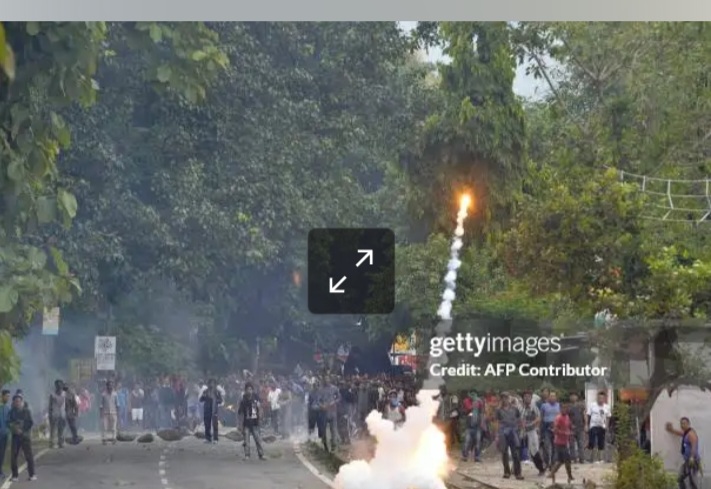
In 1986, the GNLF launched a major agitation demanding a separate Gorkhaland state. The movement became increasingly violent and resulted in significant unrest and loss of life in the Darjeeling hills. Historical accounts put the number of deaths during this phase at more than 1,200.
The agitation eventually resulted in a tripartite settlement involving the GNLF, the Government of India and the Government of West Bengal.
### 1988 – Formation of the DGHC
The 1988 agreement led to the creation of the Darjeeling Gorkha Hill Council (DGHC), a semi-autonomous administrative body for the Darjeeling hills. In return for the arrangement, the GNLF set aside its separate-state demand at that stage.
### 2004–2005 – Sixth Schedule proposal
DGHC elections that were due in 2004 were not held, and Subhas Ghising was appointed caretaker of the council while discussions continued over a proposed Sixth Schedule arrangement.
In 2005, the Centre and the West Bengal government reached an in-principle understanding concerning the inclusion of the Darjeeling hills under the Sixth Schedule framework. However, the proposal faced opposition in the hills and did not resolve the separate-state demand.
### 2007 – Formation of the GJM
In 2007, Bimal Gurung broke away from the GNLF and founded the Gorkha Janmukti Morcha (GJM). The new organisation opposed the Sixth Schedule proposal and revived the demand for a separate Gorkhaland state.
### 2011 – Formation of the GTA
After several years of agitation, an agreement was reached in 2011 for the creation of the Gorkhaland Territorial Administration (GTA), a semi-autonomous body intended to administer the Darjeeling hills.
The GTA agreement was signed in July 2011, and the West Bengal Legislative Assembly subsequently passed the legislation establishing the new administrative arrangement. The GTA replaced the DGHC and was given administrative, executive and financial powers over specified subjects, but it did not have legislative powers.
### 2013 – Revival of the separate-state demand
The creation of Telangana in 2013 gave fresh momentum to the Gorkhaland demand. The GJM renewed its agitation and called for renewed public mobilisation in support of statehood.
The protests included shutdowns and other forms of peaceful mass mobilisation in the Darjeeling hills. The renewed agitation once again brought the demand for a separate Gorkhaland state into national focus.
### An ongoing political demand
The history of the Gorkhaland movement shows that the demand has evolved through several stages. What began as calls for a separate administrative arrangement in the early 20th century later developed into a demand for statehood.
The formation of the DGHC in 1988 and the GTA in 2011 provided autonomous administrative mechanisms, but neither arrangement permanently resolved the demand for a separate state.
The Gorkhaland issue therefore remains an important part of the political history of Darjeeling and the surrounding Gorkha-inhabited areas of northern West Bengal.
KOUSHIK ROY
1 follower