THE HISTROICAL SCHOOL ST PAUL'S IS BAND OF WEST BENGAL DERJILING IDENTITY
St. Paul's School, Darjeeling: A Rich History Dating Back to 1823
St. Paul's School, one of the historic educational institutions associated with Darjeeling, traces its origins to May 1, 1823, when it was established in Calcutta by Daniel Corrie at the initiative of John William Ricketts, a prominent local Anglo-Indian leader.
The institution initially operated from 11 Park Street in Calcutta, between the Archbishop's House and the Sans Souci Theatre. In 1830, it shifted to Jawaharlal Nehru Road, an area now occupied by the Indian Museum. In 1847, Bishop Wilson renamed it St. Paul's School, associating the institution with St. Paul's Cathedral in Calcutta.
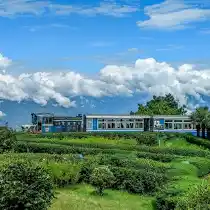
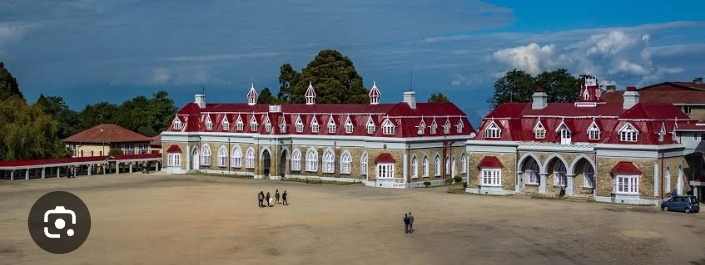
In 1864, the school moved to its present estate at Jalapahar in Darjeeling, with 31 boarders and a small number of day scholars. The estate was reportedly purchased from Brian Houghton Hodgson for ₹45,000. Situated at approximately 7,600 feet above sea level, the institution was once described as one of the highest schools in the world.
Early Objectives and Development
The school's original objective was to provide affordable education to the sons of Europeans and East Indians. Over time, it developed into a prominent residential educational institution.
Following India's Independence in 1947, the school continued to evolve, attracting students from affluent Indian families as well as from other Asian countries. Its history reflects the broader transformation of educational institutions during the transition from British rule to independent India.
Bishop Foss Westcott, Metropolitan of Bengal, Burma and Ceylon, played an important role in the school's development. The Maharaja of Burdwan also made significant contributions to the institution.
Over the years, the school expanded its estate through the acquisition of additional properties. The Mount Vernon Estate, also known as Dawkins, was reportedly acquired in the early 20th century, while the Terpsithea Estate was purchased in 1955.
Leadership and Notable Rectors
L. J. Goddard is regarded as one of the most influential rectors in the school's history. He led the institution from 1934 to 1964, overseeing a significant period that included India's transition from British rule to Independence.
David Gibbs succeeded Goddard and served from 1964 to 1972. Hari Dang later served as rector from 1977 to 1984. Dang received the Padma Shri in 1976 for his contribution to education.
Goddard and Gibbs were also awarded the Order of the British Empire (OBE) in recognition of their contributions to the school.
A Legacy of Education
Throughout its history, St. Paul's School has witnessed major social and political changes while continuing its educational mission. Its association with distinguished educators, historical estates and generations of students has contributed to its place in Darjeeling's educational heritage.
From its beginnings in Calcutta in the 19th century to its establishment at Jalapahar, Darjeeling, the institution's journey reflects a long history of educational development and institutional change.