The Silent Crisis: Why India's Children Need More Books and Less Screen Time
The Silent Crisis: Why India's Children Need More Books and Less Screen Time
As mobile phones become a constant companion for children, educators and parents are working together to encourage reading alongside responsible technology use.
A few years ago, it was common to see children carrying a storybook while travelling with their parents or waiting outside a tuition centre. Today, many children are more likely to be watching videos on a smartphone or using a tablet for entertainment or learning.
The change has happened gradually over the past decade. Digital devices have become a part of everyday life, offering convenience and new learning opportunities. Educators say that excessive recreational screen exposure may gradually reduce the habit of reading printed books.
Parents across India are increasingly expressing concern about the amount of time their children spend on digital devices. Many say they find it challenging to encourage regular reading when mobile phones provide instant entertainment.
According to teachers, the impact is visible inside classrooms. While children complete their school assignments, many read very little beyond their prescribed textbooks, limiting their exposure to language, imagination and creative thinking.
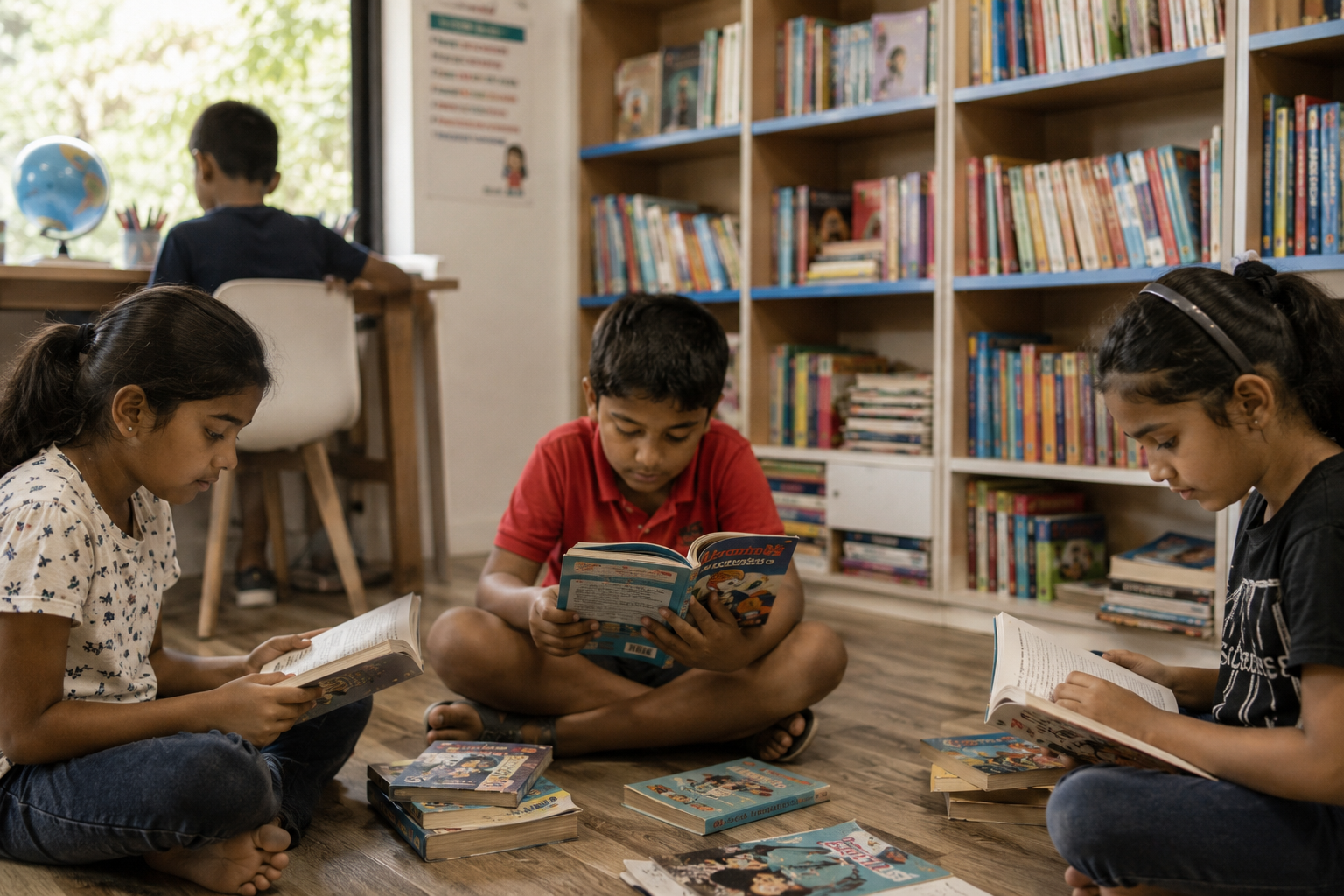
Many reading specialists believe that books continue to play an important role in a child's overall development. Storybooks introduce children to new ideas, cultures and emotions while improving vocabulary, concentration and communication skills. Unlike short-form digital content, books encourage sustained attention and reflective thinking.
"Reading develops curiosity," says a primary school teacher in Bengaluru. "Children who read regularly often ask thoughtful questions, participate more confidently in discussions and express themselves more clearly."
Parents who have introduced a daily reading routine at home report positive changes. Many say that spending around twenty minutes reading together each evening helps reduce unnecessary screen time while creating meaningful family interactions.
According to child development experts, selecting books based on a child's age and interests helps develop long-term reading habits. Picture books and illustrated stories encourage curiosity among younger children, while adventure, science, history and biographies support learning as they grow older.
Libraries continue to play an important role in this effort. Schools, community groups and private organisations are introducing new ways of making books accessible through apartment reading clubs, storytelling sessions and mobile library services.
Educators believe that encouraging reading should complement technology rather than replace it. Digital learning has its place, while books continue to support imagination, concentration and independent thinking.
Several initiatives in Bengaluru and other cities are helping make books more accessible through neighbourhood library services and community-based reading programmes. One such initiative is JustBooks, a Bengaluru-based library network that has encouraged reading among children and families by providing access to books across different age groups. Similar efforts by schools, public libraries, resident welfare associations and volunteers are also promoting reading habits in many communities.
India has a rich storytelling tradition. From the Panchatantra and Jataka Tales to the writings of R.K. Narayan, Ruskin Bond and Sudha Murty, books have inspired generations of readers. Preserving this culture remains a shared responsibility of families, schools and communities.
As the country prepares future generations for an increasingly digital world, educators say that maintaining a healthy balance between technology and reading will continue to be important for children's overall development.