The Spiritual Heart: A Rare Divine Synthesis
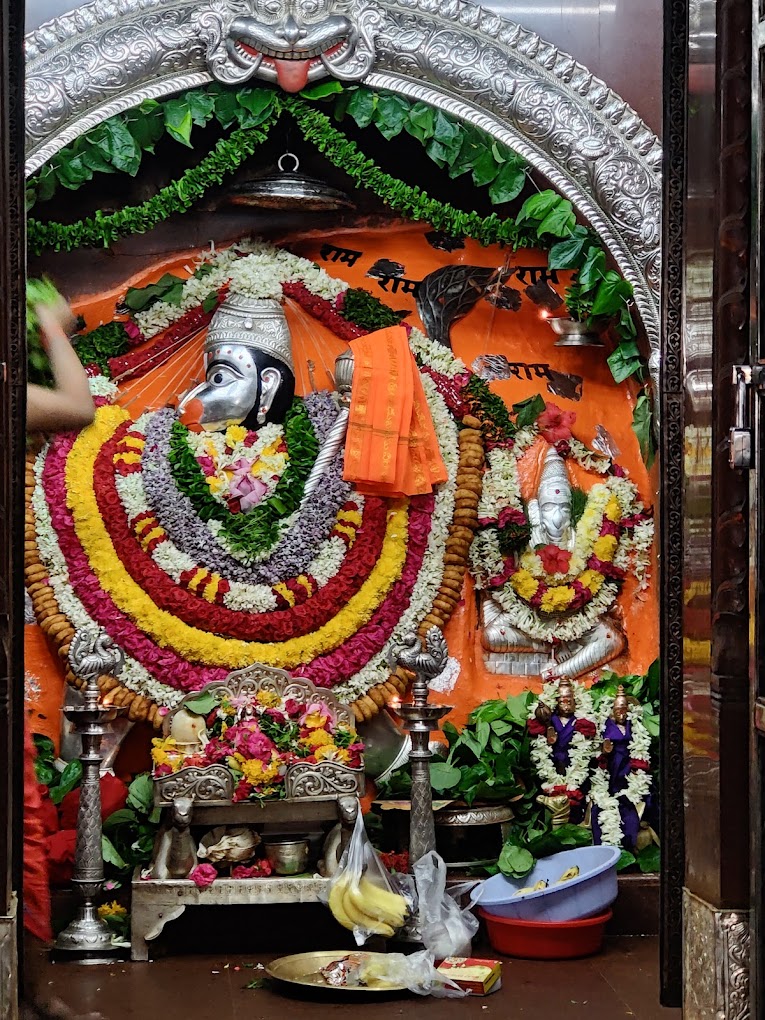
What truly sets the Tadbund Hanuman Temple apart from other shrines across India is its unique presiding deity. The central idol is Swayambhu (self-manifested), naturally formed out of a massive rock.
Remarkably, this single sacred stone features a dual manifestation: Lord Veeranjaneya Swamy stands majestic and imposing, while an image of Lord Vinayaka (Ganesha) is naturally carved right beside him on the very same rock. This rare, simultaneous presence of Hanuman and Ganesha on a single natural stone is considered deeply auspicious by devotees, symbolizing a double blessing—the strength and courage of Hanuman combined with Ganesha's power to eliminate all hurdles (Vighnaharta).
History and Local Lore
The origins of the temple are wrapped in rich folklore and historical layers. According to the Sthala Purana (local mythological history), the site traces its sanctity back to the Treta Yuga. It is believed that while carrying the Sanjeevani mountain from the Himalayas to Lanka to revive a wounded Lakshmana, Lord Hanuman briefly paused at this exact spot to rest, drawn by the serene palm groves that once covered the landscape. The name "Tadbund" itself stems from this past, derived from Tad (meaning palm tree) and the bund-like terrain of the area.
In modern history, the physical shrine began to take structured shape during the 19th-century Nizam era, over 150 years ago. Local tradition credits a wandering saint from Northern India with rediscovering the divine rock hidden among the trees. The temple gained massive popularity during the British colonial era, especially among the soldiers stationed at the nearby Secunderabad Cantonment who frequented the shrine to pray for resilience and protection.
Architectural Highlights and Complex Shrines
The temple complex showcases a beautiful blend of traditional Dravidian architecture with historical influences. Devotees enter through a grand Maharajah Gopuram (entrance tower) adorned with intricate carvings depicting scenes from the Ramayana.
Inside the vast complex, you will find:
The Mukha Mandapa: A spacious, pillared granite hall leading up to the Garbha Griha (sanctum sanctorum) that allows hundreds of devotees to gather comfortably for prayers.
The Ushtra Vahanam: Positioned right before the main shrine is the granite statue of a camel (Ushtra), which is scripturally recognized as the divine vehicle of Sri Veeranjaneya Swamy. The statue is elegantly plated in silver.
Sub-Shrines: The complex houses dedicated altars for Sri Sita Rama Lakshmana, Shiva Panchayatana (a Shiva Lingam alongside Goddess Parvati, Vishnu, and Surya), the Navagrahas (nine planetary deities), and Sri Nagendra.
Sacred Trees: The temple maintains old, revered trees within its layout, including the Ashwatha (Peepal), Bilva, Maredu, and Neem trees, around which devotees circumambulate for blessings.
Unique Rituals and Festivals
The Devasthanam is particularly famous across Hyderabad for its Vahana Pooja (vehicle blessings). It is a widespread tradition for people purchasing new two-wheelers, cars, or commercial heavy vehicles to drive straight to Tadbund to get their vehicles blessed with special safety prayers before regular use.
Best Times to Visit and Festivals
While the temple operates daily, Tuesdays and Saturdays witness an extraordinary surge of energy and footfall, as these days are traditionally dedicated to Lord Hanuman.
Hanuman Jayanthi: Celebrated with massive grandeur on both Chaitra Shudda Purnima and Vaishaka Bahula Dasami, featuring elaborate processions that culminate at the shrine.
Sri Vari Brahmotsavams: A grand five-day festival organized every two to three years whenever the Amavasya (new moon) falls on a Saturday.
General Timings
Regular Days (Mon, Wed, Thu, Fri): 5:00 AM to 11:30 AM & 4:00 PM to 8:30 PM
Tuesdays: 4:00 AM to 12:00 PM & 4:00 PM to 9:00 PM
Saturdays & Sundays: The temple remains open for extended hours, often staying open throughout the day on Saturdays until midnight to accommodate the continuous stream of pilgrims.