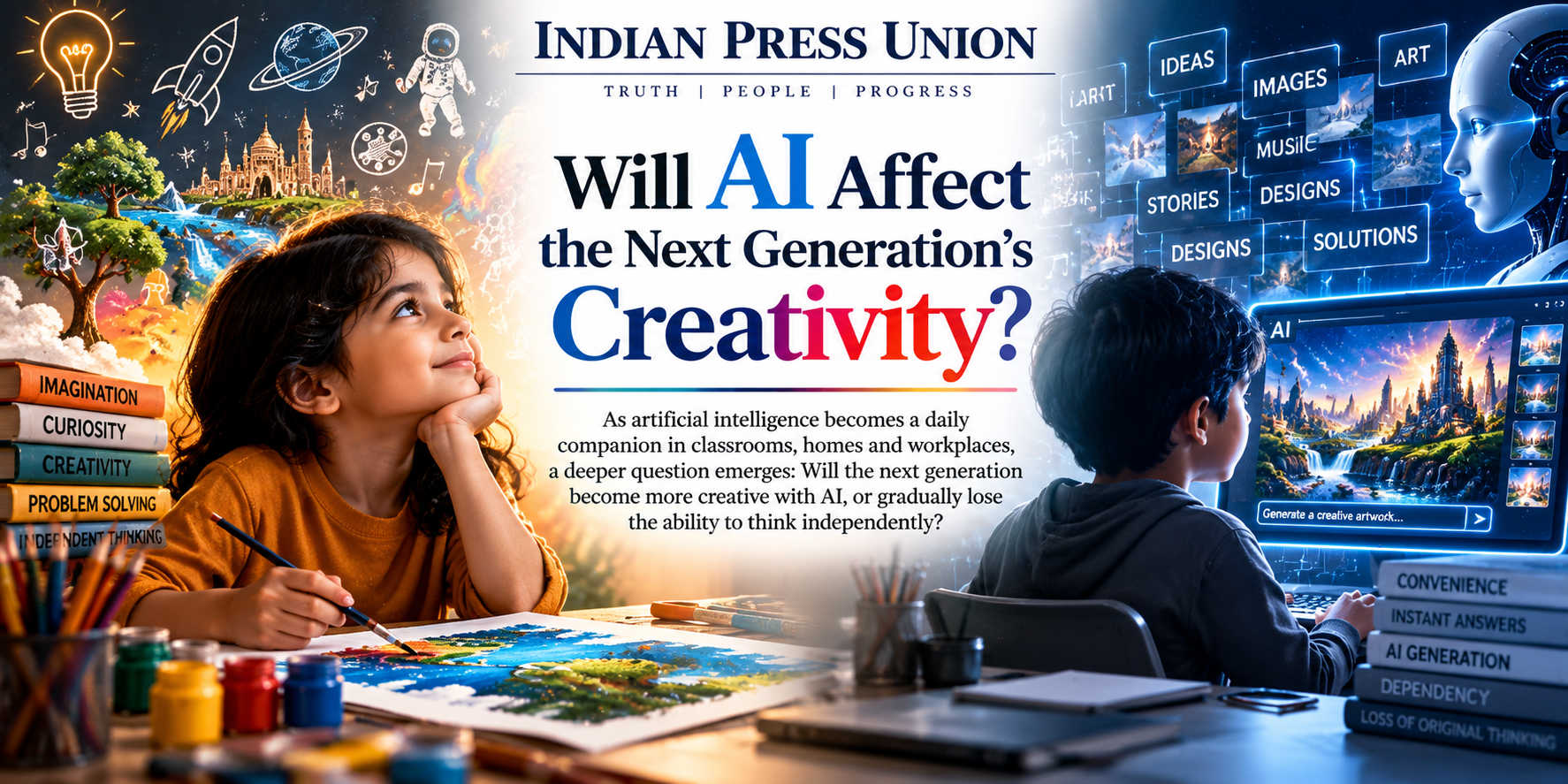
We Measure the Intelligence of Machines. But Who Measures the Future of Human Intelligence?
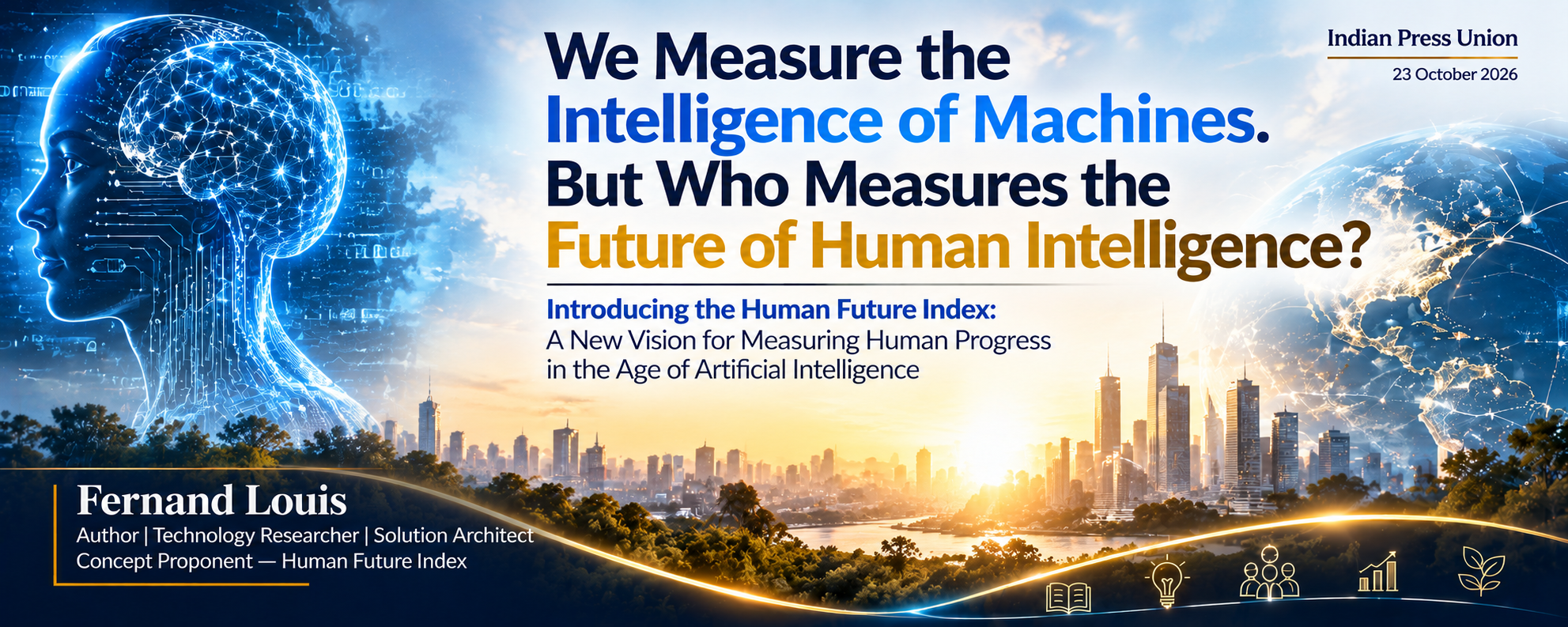
Introducing the Human Future Index: A New Vision for Measuring Human Progress in the Age of Artificial Intelligence
By Fernand Louis
Author | Technology Researcher | Solution Architect
Indian Press Union
Humanity has entered an extraordinary technological era. Artificial intelligence can now generate reports, create artwork, write software, analyse scientific information and assist with decisions that once required extensive human expertise.
Governments are investing in AI, corporations are developing increasingly capable models, and countries are expanding their digital infrastructure. Yet amid this rapid transformation, one fundamental question deserves greater attention: As machines become more intelligent, are human beings becoming more capable, creative and independent?
While established frameworks measure economic development, technological innovation and educational outcomes, there is an opportunity to examine more closely how technological progress affects human capabilities.
The Missing Dimension of Global Progress
For decades, countries have measured development through indicators such as gross domestic product, literacy, life expectancy, employment and industrial productivity. The United Nations Development Programme's Human Development Index broadens this perspective by incorporating health, education and income. The Global Innovation Index and international educational assessments such as PISA provide additional insights into innovation and learning.
These frameworks offer valuable information about national development. However, the expansion of artificial intelligence raises further questions. Are people retaining the ability to solve problems independently? Are young people developing original ideas? Do citizens have meaningful control over decisions influenced by algorithms? And are digital technologies supporting human relationships and well-being?
Existing measures address aspects of these concerns, but a more focused framework could help researchers examine how human capabilities evolve in an increasingly AI-enabled society.
Introducing the Human Future Index
I propose the development of a Human Future Index (HFI), a multidimensional research framework designed to explore how societies support human capabilities and agency alongside technological advancement.
The proposed index would not measure human worth or reduce intelligence to a single number. Instead, it would complement existing development indicators by examining conditions that support creativity, independent thinking, adaptability and responsible participation in technology-driven societies.
The framework could include six interconnected dimensions:
- Human Creativity: Opportunities and capabilities to imagine, experiment, innovate and develop original solutions.
- Critical Thinking: The ability to evaluate information, question assumptions, recognise misinformation and exercise independent judgement.
- Human Agency: The extent to which individuals retain meaningful choice, autonomy and control over technology-assisted decisions.
- Learning Resilience: The capacity to adapt, acquire new skills and participate in lifelong learning.
- Digital Well-being: The relationship between technology use, digital inclusion, human interaction and psychological well-being.
- Responsible AI Society: The quality of safeguards, public accountability, AI literacy and institutional arrangements that support human-centred technological development.
Together, these dimensions could help researchers investigate whether technological advancement is accompanied by stronger human capabilities.
Why This Matters for the Next Generation
Children growing up today are experiencing artificial intelligence as an increasingly familiar part of education and everyday life. Students can use AI to generate essays, aspiring artists can create complex images from written instructions, and young programmers can develop software with AI assistance.
These technologies can expand access to specialised resources and create new opportunities. At the same time, questions remain about cognitive dependence, originality and the development of independent problem-solving skills.
Current evidence does not establish that AI will inevitably weaken human creativity or intelligence. Outcomes will depend on how these technologies are designed, introduced and used. A carefully developed research framework could help move the discussion beyond exaggerated optimism or unnecessary fear by focusing on measurable evidence.
From Technology Rankings to Human Outcomes
Consider two countries investing heavily in artificial intelligence. Both may establish advanced computing facilities, expand digital services and attract technology investment, yet their social outcomes could differ.
One country might use AI to support education, independent research, accessibility and new opportunities for citizens. Another might achieve technological efficiency without comparable progress in human skills, inclusion or meaningful participation.
A carefully designed Human Future Index could help researchers investigate these differences. Its purpose should not be to rank populations by intelligence, but to examine which policies, institutions and social conditions support the continued development of human capabilities.
India's Opportunity to Contribute
India has an opportunity to contribute to this emerging research discussion. Its large education system, diverse population, growing digital economy and expanding AI ecosystem offer important contexts for studying the relationship between technology and human development.
A pilot initiative could bring together universities, educational institutions, research organisations, technology companies and public-policy specialists. The initial stage should focus on developing credible indicators and testing their relevance across different communities.
Any future international comparisons would require rigorous validation, transparent methodology, privacy safeguards and sensitivity to cultural differences. The framework should remain open to independent scientific review rather than being presented as an established global standard before sufficient evidence exists.
A Collective Responsibility
The future of human capabilities cannot be left to educators and parents alone. Governments influence education and technology policy, technology companies shape the systems people use, employers determine which skills are valued, universities advance research, and communities influence social learning and cultural creativity.
All these stakeholders have a role in ensuring that AI supports human capabilities rather than unnecessarily replacing opportunities for learning and independent decision-making.
A Human Future Index could eventually help stakeholders identify gaps, ask better questions and evaluate interventions. Its greatest contribution may not be a country ranking, but a shared understanding of what human progress should mean in an increasingly intelligent technological age.
The Future We Must Measure
Artificial intelligence is advancing rapidly, but technological capability alone cannot define human progress. A society may possess extraordinary computing power while continuing to face inequality, educational disadvantage, weakened public trust or limited opportunities for independent thought.
Assessing the future therefore requires attention to both technological achievements and human outcomes.
We have learned to measure the intelligence of our machines. The next great challenge is to understand whether we are creating a world in which human intelligence, creativity and freedom can continue to flourish.
The Human Future Index is proposed as one possible step towards that goal. The ultimate purpose of artificial intelligence should be to help build a future in which people become more capable, creative and empowered.
Fernand Louis
Author | Technology Researcher | Solution Architect
Concept Proponent — Human Future Index
The views expressed are those of the author. The Human Future Index is a proposed research concept, not an established or scientifically validated international ranking.