"When Religion Overshadows Education: Are We Weakening the Foundations of the Nation?"
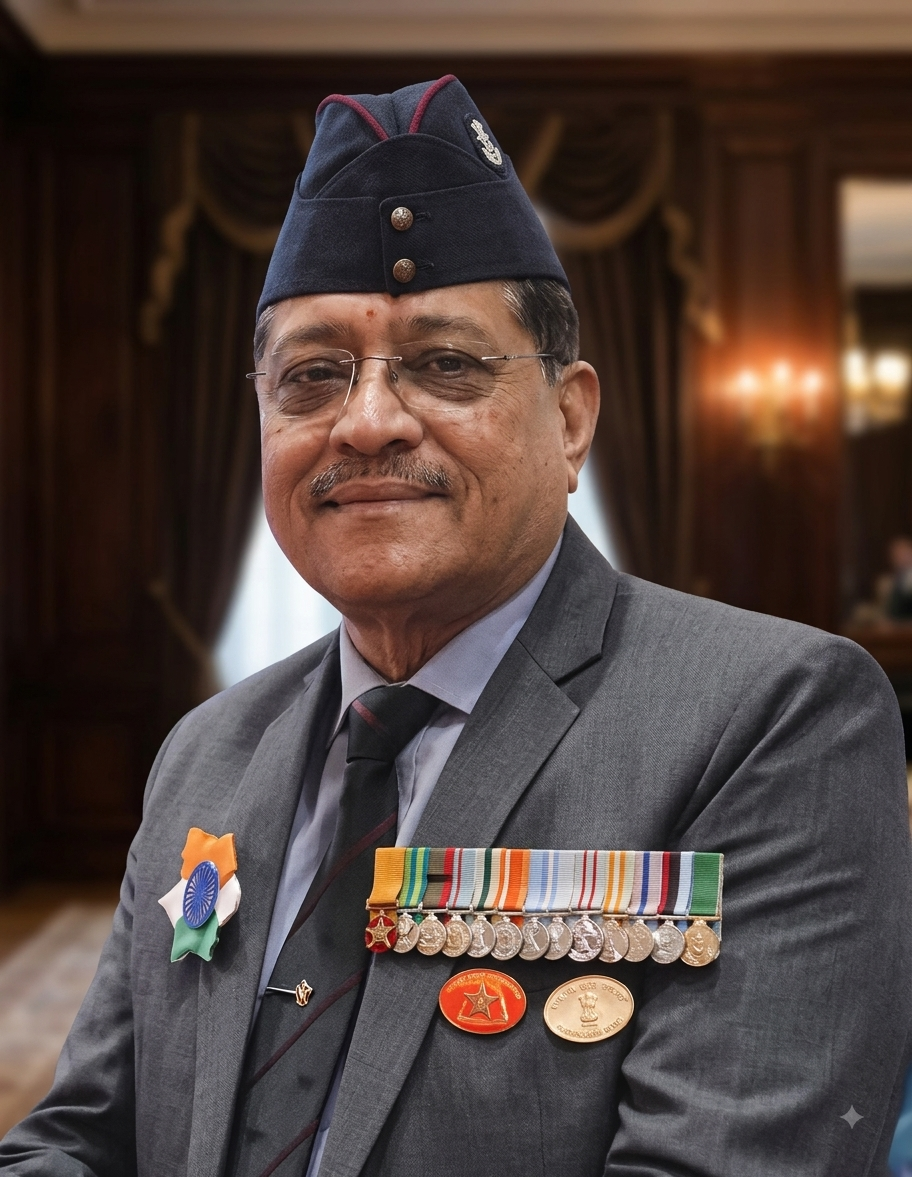
By
Colonel (Dr.) Ashwani Kumar, MiD, VSM (Retd.)
A nation does not become great by winning debates over religion. It becomes great by educating its people, nurturing scientific thought and uniting its citizens under one national purpose.
A Nation at a Crossroads.
India stands at a defining moment in its history. We aspire to become a developed nation, the world's third largest economy and a leading global power by 2047. We speak proudly of Viksit Bharat. Yet beneath this optimism lies a question that every responsible citizen must ask: Are we giving education the place it deserves, or are we allowing religion and identity to dominate our national priorities?
Religion has always been an inseparable part of India's civilisational heritage. It has guided our moral values, inspired compassion and strengthened communities. The issue is not religion itself. The issue arises when religion and identity begin to overshadow education, scientific inquiry, economic development and nation building.
Across the country, public discourse is increasingly consumed by debates over religion, caste and identity. Television studios, political platforms and social media often amplify these issues because they generate emotion and attention. Meanwhile, the quality of schools, universities, research institutions, teacher training, innovation and skill development seldom receive the same sustained focus. A nation cannot become a global leader if its classrooms are overshadowed by its conflicts.
India's Greatest Legacy: Knowledge Before Division.
India's greatness was never built on faith alone. It was built upon the extraordinary harmony between faith and knowledge.
Long before many modern nations existed, India had established centres of learning that attracted scholars from across the world. Nalanda, Takshashila and Vikramashila were symbols of intellectual excellence. Mathematics, astronomy, medicine, philosophy, literature and governance flourished because learning was regarded as sacred. Our sages were not merely spiritual leaders. They were philosophers, scientists, astronomers and educators.
Swami Vivekananda declared that education is "the manifestation of the perfection already in man." Dr. B. R. Ambedkar regarded education as the greatest weapon for social transformation. Dr. A. P. J. Abdul Kalam consistently reminded India that the future belongs to nations that invest in science, innovation and young minds. India's civilisation became great because it respected both the temple and the classroom.
That balance must never be lost.
A Soldier's Perspective: Unity Beyond Religion.
Having spent decades serving the nation in the Indian Army, Military Intelligence and national security assignments, I have experienced an India that many outside the Armed Forces rarely witness. The Indian Army represents the finest example of unity in diversity. Every regiment has soldiers belonging to different religions, languages, regions and cultures. Yet the moment they wear the olive green uniform, one identity rises above all others, they become Indian soldiers.
In almost every military station stands a Sarva Dharma Sthal, a common place of worship where soldiers of every faith pray together before undertaking difficult operations. Hindus, Muslims, Sikhs, Christians, Buddhists and others participate in each other's religious observances with equal respect. Diwali, Eid, Gurpurab, Christmas and other festivals are celebrated as family occasions. On the battlefield, no soldier asks the religion of the comrade standing beside him. He asks only one question: "Can I trust him with my life?" The answer depends neither upon religion nor caste. It depends upon courage, discipline, integrity and patriotism.
Many of my closest friends in uniform belonged to different faiths. We shared the same food, the same hardships, the same victories and, sadly, the same grief when comrades made the supreme sacrifice. No martyr's blood carries a religious identity.
Every martyr wraps himself in only one flag the Tiranga.
If India's Armed Forces can unite thousands of men and women from every religion into one family, why should the rest of our society fail to do the same?
The Armed Forces teach us a profound lesson: Faith may guide the individual, but the nation must unite us all. Perhaps our schools should learn as much from our cantonments as our cantonments once learnt from our classrooms.
When Public Discourse Shifts Away from Education.
The greatest challenge before India today is not religious diversity. India has always been diverse. The real challenge is allowing education to become secondary.
Millions of children still study in schools lacking quality teachers, laboratories and libraries. Many universities struggle to compete globally. We do claim construction of new universities, they are infact not learning places but shops to buy. One has to pay a lot to learn. It is the government, who has to open good schools, colleges and universities. Research expenditure remains far below that of leading knowledge economies. Thousands of talented Indian students continue to pursue higher education abroad because opportunities elsewhere often appear more attractive.
At precisely the time when the world is entering an era dominated by Artificial Intelligence, robotics, biotechnology, cyber security, quantum computing and space technology, India cannot afford to divert its attention away from education. No civilisation can remain globally competitive merely by celebrating its glorious past. It must prepare for the future.
The battle of the twenty-first century will not be fought only on borders. It will be fought in classrooms, laboratories, research centres and innovation hubs.
The Global Lesson: Nations Rise Through Education.
History leaves little room for doubt. Japan rose from the ashes of the Second World War through education, discipline and technology.
South Korea transformed itself from poverty into prosperity by investing heavily in schools, universities and innovation.
Singapore built one of the world's strongest economies by combining meritocracy with world-class education.
China invested massively in science, engineering and research to emerge as a global technological competitor.
None of these countries abandoned their traditions or cultural identities. They simply understood that education is the strongest foundation of national power. India possesses the world's largest youth population. Whether this becomes our greatest strength or our greatest missed opportunity depends entirely upon how seriously we educate them.
Leadership should unite, not divide.
Democracy naturally encourages political competition, and every political party seeks public support. However, leadership carries a responsibility that goes beyond winning elections. Its highest duty is to strengthen national unity and prepare future generations for the challenges ahead.
When political discourse increasingly revolves around religious, caste or community identities, society risks becoming fragmented. Public life should encourage healthy debate, but it should also inspire a shared national purpose.
Ironically, many public figures and the families of people across all walks of life, experience the benefits of diverse societies when studying, working or living abroad. Young people learn alongside classmates from every religion and nationality, celebrate one another's traditions and succeed because competence, knowledge and teamwork matter more than identity.
India deserves that same spirit within its own schools, universities and workplaces.
Our children should grow up learning how to innovate, question, collaborate and lead not how to distrust one another because of differences in faith or background.
If we truly dream of a developed and confident New India, our greatest investment cannot merely be in infrastructure. It must be in enlightened minds.
Balancing Faith, Constitutional Values and National Development।
India does not have to choose between religion and education.
It must choose balance. Our Constitution guarantees every citizen the freedom to practise and profess religion while upholding equality, liberty, fraternity and the development of scientific temper.
These values complement one another.
Religion should build character.
Education should build capability.
Science should build progress.
The Constitution should build unity.
Together they build a nation.
Governments, educational institutions, religious leaders, parents and civil society all share responsibility.
Governments must invest more in schools, universities, research, innovation and teacher development. Teachers must inspire curiosity rather than conformity.
Parents must demand quality education with the same passion with which they discuss politics.
Religious leaders can become powerful ambassadors for education by encouraging young people to pursue knowledge alongside faith.
The Future Will Be Written in Our Classrooms.
As a soldier, I have seen young Indians from every religion willingly sacrifice their lives for one flag. No one asked which temple, mosque, church or gurdwara they visited. The nation remembered only one truth:
They died for India.
That spirit should not remain confined to military cantonments.
It must become the guiding philosophy of our society.
If our classrooms teach children to respect every religion while mastering science, technology, literature, history and critical thinking, India will emerge not only as an economic power but also as a moral and intellectual leader.
The real battle before India today is not between religions.
It is between knowledge and ignorance.
Between innovation and stagnation.
Between unity and division.
Between preparing our children for the future and trapping them in the conflicts of the past.
The Indian soldier has already shown us the path.
He worships differently.
He serves together.
He sacrifices together.
He wins together.
That is the India our children deserve.
The greatest tribute we can pay to our civilisation is not merely by preserving our places of worship. It is by building schools that inspire excellence, universities that produce innovators, laboratories that create discoveries and institutions that unite rather than divide.
The future of India will not be decided by the loudest slogan.
It will be decided in its classrooms.
If we truly wish to build a stronger, more prosperous and united India, then let us make education our highest national mission. Let religion remain a source of personal strength and moral guidance, but let knowledge become the foundation of national progress.
Only then will India fulfil its destiny, not merely as an ancient civilisation, but as a modern nation where every child, irrespective of faith, has the opportunity to learn, to innovate and to contribute to the greatness of the Republic.
A nation that educates together, grows together. A nation that divides its children will eventually divide its future. The choice is ours.