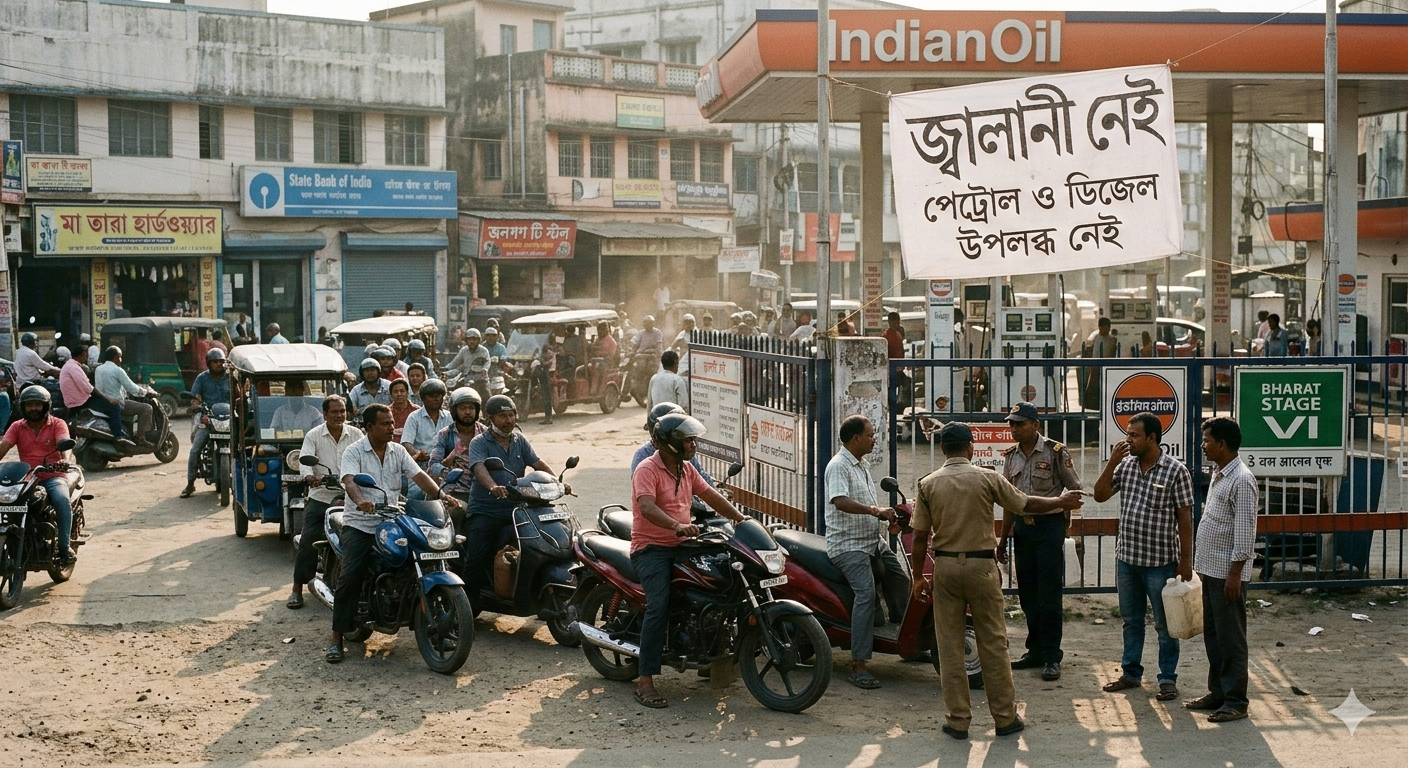
The oil crisis in early 2026, triggered by escalating tensions in West Asia and the closure of the Strait of Hormuz, has placed India in a delicate position. While the national government has managed to keep retail prices relatively stable through strategic reserves and Russian oil waivers, the ripple effects are being felt acutely in regional pockets like Murshidabad and its administrative headquarters, Berhampore.
Murshidabad is a unique district where the economy is heavily reliant on agriculture, small-scale transport, and cross-border trade. The “oil crisis” here isn’t just a number at the pump; it’s a disruption of the local lifecycle.
Agriculture and the “Diesel Tax”
As a primary agricultural hub (producing rice, jute, and mangoes), Murshidabad is highly sensitive to diesel prices.
Irrigation Costs: Farmers using diesel-powered pumps for the Boro rice season are seeing their input costs rise by 15–20%.
The “Kohitur” Factor: Berhampore is famous for the rare Kohitur mango. The specialized logistics required to transport these delicate fruits to Kolkata and beyond are becoming prohibitively expensive due to rising freight and insurance costs.Berhampore serves as the transit point between South and North Bengal.
Local Inflation: Diesel in Murshidabad is currently hovering around ₹93.33/litre (as of March 8, 2026). This has forced private bus operators and “Toto” (e-rickshaw) drivers—who are also affected by electricity price hikes—to reconsider fare structures.
Supply Chain Delays: Being a “distal” district from the main refineries in Haldia, any logistics bottleneck results in immediate local shortages. The crisis coincides with a period of electoral churn in West Bengal. Murshidabad, with its high number of “under adjudication” voters (nearly 11 lakh), is at a political crossroads. Rising fuel and food prices are becoming central talking points in local tea stalls (cha-er dokan), often overshadowing larger geopolitical narratives with immediate concerns about the “cost of living.”