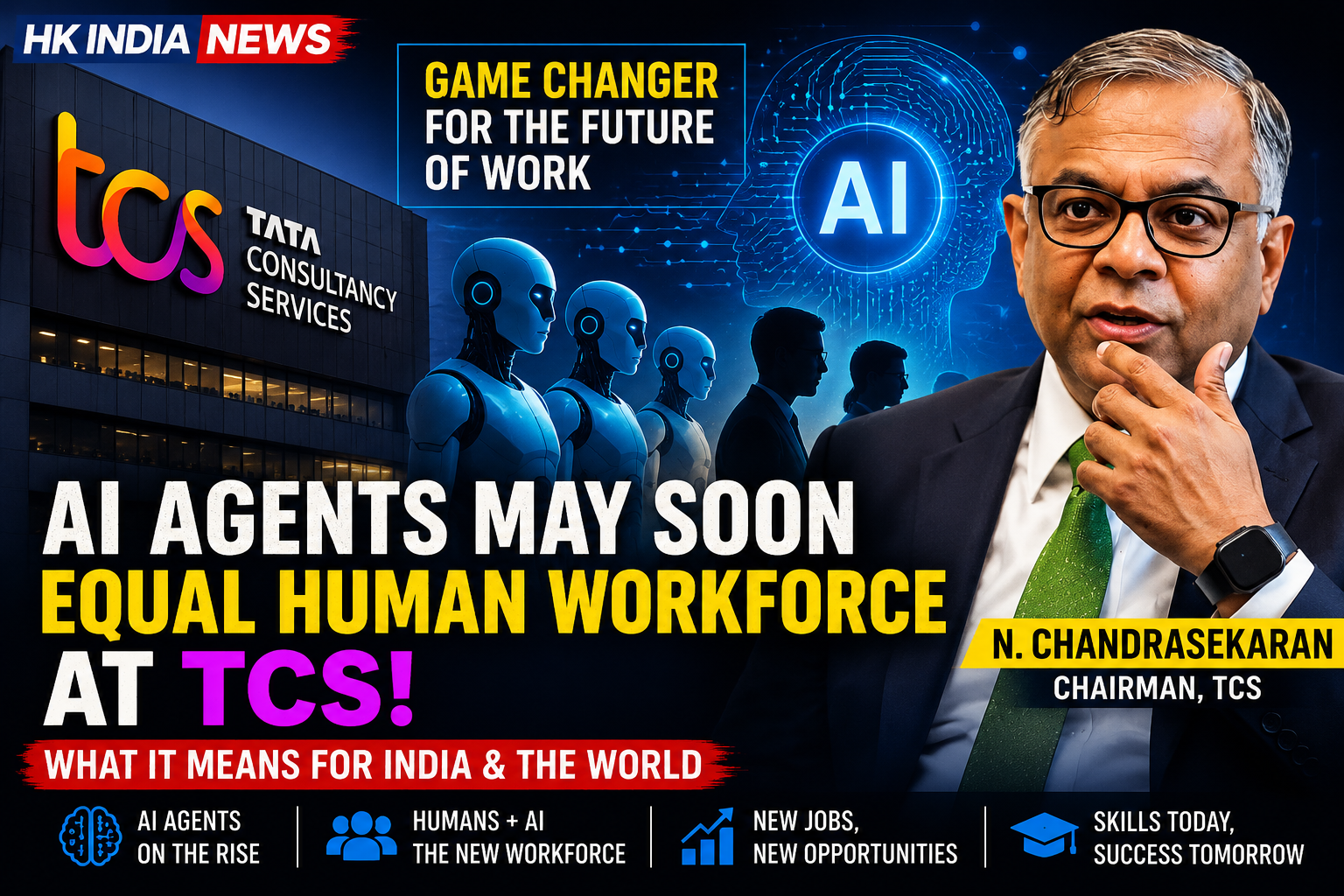
The global technology industry is entering a new era where Artificial Intelligence is no longer viewed solely as a tool but is increasingly being integrated into everyday business operations. Recent remarks by TCS Chairman N. Chandrasekaran have renewed discussions about the future of employment, automation, and digital transformation.
As organizations invest heavily in AI technologies, industry observers suggest that the coming decade could bring significant changes to workplace structures and business processes.
The Rise of the Digital Employee
For decades, companies expanded operations primarily by hiring more people. Today, AI is changing that equation.
Modern AI systems can:
✔ Write and review code
✔ Analyze large datasets
✔ Generate reports
✔ Handle customer queries
✔ Monitor cybersecurity threats
✔ Support business workflows
✔ Assist in decision-making
Unlike human workers, AI systems can operate continuously, making them particularly useful for repetitive and time-sensitive tasks.
Why TCS Is Investing in AI
TCS serves clients across banking, healthcare, manufacturing, telecommunications, retail, and government sectors.
Many organizations are increasingly seeking:
- Faster project delivery
- Lower operational costs
- Improved customer experiences
- Real-time analytics
- Intelligent automation
AI-driven tools can help businesses pursue these objectives while maintaining scalability and operational efficiency.
Industry reports and market forecasts indicate that enterprise AI adoption could represent a significant economic opportunity globally over the coming decade.
How AI Is Already Changing IT Jobs
In the past, software projects often required large teams for:
- Coding
- Testing
- Documentation
- Maintenance
- Customer support
Today, AI-assisted tools can help complete portions of these tasks more efficiently.
For example, some organizations report that tasks previously requiring larger engineering teams can now be completed by smaller teams supported by AI-based systems. However, the impact varies depending on project complexity and business requirements.
This shift does not necessarily eliminate jobs but may change the nature of work and the skills required.
Roles That May Be More Susceptible to Automation
Higher Automation Potential
- Data entry operations
- Basic software testing
- Routine technical support
- Standardized reporting functions
- Repetitive back-office processes
Areas of Growing Demand
- AI Engineers
- Machine Learning Specialists
- Data Scientists
- Cybersecurity Experts
- Cloud Architects
- AI Product Managers
- AI Trainers
- Prompt Engineers
- Digital Transformation Consultants
The New Skill Economy
Many experts believe the future workforce will increasingly be defined by adaptability and continuous learning.
Technical Skills
- Artificial Intelligence
- Machine Learning
- Generative AI
- Cloud Platforms
- Cybersecurity
- Data Analytics
Human Skills
- Creativity
- Leadership
- Communication
- Critical Thinking
- Problem Solving
- Emotional Intelligence
These human-centered capabilities continue to play an important role in workplaces and are generally considered difficult to fully automate.
India’s Opportunity
India has one of the world’s largest technology workforces.
The growth of AI presents potential opportunities in two key areas:
1. Global AI Talent Hub
India could strengthen its position as a major source of AI-related talent for international markets.
2. AI-Driven Productivity Growth
AI adoption may help improve efficiency across sectors such as:
- Agriculture
- Healthcare
- Education
- Banking
- Manufacturing
- Government Services
Several industry studies have suggested that wider AI adoption could contribute positively to economic productivity over the coming years.
Challenges Ahead
Despite the opportunities, several challenges remain:
Workforce Reskilling
Large numbers of workers may require additional training to adapt to changing workplace requirements.
Data Security
As AI systems process increasing amounts of information, cybersecurity and data protection remain important concerns.
Ethical Considerations
Questions related to privacy, transparency, accountability, and responsible AI use continue to be debated globally.
Digital Divide
Smaller businesses and underserved regions may face challenges in adopting advanced AI technologies.
What the Future Workplace Could Look Like
By 2030, many technology companies may operate with a combination of:
- Human employees focused on innovation and strategy
- AI-assisted operational processes
- Automated customer support systems
- AI-enabled project management
- Advanced cybersecurity monitoring
Many analysts expect future workplaces to rely on collaboration between humans and technology rather than direct competition between the two.
The discussion around AI reflects a broader global trend toward increased automation and digital transformation. Organizations that invest in innovation while supporting employee upskilling may be better positioned to adapt to changing market conditions.
For students, professionals, and businesses, understanding and effectively using AI tools may become increasingly important in the years ahead.
Editorial Observation
“Artificial Intelligence may change how we work, but human creativity, vision, and leadership are likely to remain important drivers of innovation and progress.”